Govt announces maximum fares that airlines can charge amid IndiGo chaos
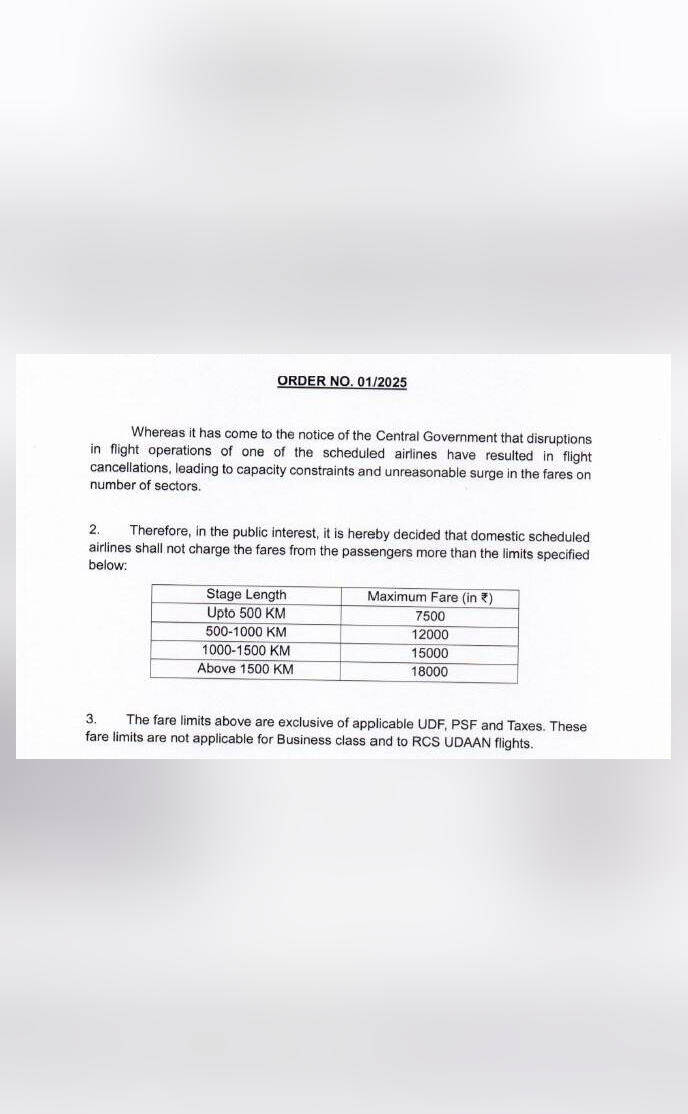
The Indian government has stepped in to regulate airfares in the country, imposing temporary fare ceilings across various routes. This move comes in the wake of mass flight cancellations by IndiGo, the country’s largest airline, which has led to a surge in prices. The Civil Aviation Ministry has announced that airlines will not be allowed to charge more than a certain maximum fare for flights, depending on the distance of the route.
For flights that cover a distance of up to 500km, airlines can charge a maximum fare of ₹7,500. This means that passengers traveling on short-haul flights will not have to pay more than this amount, regardless of the airline or the time of booking. This fare cap is expected to bring relief to passengers who have been facing exorbitant prices due to the cancellation of flights by IndiGo.
For flights that cover a distance between 500km and 1,000km, a maximum fare of ₹12,000 can be charged. This fare cap will apply to medium-haul flights, which are commonly used by business travelers and tourists. The government has fixed this fare cap to prevent airlines from taking advantage of the situation and charging high fares from passengers.
For flights that cover a distance of more than 1,500km, a maximum fare of ₹18,000 can be charged. This fare cap will apply to long-haul flights, which are commonly used by international travelers. The government has fixed this fare cap to prevent airlines from charging high fares from passengers who have no other option but to travel by air.
The government’s decision to impose fare ceilings on airlines is a welcome move, as it will provide relief to passengers who have been facing high prices due to the cancellation of flights by IndiGo. The airline has been facing technical issues with its fleet, which has led to the cancellation of hundreds of flights. This has resulted in a surge in prices, as other airlines have taken advantage of the situation to charge high fares from passengers.
The government’s move to regulate airfares is also expected to promote competition in the aviation sector. With fare ceilings in place, airlines will be forced to compete with each other on the basis of service quality and not just price. This will lead to better services and more options for passengers, who will be able to choose from a range of airlines and fares.
The imposition of fare ceilings is also expected to help the government to control inflation. High airfares have been a major contributor to inflation in the country, and the government’s move to regulate airfares is expected to bring down prices and control inflation.
However, the government’s decision to impose fare ceilings has not gone down well with all airlines. Some airlines have argued that the fare ceilings are too low and will not allow them to cover their costs. They have also argued that the fare ceilings will lead to a reduction in the quality of services, as airlines will not be able to invest in new aircraft and staff.
Despite these concerns, the government has stated that the fare ceilings are temporary and will be reviewed after a period of time. The government has also stated that it will monitor the situation closely and make adjustments to the fare ceilings as needed.
In conclusion, the government’s decision to impose fare ceilings on airlines is a welcome move that will provide relief to passengers who have been facing high prices due to the cancellation of flights by IndiGo. The fare ceilings will promote competition in the aviation sector, control inflation, and lead to better services and more options for passengers. However, the government needs to monitor the situation closely and make adjustments to the fare ceilings as needed to ensure that they do not have an adverse impact on the aviation sector.
News source: https://x.com/NDTVProfitIndia/status/1997255961241919681
About the Author