Govt announces maximum fares that airlines can charge amid IndiGo chaos
The Indian government has taken a significant step to regulate the aviation industry, particularly in the wake of the recent mass flight cancellations by IndiGo. The Civil Aviation Ministry has imposed temporary fare ceilings across various routes to curb the practice of surge pricing, which has been a major concern for passengers. This move is expected to bring relief to travelers who have been facing exorbitant fares, especially during peak travel seasons.
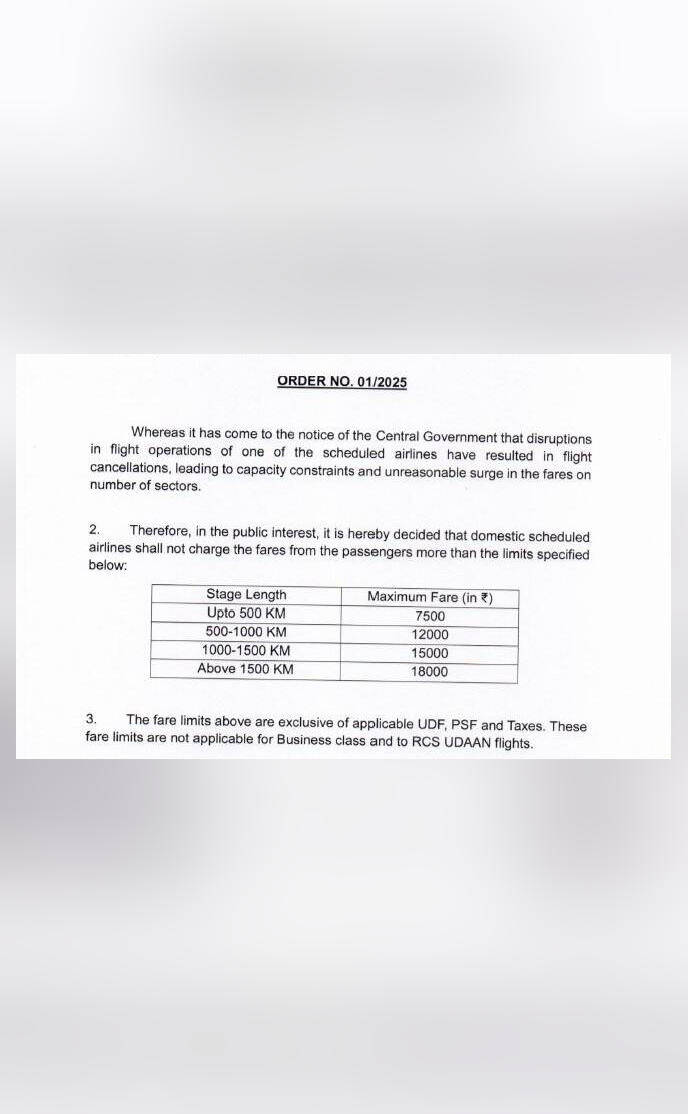
According to the new guidelines, airlines will not be allowed to charge beyond a certain limit for flights of different distances. For flights covering a distance of up to 500km, the maximum fare that airlines can charge is ₹7,500. This means that passengers traveling on short-haul flights will not have to pay more than this amount, regardless of the demand or supply conditions.
For flights that cover a distance between 500km and 1,000km, the maximum fare that airlines can charge is ₹12,000. This will provide relief to passengers traveling on medium-haul flights, who have often been at the receiving end of high fares due to surge pricing. The government’s decision to impose a fare ceiling on these routes will ensure that airlines do not take advantage of passengers during peak travel seasons.
For flights that cover a distance of more than 1,500km, the maximum fare that airlines can charge is ₹18,000. This will provide relief to passengers traveling on long-haul flights, who have often been forced to pay exorbitant fares due to limited availability of seats. The government’s decision to impose a fare ceiling on these routes will ensure that airlines do not exploit passengers who have no choice but to travel on these routes.
The government’s decision to impose fare ceilings is a welcome move, as it will provide relief to passengers who have been facing high fares due to surge pricing. The practice of surge pricing has been a major concern for passengers, as it often results in exorbitant fares, especially during peak travel seasons. The government’s decision to regulate fares will ensure that airlines do not take advantage of passengers and will provide a fair deal to travelers.
The move is also expected to promote competition among airlines, as they will be forced to operate within the fare ceilings imposed by the government. This will lead to better services and more affordable fares for passengers, as airlines will be forced to innovate and improve their services to attract passengers.
The decision to impose fare ceilings has been taken in the wake of the recent mass flight cancellations by IndiGo, which had left thousands of passengers stranded. The airline had canceled several flights due to a shortage of pilots, which had resulted in a surge in fares on other flights. The government’s decision to impose fare ceilings will ensure that such a situation does not arise again in the future.
The Civil Aviation Ministry has also asked airlines to ensure that they do not charge beyond the fare ceilings imposed by the government. The ministry has warned airlines that any violation of the fare ceilings will result in strict action, including penalties and fines.
In conclusion, the government’s decision to impose fare ceilings is a welcome move, as it will provide relief to passengers who have been facing high fares due to surge pricing. The move is expected to promote competition among airlines and will lead to better services and more affordable fares for passengers. The government’s decision to regulate fares will ensure that airlines do not take advantage of passengers and will provide a fair deal to travelers.
For more information on this development, you can visit: https://x.com/NDTVProfitIndia/status/1997255961241919681
News Source: https://x.com/NDTVProfitIndia/status/1997255961241919681
About the Author