Govt announces maximum fares that airlines can charge amid IndiGo chaos
The Indian government has stepped in to regulate airfares in the country, imposing temporary fare ceilings across various routes. This move comes in the wake of mass flight cancellations by IndiGo, one of the largest airlines in India, which led to a significant surge in prices. The Civil Aviation Ministry has taken this decision to protect the interests of passengers and prevent airlines from taking advantage of the situation.
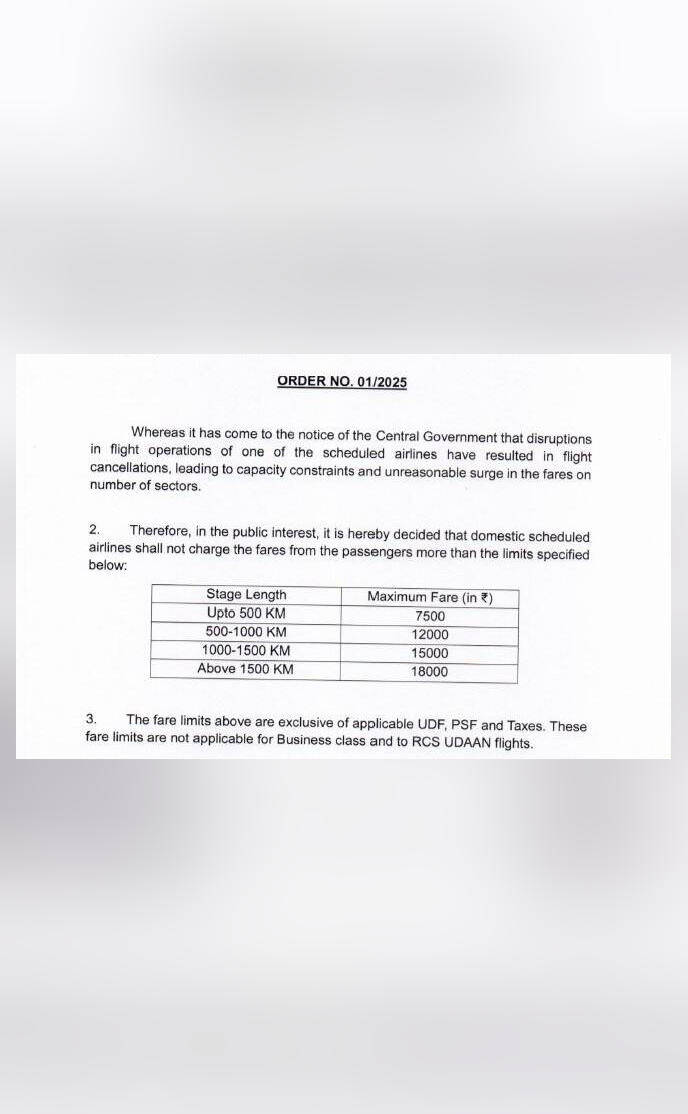
As per the new regulations, airlines are now restricted from charging exorbitant fares, and the maximum fares that can be charged have been clearly defined. For flights with a distance of up to 500 kilometers, airlines can charge a maximum fare of ₹7,500. This move is expected to bring relief to passengers traveling on short-haul flights, who were earlier being forced to pay much higher prices due to the surge in demand.
For flights with a distance between 500 kilometers and 1,000 kilometers, a maximum fare of ₹12,000 can be charged. This ceiling will apply to a large number of domestic flights, including those connecting major cities like Delhi, Mumbai, and Bengaluru. By imposing this fare ceiling, the government aims to prevent airlines from exploiting the situation and charging passengers unfairly high prices.
For flights with a distance of over 1,500 kilometers, the maximum fare that can be charged is ₹18,000. This will apply to long-haul flights, including those connecting India to international destinations. The government has taken this step to ensure that passengers are not forced to pay exorbitant prices, even on longer flights.
The decision to impose fare ceilings has been welcomed by passengers, who have been struggling to cope with the high prices. Many have taken to social media to express their relief and gratitude to the government for taking this step. The move is also expected to promote healthy competition among airlines, as they will now be forced to operate within the defined fare limits.
The IndiGo chaos, which led to the mass cancellation of flights, had created a crisis-like situation in the Indian aviation sector. With many flights being canceled at short notice, passengers were left stranded, and prices skyrocketed. The situation was further exacerbated by the fact that many airlines, including IndiGo, had reduced their fleet size and frequency of flights, leading to a shortage of seats.
In this scenario, the government’s decision to impose fare ceilings is a welcome move. It will not only protect the interests of passengers but also promote transparency and fairness in the aviation sector. The move is also expected to benefit the economy, as it will prevent airlines from exploiting the situation and charging high prices, which could have a negative impact on the overall cost of travel.
The Civil Aviation Ministry has clarified that these fare ceilings are temporary and will be reviewed after a period of time. The ministry will monitor the situation closely and take further action if needed. The government has also asked airlines to ensure that they operate with full transparency and fairness, and that passengers are not exploited in any way.
In conclusion, the government’s decision to impose fare ceilings is a positive step, which will bring relief to passengers and promote healthy competition among airlines. The move is expected to have a positive impact on the Indian aviation sector, and will help to promote transparency and fairness. As the situation continues to evolve, it will be interesting to see how airlines respond to these new regulations, and how the government monitors the situation to ensure that passengers’ interests are protected.
For more information on this development, you can visit: https://x.com/NDTVProfitIndia/status/1997255961241919681
News Source: https://x.com/NDTVProfitIndia/status/1997255961241919681
About the Author