Govt announces maximum fares that airlines can charge amid IndiGo chaos
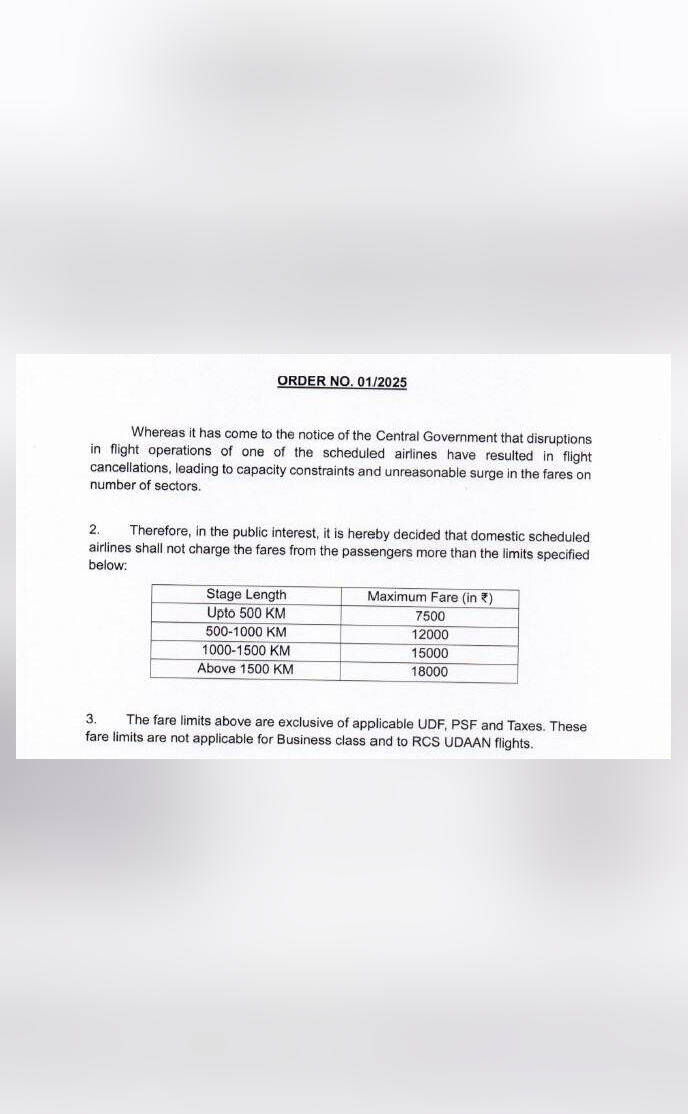
The Civil Aviation Ministry has taken a significant step to regulate the aviation industry, particularly in the wake of the recent chaos caused by mass flight cancellations by IndiGo. The ministry has imposed temporary fare ceilings across routes to curb surge pricing, which has been a major concern for passengers. This move is expected to bring relief to travelers who have been facing exorbitant fares, especially during peak travel seasons.
As per the new regulations, airlines can charge a maximum fare of ₹7,500 for flights with a distance of up to 500km. For flights with a distance between 500km and 1,000km, a maximum fare of ₹12,000 can be charged. Meanwhile, for flights covering a distance above 1,500km, the maximum fare that airlines can charge is ₹18,000. These fare ceilings are temporary and have been put in place to prevent airlines from taking undue advantage of passengers during times of high demand.
The move comes after IndiGo, one of the largest airlines in the country, canceled several flights due to technical issues, leaving thousands of passengers stranded. The cancellations led to a surge in fares across the industry, with many airlines hiking their prices to take advantage of the situation. The government’s decision to impose fare ceilings is aimed at preventing such price gouging and ensuring that passengers are not exploited during times of crisis.
The fare ceilings will be in place for a limited period, and the government will review them periodically to assess their impact on the industry. The move is expected to bring transparency and fairness to the pricing mechanism, which has been a long-standing demand of passengers. The government has also warned airlines against violating the fare ceilings, stating that any airline found to be charging more than the prescribed maximum fare will face strict action.
The decision to impose fare ceilings has been welcomed by passengers, who have been facing the brunt of surge pricing for years. Many passengers have taken to social media to express their relief and appreciation for the government’s move. The opposition parties, however, have criticized the government for not taking more stringent measures to regulate the industry.
The aviation industry has also reacted to the government’s decision, with some airlines expressing concerns about the impact of fare ceilings on their revenue. The airlines have argued that the fare ceilings will limit their ability to generate revenue, particularly during peak travel seasons. However, the government has maintained that the fare ceilings are necessary to protect the interests of passengers and prevent price gouging.
The imposition of fare ceilings is not the only measure that the government has taken to regulate the aviation industry. The ministry has also been working on a new aviation policy, which aims to promote transparency and fairness in the industry. The policy is expected to address issues such as surge pricing, cancellation charges, and passenger rights.
In conclusion, the government’s decision to impose fare ceilings is a significant step towards regulating the aviation industry and protecting the interests of passengers. The move is expected to bring relief to travelers who have been facing exorbitant fares, particularly during peak travel seasons. While the fare ceilings may have an impact on the revenue of airlines, they are necessary to prevent price gouging and ensure that passengers are not exploited. As the industry continues to evolve, it is essential that the government takes more stringent measures to regulate the industry and promote transparency and fairness.
Source: https://x.com/NDTVProfitIndia/status/1997255961241919681
About the Author