Govt announces maximum fares that airlines can charge amid IndiGo chaos
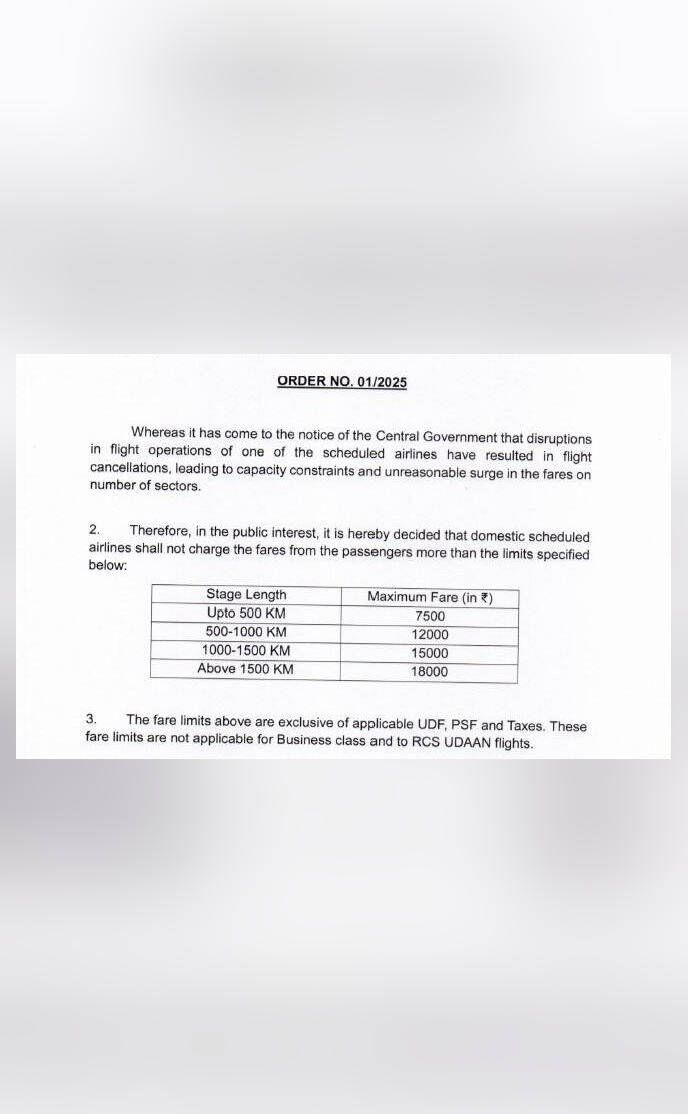
The Indian government has stepped in to regulate the aviation industry by imposing temporary fare ceilings across routes, in an effort to curb surge pricing that has been affecting passengers, particularly after the recent mass flight cancellations by IndiGo. This move is expected to bring relief to travelers who have been facing exorbitant airfares due to the shortage of flights.
According to the new regulations, airlines will not be allowed to charge more than a certain maximum fare for specific distance ranges. For flights that cover a distance of up to 500 kilometers, airlines can charge a maximum fare of ₹7,500. For flights that cover a distance between 500 kilometers and 1,000 kilometers, a maximum fare of ₹12,000 can be charged. Meanwhile, for flights that cover a distance of more than 1,500 kilometers, airlines can charge a maximum fare of ₹18,000.
This decision has been taken by the Civil Aviation Ministry in response to the recent chaos caused by IndiGo’s mass flight cancellations, which left thousands of passengers stranded and forced to look for alternative flights at extremely high prices. The ministry has been working to address the issue of surge pricing, which has become a major concern for air travelers in the country.
The government’s move to impose fare ceilings is expected to have a significant impact on the aviation industry, as it will prevent airlines from taking advantage of passengers during times of high demand. The regulations will also help to promote transparency and fairness in airfares, making it easier for passengers to plan their travel without having to worry about being charged exorbitant prices.
The decision to impose fare ceilings has been welcomed by passenger rights groups, who have been advocating for stricter regulations to control airfares. According to them, the move will help to protect passengers from being exploited by airlines, particularly during peak travel seasons or when there are disruptions to flight schedules.
However, the move has also raised concerns among airlines, who argue that fare ceilings could lead to a reduction in their revenue and profitability. Airlines have been facing increasing operational costs, including higher fuel prices, and the imposition of fare ceilings could make it challenging for them to maintain their profitability.
Despite these concerns, the government has made it clear that the fare ceilings are a temporary measure aimed at addressing the current crisis in the aviation industry. The regulations will be reviewed and revised as necessary, taking into account the needs of both passengers and airlines.
In recent days, the Indian aviation industry has been facing significant challenges, including flight cancellations, delays, and disruptions. The recent chaos caused by IndiGo’s mass flight cancellations has highlighted the need for stricter regulations to ensure that airlines operate in a fair and transparent manner.
The government’s decision to impose fare ceilings is a step in the right direction, as it will help to promote fairness and transparency in airfares. However, more needs to be done to address the underlying issues affecting the aviation industry, including infrastructure constraints, regulatory challenges, and operational inefficiencies.
As the Indian aviation industry continues to grow and evolve, it is essential that the government and regulatory authorities work together to create a fair and sustainable operating environment for airlines, while also protecting the interests of passengers. The imposition of fare ceilings is a temporary measure, but it is an important step towards creating a more regulated and transparent aviation industry.
In conclusion, the government’s decision to impose fare ceilings on airlines is a welcome move that will help to curb surge pricing and promote fairness and transparency in airfares. While the move may raise concerns among airlines, it is an essential step towards creating a more regulated and sustainable aviation industry. As the industry continues to evolve, it is essential that the government and regulatory authorities work together to address the underlying challenges and create a fair operating environment for all stakeholders.
Source: https://x.com/NDTVProfitIndia/status/1997255961241919681
About the Author