Govt announces maximum fares that airlines can charge amid IndiGo chaos
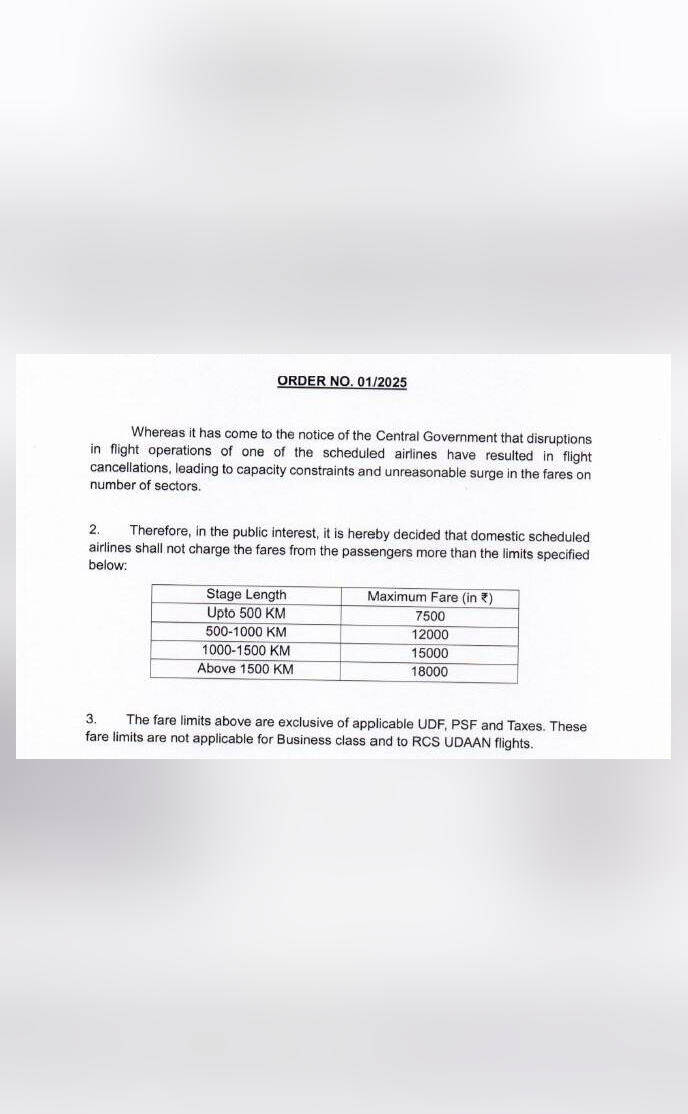
The Indian government has stepped in to regulate airfares in the country, imposing temporary fare ceilings across routes to curb surge pricing. This move comes after a series of mass flight cancellations by IndiGo, one of the country’s largest airlines, left thousands of passengers stranded. The Civil Aviation Ministry has announced that airlines will no longer be able to charge exorbitant fares, and instead, will have to adhere to a set of maximum fare limits.
According to the new regulations, for flights that cover a distance of up to 500 kilometers, airlines can charge a maximum fare of ₹7,500. For flights that cover a distance between 500 kilometers and 1,000 kilometers, a maximum fare of ₹12,000 can be charged. Meanwhile, for flights that cover distances of over 1,500 kilometers, the maximum fare that can be charged is ₹18,000. These fare ceilings are expected to provide relief to passengers who have been facing steep airfare hikes in recent times.
The decision to impose fare ceilings was taken after the government received numerous complaints about airlines charging exorbitant fares, especially during peak travel seasons. The issue was further exacerbated by the recent flight cancellations by IndiGo, which led to a surge in demand for seats on other flights, resulting in higher fares. The government has stated that the fare ceilings are a temporary measure and will be reviewed after 15 days.
The move is expected to bring relief to passengers who have been struggling to afford air travel due to high fares. Many passengers have taken to social media to express their frustration about the high airfares, with some even claiming that they have been forced to cancel their travel plans due to the unaffordable prices. The imposition of fare ceilings is seen as a positive step towards regulating the aviation industry and protecting the interests of passengers.
However, the move has also raised concerns among airlines, which have argued that the fare ceilings will affect their revenue and profitability. Airlines have stated that they need to charge higher fares to cover their operational costs, which have increased significantly in recent times due to rising fuel prices and other expenses. The airlines have also argued that the fare ceilings will lead to a reduction in the number of flights operated, which will further exacerbate the shortage of seats and lead to higher fares.
Despite these concerns, the government has stated that it will continue to monitor the situation and take necessary steps to ensure that passengers are not exploited by airlines. The government has also stated that it will work with airlines to find a solution that balances the interests of both passengers and airlines.
The imposition of fare ceilings is not the only measure that the government has taken to regulate the aviation industry. The government has also introduced a number of other measures, including the establishment of a regulatory body to oversee the industry and the introduction of rules to prevent airlines from charging excessive fees for services such as baggage and food.
In recent years, the Indian aviation industry has experienced rapid growth, with the number of air passengers increasing significantly. However, this growth has also been accompanied by a number of challenges, including congestion at airports, flight delays, and high airfares. The government has stated that it is committed to addressing these challenges and ensuring that the aviation industry is regulated in a way that benefits both passengers and airlines.
The announcement of fare ceilings has been welcomed by passengers, who have been struggling to afford air travel due to high fares. The move is seen as a positive step towards regulating the aviation industry and protecting the interests of passengers. However, the impact of the fare ceilings on airlines remains to be seen, and it is likely that the issue will continue to be debated in the coming days.
In conclusion, the imposition of fare ceilings by the government is a significant step towards regulating the aviation industry and protecting the interests of passengers. While the move is expected to bring relief to passengers, it has also raised concerns among airlines, which have argued that the fare ceilings will affect their revenue and profitability. The government has stated that it will continue to monitor the situation and take necessary steps to ensure that passengers are not exploited by airlines.
For more information on this topic, you can visit: https://x.com/NDTVProfitIndia/status/1997255961241919681
News Source: https://x.com/NDTVProfitIndia/status/1997255961241919681
About the Author