Govt announces maximum fares that airlines can charge amid IndiGo chaos
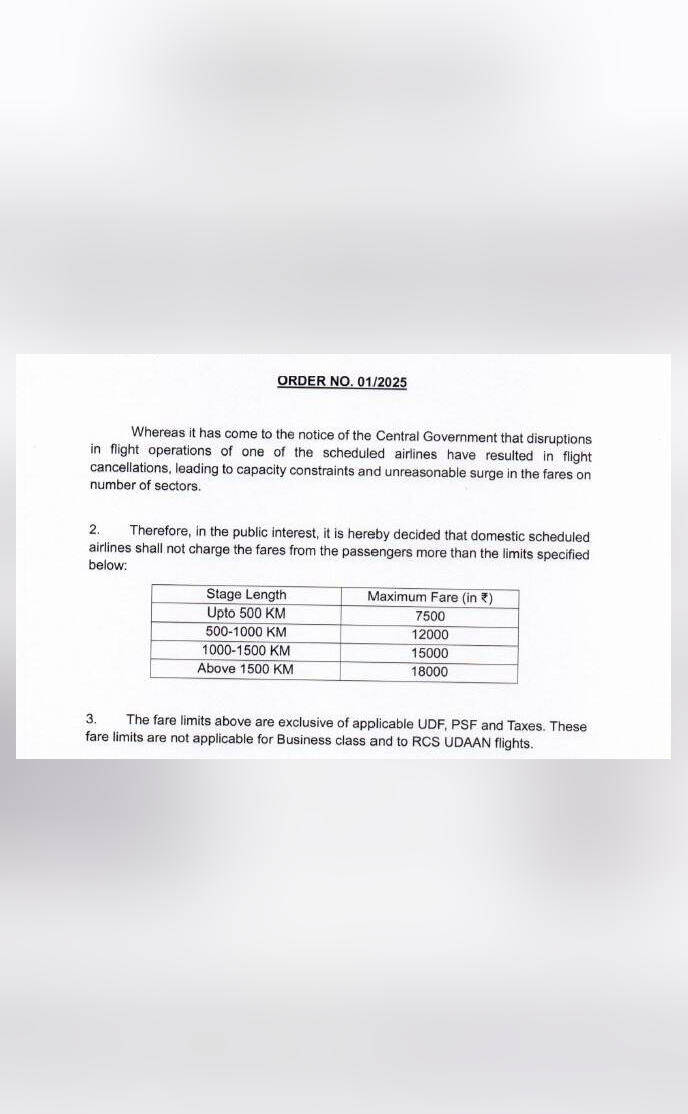
The Civil Aviation Ministry has taken a significant step to regulate the pricing of airline tickets in the country. In the wake of mass flight cancellations by IndiGo, the ministry has imposed temporary fare ceilings across routes to curb surge pricing. This move is aimed at protecting the interests of air travelers who have been facing exorbitant fares due to the sudden shortage of flights.
As per the new regulations, airlines can charge a maximum fare of ₹7,500 for flights with a distance of up to 500km. For flights with a distance between 500km and 1,000km, a maximum fare of ₹12,000 can be charged. Similarly, for flights with a distance above 1,500km, the maximum fare that can be charged is ₹18,000. These fare ceilings will be in place for the time being, until the situation returns to normalcy.
The decision to impose fare ceilings comes after IndiGo, one of the largest airlines in the country, cancelled hundreds of flights due to a shortage of pilots. This led to a surge in demand for flights on other airlines, resulting in exorbitant fares for travelers. The situation was further exacerbated by the peak travel season, with many people planning their summer vacations.
The government’s move to regulate airfares is a welcome step, as it will provide relief to air travelers who have been facing high prices. The fare ceilings will ensure that airlines do not take advantage of the situation and charge excessive fares. The regulations will also promote fair competition among airlines, as they will not be able to charge higher fares than their competitors.
The imposition of fare ceilings is not a new concept in the aviation industry. Many countries have similar regulations in place to protect the interests of air travelers. In India, the Directorate General of Civil Aviation (DGCA) has been monitoring airfares and taking action against airlines that engage in predatory pricing.
The current situation has highlighted the need for more effective regulation of the aviation industry. The government needs to take a closer look at the industry and identify areas where regulation is necessary. This could include measures such as increasing the number of flights, promoting competition among airlines, and improving the overall infrastructure of airports.
In addition to imposing fare ceilings, the government could also consider other measures to promote the growth of the aviation industry. This could include providing incentives to airlines to operate on underserved routes, investing in airport infrastructure, and promoting tourism in the country.
The aviation industry is a critical component of the country’s economy, and it is essential to ensure that it operates in a fair and transparent manner. The government’s decision to impose fare ceilings is a step in the right direction, and it is hoped that it will have a positive impact on the industry.
As the situation returns to normalcy, it is expected that the fare ceilings will be removed, and airlines will be free to charge fares as per their discretion. However, the government’s move to regulate airfares will send a strong signal to airlines that they need to operate in a fair and transparent manner.
In conclusion, the government’s decision to impose fare ceilings is a welcome step, and it will provide relief to air travelers who have been facing high prices. The regulations will promote fair competition among airlines and ensure that they do not take advantage of the situation. As the aviation industry continues to grow, it is essential to ensure that it operates in a fair and transparent manner, and the government’s move is a step in the right direction.
For more information on this topic, you can visit: https://x.com/NDTVProfitIndia/status/1997255961241919681
News Source: https://x.com/NDTVProfitIndia/status/1997255961241919681
About the Author