Govt announces maximum fares that airlines can charge amid IndiGo chaos
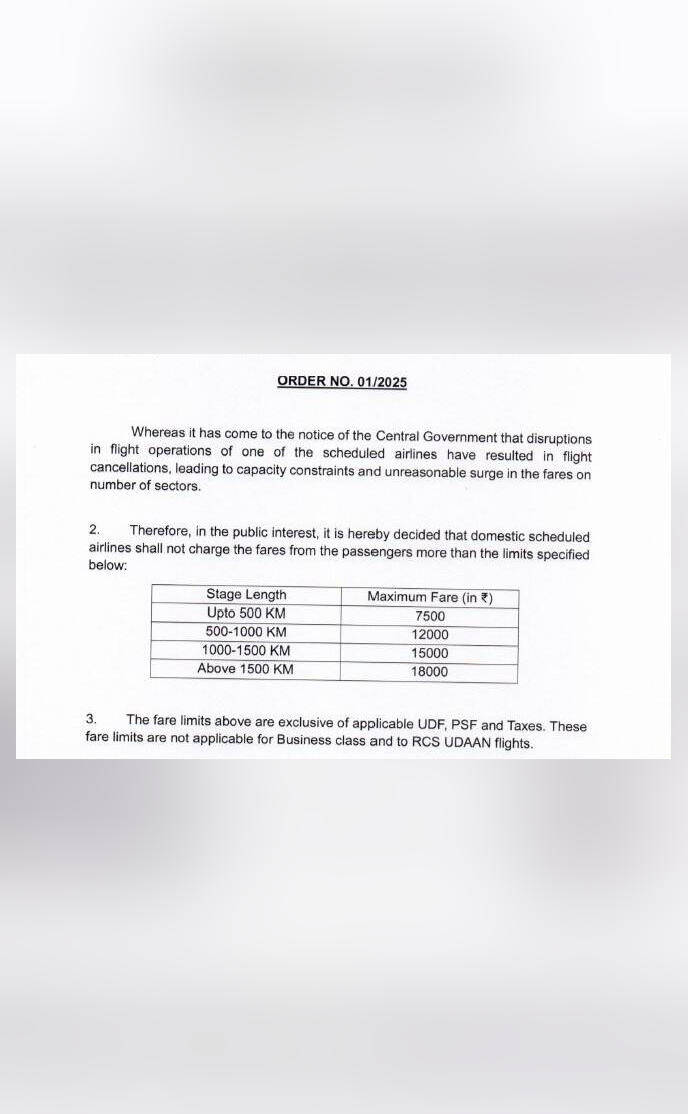
The Civil Aviation Ministry has taken a significant step to regulate airfares in the country, imposing temporary fare ceilings across routes to curb surge pricing. This move comes after the recent mass flight cancellations by IndiGo, which left thousands of passengers stranded and facing exorbitant fares on other flights. As per the new guidelines, airlines will not be allowed to charge more than the specified maximum fares for flights of different distances.
For flights with a distance of up to 500 kilometers, airlines can charge a maximum fare of ₹7,500. This move is expected to bring relief to passengers traveling on short-haul routes, who were often forced to pay high fares due to limited options. Similarly, for flights with a distance between 500 kilometers and 1,000 kilometers, a maximum fare of ₹12,000 can be charged. This will help regulate fares on medium-haul routes, where prices often fluctuate wildly.
For flights with a distance of over 1,500 kilometers, the maximum fare that airlines can charge is ₹18,000. This will help bring down the costs of long-haul flights, which often become prohibitively expensive due to surge pricing. The government’s decision to impose fare ceilings is a welcome move, as it will help protect passengers from exploitation by airlines.
The recent chaos caused by IndiGo’s mass flight cancellations highlighted the need for fare regulation in the aviation sector. With many flights canceled, passengers were left with limited options, and airlines took advantage of the situation by hiking fares. The government’s intervention is expected to prevent such situations in the future, where passengers are forced to pay exorbitant fares due to a lack of options.
The Civil Aviation Ministry’s decision to impose fare ceilings is also expected to promote competition among airlines. With fare regulation in place, airlines will be forced to compete on other factors such as service quality, on-time performance, and in-flight amenities. This will lead to improved services and better value for money for passengers.
The government’s move to regulate airfares is also expected to have a positive impact on the tourism industry. With air travel becoming more affordable, more people are likely to travel, which will boost the tourism sector. This, in turn, will have a positive impact on the economy, as tourism is a significant contributor to the country’s GDP.
However, some airlines have expressed concerns over the government’s decision to impose fare ceilings. They argue that fare regulation will limit their ability to respond to changing market conditions and may lead to losses. Airlines also point out that fare ceilings may not be sufficient to cover their costs, particularly on routes with low demand.
Despite these concerns, the government’s decision to regulate airfares is a step in the right direction. The aviation sector has long been plagued by issues of surge pricing, and the government’s intervention is necessary to protect passengers’ interests. The fare ceilings imposed by the government are temporary, and it is expected that they will be reviewed and revised as necessary.
In conclusion, the government’s decision to impose fare ceilings on airlines is a welcome move that will help regulate airfares and prevent surge pricing. The move is expected to bring relief to passengers, promote competition among airlines, and have a positive impact on the tourism industry. As the aviation sector continues to evolve, it is essential that the government plays a proactive role in regulating the industry and protecting passengers’ interests.
For more information on this topic, you can visit: https://x.com/NDTVProfitIndia/status/1997255961241919681
News Source: https://x.com/NDTVProfitIndia/status/1997255961241919681
About the Author