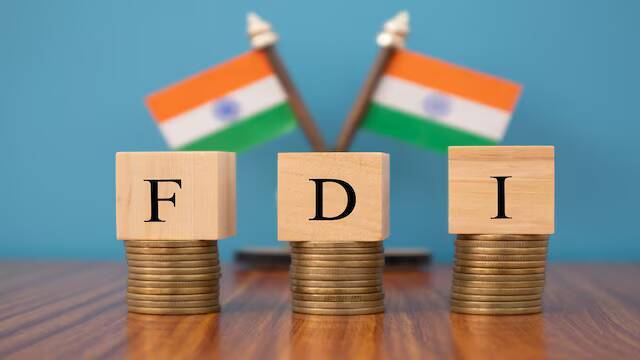
FDI inflows to India surge by 73% to $47 billion in 2025
The Indian economy has been witnessing a significant surge in Foreign Direct Investment (FDI) inflows, with the latest report by the UN Trade and Development revealing a staggering 73% increase in 2025. The total FDI inflows to India reached an impressive $47 billion, driven primarily by large investments in the services sector, including finance and IT, as well as manufacturing. This remarkable growth has cemented India’s position as a prime destination for foreign investors, while neighboring China witnessed a decline in FDI inflows for the third consecutive year, with an 8% drop.
The services sector, which includes finance, IT, and other business services, has been a major driver of FDI inflows to India. The country’s large pool of skilled and English-speaking workforce, combined with its favorable business environment, has made it an attractive destination for foreign investors looking to establish their presence in the region. The IT sector, in particular, has been a key recipient of FDI, with many global companies setting up their development centers and outsourcing operations in India. The finance sector has also seen significant investments, with foreign banks and financial institutions establishing their presence in the country.
Manufacturing has also been a significant recipient of FDI inflows, with many foreign companies setting up their production facilities in India. The government’s “Make in India” initiative, launched in 2014, has been instrumental in promoting India as a manufacturing hub, with a focus on sectors such as automotive, pharmaceuticals, and textiles. The initiative has led to a significant increase in FDI inflows to the manufacturing sector, with many foreign companies investing in India to take advantage of its large market and favorable business environment.
The surge in FDI inflows to India is a testament to the country’s improving business environment and its attractiveness as an investment destination. The government’s efforts to simplify regulations, improve infrastructure, and promote ease of doing business have paid off, with foreign investors showing increased confidence in the Indian economy. The country’s large and growing market, combined with its skilled workforce and favorable demographics, make it an attractive destination for foreign investors looking to establish their presence in the region.
In contrast, China’s FDI inflows declined for the third consecutive year, with an 8% drop. The decline is attributed to a combination of factors, including a slowing economy, rising labor costs, and increasing competition from other emerging markets. The Chinese government’s efforts to promote domestic investment and reduce reliance on foreign capital have also contributed to the decline in FDI inflows.
The surge in FDI inflows to India is expected to have a positive impact on the country’s economy, with increased investment leading to job creation, improved infrastructure, and higher economic growth. The government’s efforts to promote FDI and improve the business environment are expected to continue, with a focus on attracting more investments in key sectors such as manufacturing, IT, and finance.
In conclusion, the surge in FDI inflows to India is a significant development, with the country emerging as a prime destination for foreign investors. The growth is driven by large investments in the services sector, including finance and IT, as well as manufacturing. The government’s efforts to promote FDI and improve the business environment have paid off, with foreign investors showing increased confidence in the Indian economy. As the country continues to grow and develop, it is expected to attract even more foreign investment, leading to higher economic growth and improved living standards for its citizens.
Source: https://www.ndtvprofit.com/economy/indias-fdi-inflows-surge-74-to-47-billion-un-data-10864485/amp/1
About the Author