Deepinder claims issue with gig economy is it exposed class divide, says ‘We tip awkwardly’
The gig economy has been a topic of discussion in recent years, with many debating its pros and cons. While some see it as an opportunity for flexible work and entrepreneurship, others criticize it for perpetuating inequality and exploiting workers. Recently, billionaire Deepinder Goyal weighed in on the issue, claiming that the problem with the gig economy is not its underlying economics, but rather the fact that it has brought the prevailing class divide to light.
According to Goyal, the gig economy has made it impossible for the consuming class to ignore the existence of the working class. “Suddenly, the poor aren’t hidden away,” he said. “Now, every doorbell is a reminder of systemic inequality.” This statement highlights the uncomfortable truth that the gig economy has forced us to confront the reality of class divisions in our society.
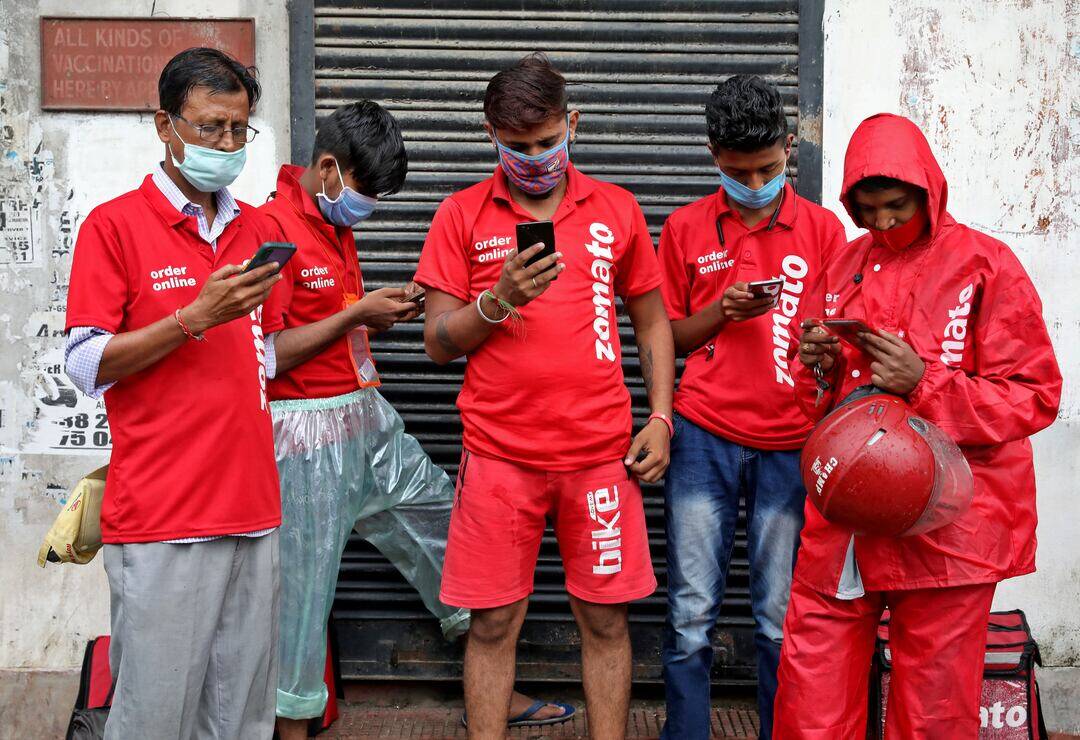
In the past, the working class was often invisible to the consuming class, hidden away in factories, farms, and other workplaces. However, with the rise of the gig economy, workers are now delivering food, driving cars, and providing other services directly to the doors of the consuming class. This has made it impossible for the consuming class to ignore the existence of the working class, and has forced them to confront the reality of systemic inequality.
Goyal’s statement also highlights the emotional response that many people have to this newfound visibility. “We aren’t just debating economics, we’re confronting guilt,” he said. This guilt is a result of the fact that the consuming class is now face-to-face with the working class, and is forced to confront the reality of their own privilege. The gig economy has made it impossible for us to ignore the fact that our convenience and affordability come at the cost of someone else’s labor and exploitation.
One of the most striking aspects of Goyal’s statement is his comment that “we tip awkwardly.” This phrase highlights the uncomfortable nature of our interactions with gig economy workers. When we order food or take a ride, we are forced to confront the reality of the worker’s existence, and to consider the fact that they are not being paid a living wage. Our response to this guilt is often to tip, but this can be an awkward and uncomfortable experience.
Tipping is a way of acknowledging the worker’s labor, but it is also a reminder of the fact that we are not paying them enough to begin with. It is a Band-Aid solution to a much deeper problem, and it does not address the systemic inequality that underlies the gig economy. By tipping, we are able to assuage our guilt and convince ourselves that we are doing something to help the worker, but in reality, we are only perpetuating the problem.
Goyal’s statement also highlights the fact that inequality is no longer an abstract concept. In the past, inequality was something that we could read about in the news or learn about in school, but it was not something that we experienced firsthand. However, with the rise of the gig economy, inequality is now a tangible reality that we confront every day. Every time we order food or take a ride, we are reminded of the fact that there are people who are struggling to make ends meet, and that our convenience and affordability come at the cost of their labor and exploitation.
In conclusion, Deepinder Goyal’s statement highlights the uncomfortable reality of the gig economy. The issue with the gig economy is not its underlying economics, but rather the fact that it has brought the prevailing class divide to light. By forcing us to confront the reality of systemic inequality, the gig economy has made it impossible for us to ignore the existence of the working class. As Goyal said, “we tip awkwardly” because inequality is no longer an abstract concept, but a tangible reality that we confront every day.
As we move forward, it is essential that we consider the implications of the gig economy and the impact that it has on workers. We must recognize that the gig economy is not just an economic system, but a social and cultural phenomenon that reflects our values and priorities. By acknowledging the uncomfortable reality of the gig economy, we can begin to work towards creating a more just and equitable society, where all workers are valued and respected.
Source: https://x.com/deepigoyal/status/2007030873711927381
About the Author