Deepinder claims issue with gig economy is it exposed class divide, says ‘We tip awkwardly’
The gig economy has been a topic of discussion for several years now, with many praising its ability to provide flexible work opportunities and others criticizing its lack of job security and benefits. However, according to billionaire Deepinder Goyal, the real issue with the gig economy is not its economic implications, but rather the way it has exposed the prevailing class divide in our society.
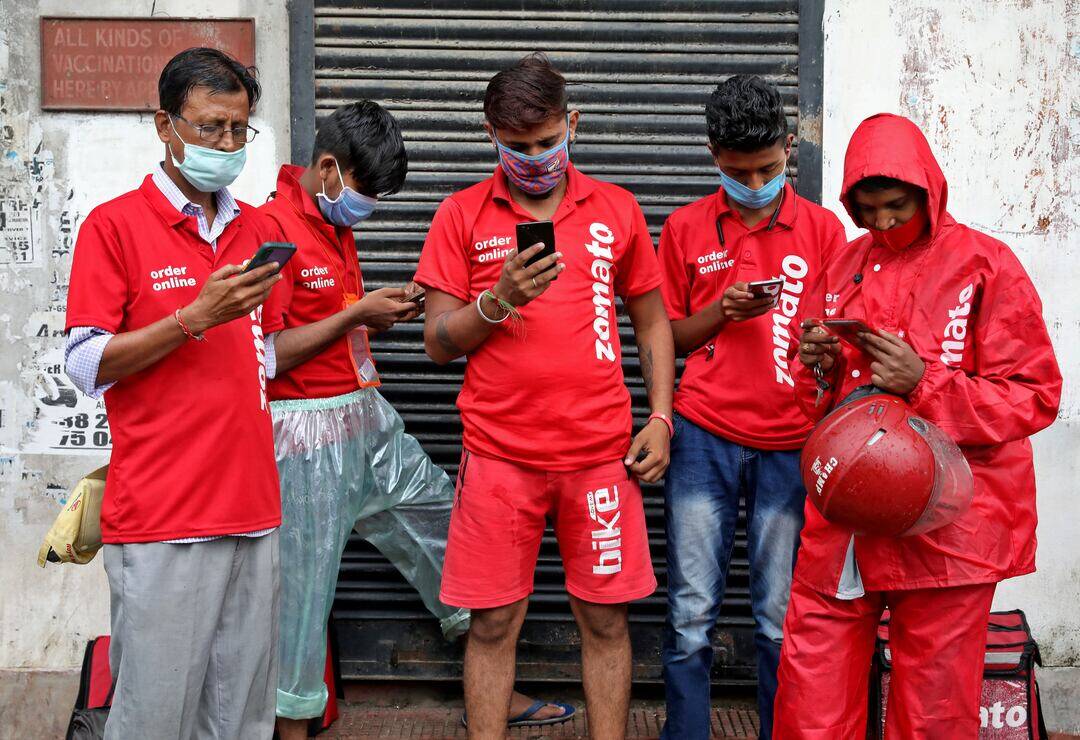
In a recent statement, Goyal claimed that the gig economy’s problem is that it has brought the existing class divide to light by ensuring that workers are seen by the consuming class. “Suddenly, the poor aren’t hidden away,” he said. “Now, every doorbell is a reminder of systemic inequality.” This statement highlights the way in which the gig economy has made the wealthy and middle class confront the reality of poverty and inequality in their daily lives.
Goyal’s statement suggests that the gig economy has made it impossible for people to ignore the class divide that has always existed in our society. With the rise of food delivery and ride-hailing services, people are now constantly interacting with workers who are struggling to make a living wage. This has forced many to confront the reality of poverty and inequality, and to consider the ways in which they contribute to these problems.
As Goyal noted, “We aren’t just debating economics, we’re confronting guilt.” This guilt arises from the fact that many people are aware that they are not paying workers a fair wage, and that they are perpetuating a system that is based on exploitation. The fact that we tip workers, often in an awkward and insincere way, is a reflection of this guilt. “We tip awkwardly,” Goyal said, “because inequality is no longer abstract.”
The issue of tipping is an interesting one, as it highlights the way in which we try to assuage our guilt about the class divide. By tipping workers, we are attempting to make up for the fact that they are not being paid a fair wage. However, this solution is ultimately inadequate, as it does not address the root causes of poverty and inequality. Instead, it allows us to feel good about ourselves, while perpetuating a system that is based on exploitation.
Goyal’s statement has sparked a lot of debate about the gig economy and its implications for society. Some have argued that the gig economy is a necessary evil, as it provides flexible work opportunities for people who might otherwise be unemployed. Others have argued that the gig economy is a reflection of a broader problem, namely the decline of the traditional employment model and the rise of precarious work.
Regardless of where one stands on the issue, it is clear that the gig economy has exposed the class divide in our society. By forcing us to confront the reality of poverty and inequality, the gig economy has made it impossible for us to ignore these problems. As Goyal noted, “every doorbell is a reminder of systemic inequality.” This is a stark reminder that the class divide is not just an economic issue, but a moral one.
In conclusion, Deepinder Goyal’s statement about the gig economy and the class divide is a thought-provoking one. By highlighting the way in which the gig economy has exposed the prevailing class divide in our society, Goyal has forced us to confront the reality of poverty and inequality. The fact that we tip workers awkwardly is a reflection of our guilt about these issues, and a reminder that we need to do more to address the root causes of poverty and inequality.
As we move forward, it is essential that we consider the implications of the gig economy for our society. We need to think about how we can create a more equitable system, one that provides fair wages and benefits for all workers. This will require a fundamental transformation of our economy and our society, but it is a necessary step towards creating a more just and equitable world.
Source: https://x.com/deepigoyal/status/2007030873711927381
About the Author