Deepinder claims issue with gig economy is it exposed class divide, says ‘We tip awkwardly’
The gig economy has been a subject of much debate in recent years, with many arguing that it has led to the exploitation of workers and perpetuated systemic inequality. Billionaire Deepinder Goyal, however, has offered a different perspective on the issue. According to him, the problem with the gig economy is not the economy itself, but rather the fact that it has brought the prevailing class divide to light.
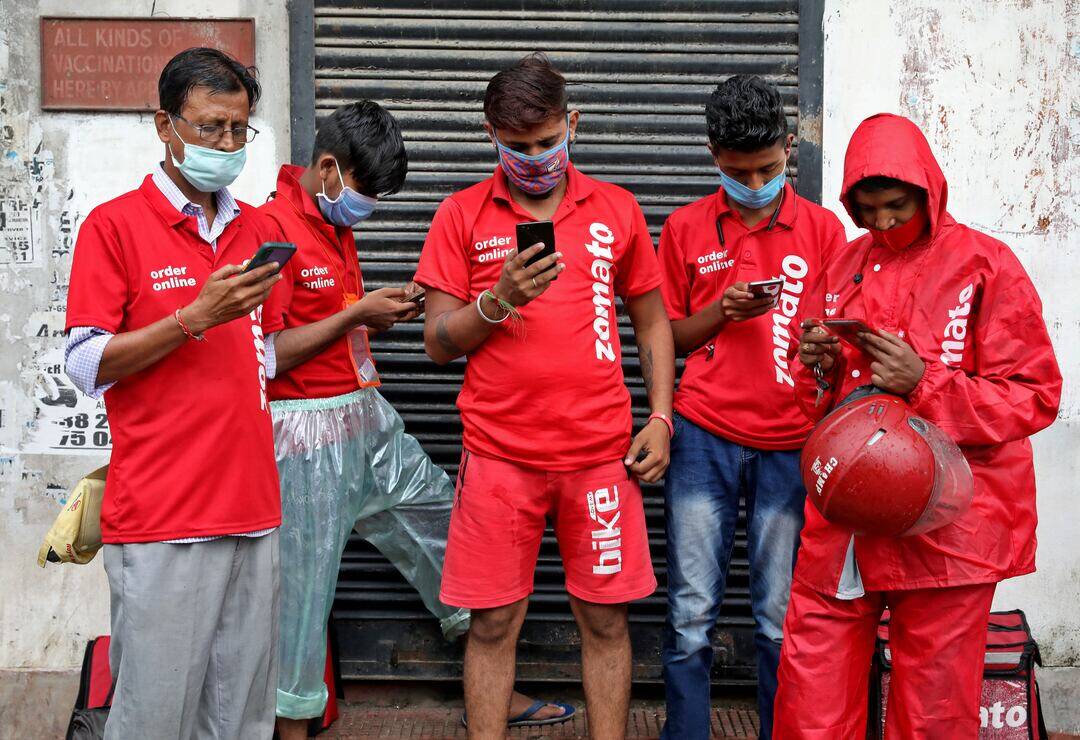
In a recent statement, Goyal claimed that the gig economy has made it impossible for the consuming class to ignore the existence of the poor. “Suddenly, the poor aren’t hidden away,” he said. “Now, every doorbell is a reminder of systemic inequality.” This statement highlights the uncomfortable truth that the gig economy has forced us to confront. By bringing workers into our homes and onto our streets, the gig economy has made it impossible for us to pretend that poverty and inequality do not exist.
Goyal’s statement also touches on the guilt that many of us feel when interacting with gig economy workers. “We aren’t just debating economics, we’re confronting guilt,” he said. This guilt is a result of the fact that we are forced to confront the reality of inequality every time we interact with a gig economy worker. Whether it’s a food delivery person, a ride-hailing driver, or a tasker, we are reminded of the fact that there are people who are struggling to make ends meet.
One of the ways that this guilt manifests is in our tipping habits. As Goyal so aptly put it, “We tip awkwardly…because inequality is no longer abstract.” When we tip a gig economy worker, we are acknowledging the fact that they are not being paid a living wage. We are also acknowledging the fact that we have the power to give them a little extra money, but that this extra money is not enough to lift them out of poverty. This awkwardness is a result of the fact that we are forced to confront the reality of inequality, and that we are not sure how to respond to it.
The gig economy has also highlighted the issue of class divide in other ways. For example, it has created a new class of workers who are forced to rely on multiple jobs just to make ends meet. This has led to a situation where workers are exhausted, stressed, and struggling to provide for their families. At the same time, the gig economy has created a new class of consumers who are able to afford the luxury of having their groceries delivered, their houses cleaned, and their tasks completed by others.
This class divide is not just economic, but also social. The gig economy has created a situation where workers are treated as invisible, where they are not seen as human beings with dignity and worth. This is reflected in the way that we talk about gig economy workers, often referring to them as “drivers” or “taskers” rather than as people. It is also reflected in the way that we treat them, often yelling at them, complaining about them, and demanding more from them.
The issue of class divide is not just limited to the gig economy, but it is a reflection of a broader societal problem. The fact that we have a system that allows for such extreme inequality is a reflection of our values as a society. It is a reflection of the fact that we prioritize profit over people, and that we are willing to exploit others in order to get what we want.
So, what can we do to address this issue? First and foremost, we need to recognize the humanity of gig economy workers. We need to see them as people, rather than just as workers. We need to treat them with dignity and respect, and we need to advocate for their rights. This includes advocating for a living wage, for benefits, and for job security.
We also need to address the broader issue of class divide. This requires a fundamental transformation of our economic system, one that prioritizes people over profit. It requires a system that provides for the basic needs of all people, regardless of their background or circumstances. It requires a system that is based on solidarity, rather than exploitation.
In conclusion, the issue with the gig economy is not the economy itself, but rather the fact that it has exposed the prevailing class divide. As Deepinder Goyal so aptly put it, “We tip awkwardly…because inequality is no longer abstract.” We need to confront this inequality head-on, and we need to work towards creating a more just and equitable society. This requires a fundamental transformation of our economic system, as well as a recognition of the humanity of all people.
News Source: https://x.com/deepigoyal/status/2007030873711927381
About the Author