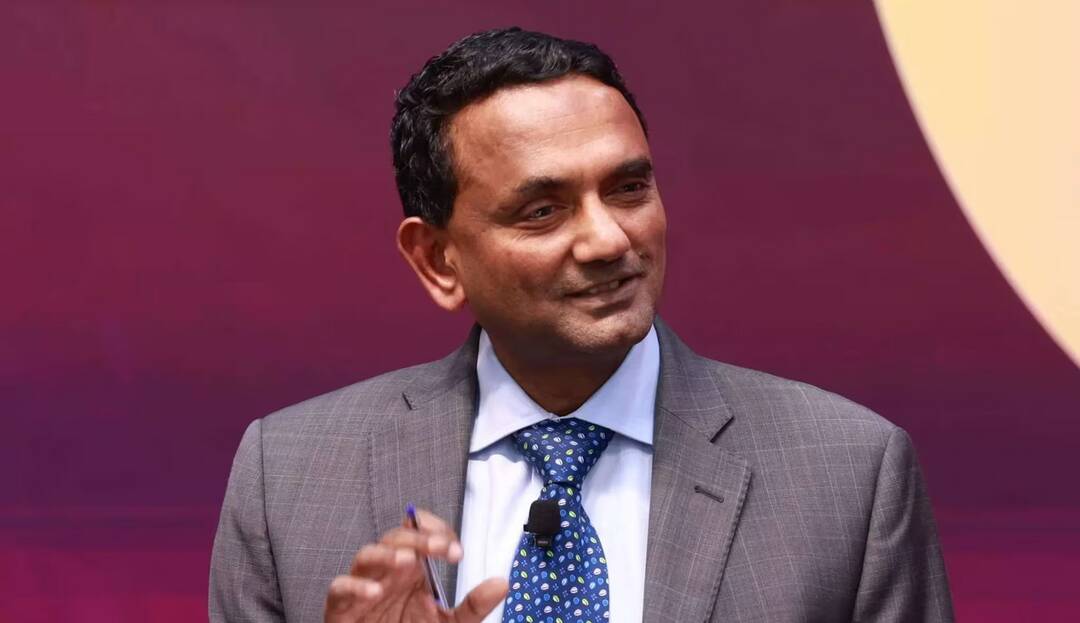
95% of AI pilots fail to deliver meaningful efficiency: TCS CEO
The world of artificial intelligence (AI) has been abuzz with excitement and promise, with many organizations investing heavily in AI pilots to streamline their operations and improve efficiency. However, according to K Krithivasan, CEO of Tata Consultancy Services (TCS), a staggering 95% of these AI pilots have failed to deliver measurable value. This sobering statistic was revealed by Krithivasan, citing research, and highlights the challenges that organizations face in harnessing the true potential of AI.
Krithivasan’s comments come at a time when the world is on the cusp of a new era of technological transformation, with AI being touted as a key driver of innovation and growth. As we look ahead to 2026, a clearer picture of AI’s impact is emerging, and it’s becoming increasingly clear that the journey to AI adoption is not without its challenges. According to Krithivasan, “We are witnessing…a new form of organisational intelligence, where combinations of humans and machines shape how choices are developed, presented and discussed.” This new paradigm requires organizations to rethink their approach to AI adoption and to prioritize a more holistic and human-centered approach to technological innovation.
So, what’s behind the failure of AI pilots to deliver meaningful efficiency? There are several reasons, including the lack of a clear strategy, inadequate data quality, and insufficient training and expertise. Many organizations rush into AI pilots without a clear understanding of what they want to achieve, and without the necessary infrastructure and resources in place. This can lead to a lack of focus and direction, which can ultimately derail the entire project.
Another major challenge is the quality of the data used to train AI models. AI algorithms are only as good as the data they are trained on, and if the data is biased, incomplete, or inaccurate, the results will be flawed. This can lead to a lack of trust in the AI system, and can ultimately undermine the entire project.
To overcome these challenges, Krithivasan highlights the importance of adopting a more nuanced and human-centered approach to AI adoption. This requires organizations to prioritize a deep understanding of their business needs and to develop a clear strategy for AI adoption. It also requires a focus on data quality and governance, as well as a commitment to ongoing training and development.
In addition to these principles, Krithivasan also emphasizes the importance of a collaborative approach to AI adoption. This requires organizations to work closely with their stakeholders, including employees, customers, and partners, to develop a shared understanding of the benefits and challenges of AI. By adopting a more collaborative and human-centered approach to AI adoption, organizations can unlock the true potential of AI and achieve meaningful efficiency gains.
As we look ahead to 2026, it’s clear that AI will play an increasingly important role in shaping the future of business and society. However, to realize the full potential of AI, organizations must adopt a more nuanced and human-centered approach to AI adoption. This requires a focus on strategy, data quality, training and development, collaboration, and ongoing evaluation and improvement.
In conclusion, the failure of 95% of AI pilots to deliver meaningful efficiency is a sobering reminder of the challenges that organizations face in harnessing the true potential of AI. However, by adopting a more holistic and human-centered approach to AI adoption, organizations can unlock the true potential of AI and achieve meaningful efficiency gains. As Krithivasan so aptly puts it, “We are witnessing…a new form of organisational intelligence, where combinations of humans and machines shape how choices are developed, presented and discussed.” By embracing this new paradigm, organizations can create a brighter future for themselves and for society as a whole.
About the Author