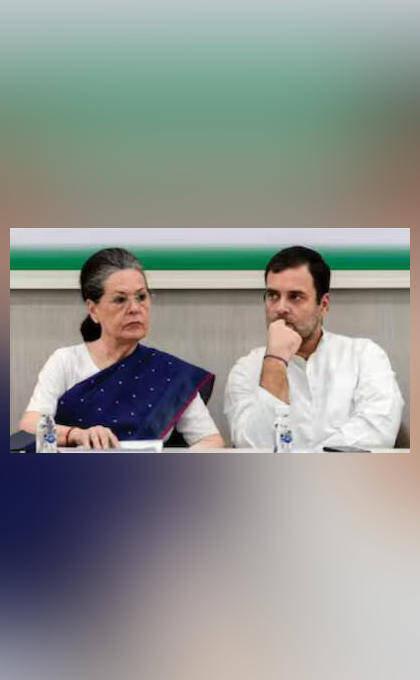
ED moves Delhi HC against trial court’s ruling in National Herald case
The Enforcement Directorate (ED) has taken a significant step in the National Herald case, approaching the Delhi High Court to challenge a trial court order that declined to take cognisance of the money laundering complaint against prominent Congress leaders, including Sonia Gandhi, Rahul Gandhi, and others. This move by the ED is a clear indication that the agency is determined to pursue the case and ensure that those accused of wrongdoing are held accountable.
At the heart of the National Herald case is the allegation that assets worth over ₹2,000 crore belonging to Associated Journals Limited (AJL) were wrongfully taken over. The ED has been investigating this matter, and its decision to move the Delhi High Court against the trial court’s ruling suggests that the agency believes it has sufficient evidence to support its claims of money laundering and other financial irregularities.
The National Herald case has been a subject of controversy for several years, with the ED and other investigative agencies probing the alleged misappropriation of assets and funds by the Gandhi family and other Congress leaders. The case involves the acquisition of AJL, which published the National Herald newspaper, by a company called Young Indian Private Limited (YIPL). It is alleged that YIPL, which had Sonia Gandhi and Rahul Gandhi as its majority shareholders, acquired AJL’s assets worth over ₹2,000 crore for a mere ₹50 lakh.
The ED’s investigation into the National Herald case has been ongoing for several years, during which time the agency has gathered significant evidence to support its allegations of money laundering and other financial irregularities. The agency’s decision to challenge the trial court’s order in the Delhi High Court is a clear indication that it is committed to pursuing the case and ensuring that justice is served.
The trial court’s order declining to take cognisance of the money laundering complaint against the Gandhi family and other Congress leaders was seen as a significant setback for the ED and other investigative agencies. However, the ED’s decision to appeal this order in the Delhi High Court has rekindled hopes that the case will be pursued to its logical conclusion.
The National Herald case has significant implications for Indian politics, as it involves some of the most prominent leaders of the Congress party. The case has also sparked a heated debate about the use of investigative agencies to target political opponents, with some accusing the government of using the ED and other agencies to harass and intimidate its critics.
However, the ED’s decision to challenge the trial court’s order in the Delhi High Court suggests that the agency is committed to pursuing the case on its merits, rather than being driven by any political considerations. The agency’s investigation into the National Herald case has been thorough and meticulous, and its decision to appeal the trial court’s order is a clear indication that it believes it has a strong case against the accused.
As the National Herald case continues to unfold, it is likely to remain a major talking point in Indian politics. The ED’s decision to challenge the trial court’s order in the Delhi High Court has ensured that the case will remain in the headlines for the foreseeable future, and it will be interesting to see how the case progresses from here.
The Delhi High Court’s decision on the ED’s appeal will be closely watched, as it will have significant implications for the Gandhi family and other Congress leaders accused in the National Herald case. If the High Court upholds the ED’s appeal, it could lead to the trial court taking cognisance of the money laundering complaint against the accused, which could have serious consequences for them.
On the other hand, if the High Court dismisses the ED’s appeal, it could be seen as a significant setback for the agency and a victory for the Gandhi family and other Congress leaders accused in the case. Either way, the outcome of the ED’s appeal in the Delhi High Court will be a major development in the National Herald case, and it will be interesting to see how the case unfolds from here.
In conclusion, the ED’s decision to challenge the trial court’s order in the Delhi High Court is a significant development in the National Herald case. The case has significant implications for Indian politics, and its outcome will be closely watched by politicians, journalists, and ordinary citizens alike. As the case continues to unfold, it is likely to remain a major talking point in Indian politics, and it will be interesting to see how it progresses from here.
About the Author