Skull reveals some ancient humans had more ‘primitive’ faces
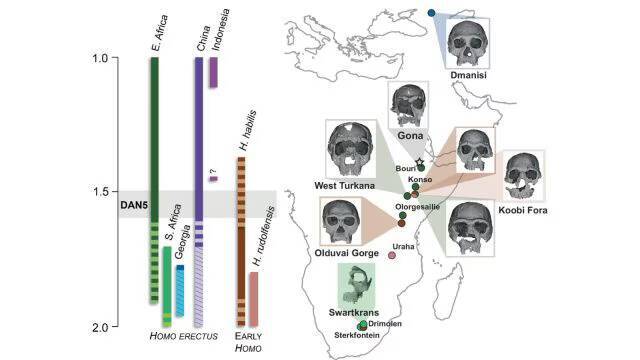
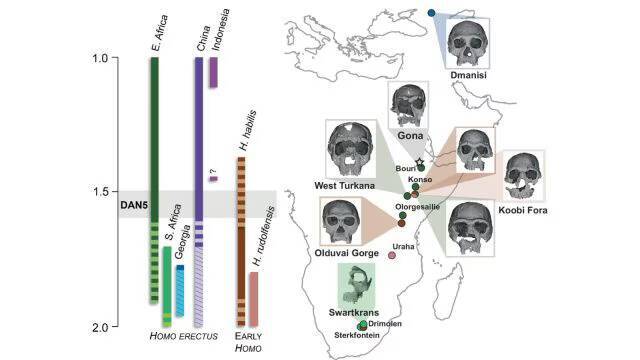
The discovery of a 1.5-1.6-million-year-old Homo erectus skull in Ethiopia has shed new light on the evolution of early humans. A recent study has revealed that this ancient skull, known as DAN5, exhibits surprisingly primitive facial traits, challenging our previous understanding of human evolution. The findings, which were made possible through the use of micro-CT modeling, have significant implications for our understanding of the development of the human face and brain.
According to Dr. Baab, one of the researchers involved in the study, “The face is more archaic than we anticipated.” The skull’s facial structure is characterized by a flat nasal bridge and large molars, features that are more commonly associated with earlier human ancestors. This discovery has sparked surprise among scientists, as it was expected that Homo erectus, which lived around 1.5-1.6 million years ago, would have had more modern facial features.
The use of micro-CT modeling allowed researchers to create a detailed reconstruction of the skull, revealing a small braincase paired with these ancestral features. This combination of primitive and modern traits has raised interesting questions about the evolution of the human face and brain. As Yousuke Kaifu, another researcher involved in the study, noted, “Seeing such a primitive face on a fossil this young was surprising.” The discovery of the DAN5 skull has provided a unique insight into the evolution of early humans, highlighting the complexity and variability of human development.
The Homo erectus species is believed to have played a significant role in human evolution, as they are thought to have been one of the first human ancestors to migrate out of Africa and colonize other parts of the world. The discovery of the DAN5 skull has provided a fascinating glimpse into the lives of these early humans, revealing that they may have had more primitive facial features than previously thought.
The study’s findings have significant implications for our understanding of human evolution, as they suggest that the development of the human face and brain may have been more complex and nuanced than previously thought. The presence of primitive facial traits in a fossil as young as 1.5-1.6 million years old challenges the idea that human evolution followed a linear progression, with earlier species exhibiting more primitive features and later species exhibiting more modern features.
Instead, the discovery of the DAN5 skull suggests that human evolution may have been more variable, with different species exhibiting a range of primitive and modern traits. This variability may have been driven by a range of factors, including environmental pressures, genetic variation, and cultural influences.
The study’s findings also highlight the importance of continued research into human evolution, as there is still much to be learned about the development of our species. The discovery of the DAN5 skull is a significant addition to our understanding of human evolution, and it is likely that future discoveries will continue to shed new light on the complexities of human development.
In conclusion, the discovery of the 1.5-1.6-million-year-old Homo erectus skull DAN5 has provided a fascinating insight into the evolution of early humans. The skull’s primitive facial traits, which include a flat nasal bridge and large molars, challenge our previous understanding of human evolution and highlight the complexity and variability of human development. As researchers continue to study the DAN5 skull and other fossils, we can expect to learn more about the lives of our ancient ancestors and the development of our species.
The study’s findings are a significant reminder of the importance of continued research into human evolution, and the many surprises that still await us in the field of paleoanthropology. As we continue to explore the history of our species, we can expect to encounter many more fascinating discoveries, each one shedding new light on the complexities of human evolution.
The discovery of the DAN5 skull is a testament to the power of scientific inquiry and the importance of continued exploration and discovery. As we look to the future, it is likely that we will continue to uncover new and exciting insights into the evolution of our species, and the many mysteries that still surround the development of the human face and brain.
For more information on this topic, you can visit the original news source at:
https://indianexpress.com/article/technology/science/ancient-ethiopian-skull-reshapes-understanding-early-homo-erectus-evolution-10426865/lite/
About the Author