Skull reveals some ancient humans had more ‘primitive’ faces
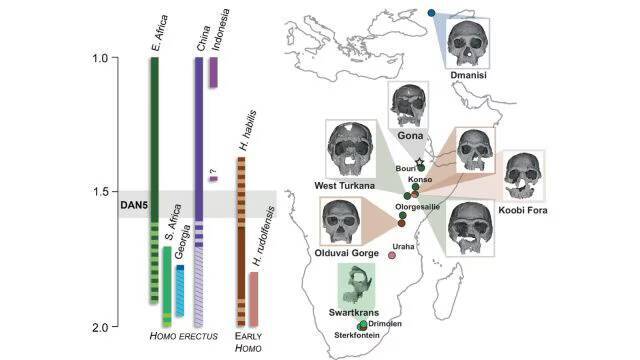
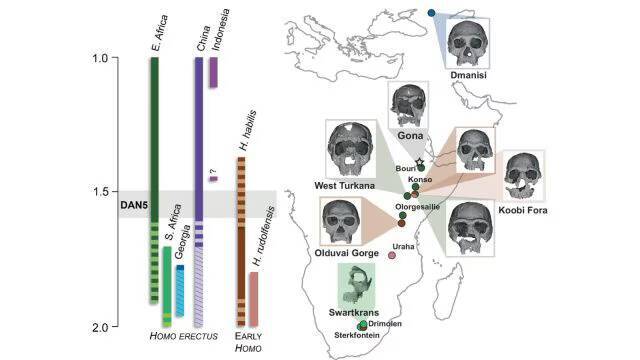
The discovery of a 1.5-1.6 million-year-old Homo erectus skull in Ethiopia has shed new light on the evolution of early humans. The skull, known as DAN5, has been reconstructed and studied using micro-CT modeling, revealing a face that is more primitive than previously thought. According to Dr. Baab, “The face is more archaic than we anticipated,” with a flat nasal bridge and large molars, characteristic of ancestral features.
The study, which was recently published, has sparked excitement among paleoanthropologists and scientists, as it challenges our current understanding of early Homo erectus evolution. Yousuke Kaifu, a researcher involved in the study, expressed surprise at the primitive features of the skull, saying, “Seeing such a primitive face on a fossil this young was surprising.” The discovery suggests that some ancient humans had more primitive faces than others, even at a relatively late stage in human evolution.
To understand the significance of this discovery, it’s essential to delve into the history of human evolution. Homo erectus is an extinct species of human that lived from approximately 1.8 million to 50,000 years ago. They were the first humans to migrate out of Africa and colonize other parts of the world, including Asia and Europe. The species is thought to have played a crucial role in the evolution of modern humans, with some researchers suggesting that they may have interbred with other human species, such as the Neanderthals and Denisovans.
The DAN5 skull was discovered in the Danakil Depression, a region in northern Ethiopia known for its rich fossil deposits. The area is home to numerous archaeological sites, including the famous Hadar formation, where the famous fossil “Lucy” was discovered in 1974. The DAN5 skull is significant not only because of its age but also because of its exceptional preservation. The fossil was found with a relatively complete face, allowing researchers to reconstruct the skull and study its features in detail.
Micro-CT modeling, a non-invasive imaging technique, was used to study the skull and reveal its internal structure. The technique involves scanning the fossil using X-rays, which allows researchers to create detailed 3D models of the skull’s internal anatomy. The results of the study showed that the DAN5 skull had a small braincase, paired with primitive facial features, including a flat nasal bridge and large molars. These characteristics are more commonly associated with earlier human species, such as Homo habilis, which lived around 2.8-1.4 million years ago.
The discovery of the DAN5 skull has significant implications for our understanding of human evolution. It suggests that some ancient humans had more primitive faces than others, even at a relatively late stage in human evolution. This challenges the traditional view of human evolution, which assumes that early Homo erectus had more modern faces, similar to those of present-day humans. The study also highlights the complexity and diversity of human evolution, with different species and populations exhibiting a range of characteristics.
The finding also raises questions about the pace and pattern of human evolution. If some ancient humans had more primitive faces, what drove the evolution of more modern features in other populations? Was it environmental pressures, genetic drift, or other factors? The discovery of the DAN5 skull highlights the need for further research into the evolution of human facial features and the factors that influenced their development.
In conclusion, the discovery of the 1.5-1.6 million-year-old Homo erectus skull DAN5 has provided new insights into the evolution of early humans. The skull’s primitive facial features, including a flat nasal bridge and large molars, challenge our current understanding of human evolution and highlight the complexity and diversity of the human fossil record. As researchers continue to study the DAN5 skull and other fossil discoveries, we can expect to learn more about the history of our species and the factors that shaped our evolution.
About the Author