Skull reveals some ancient humans had more ‘primitive’ faces
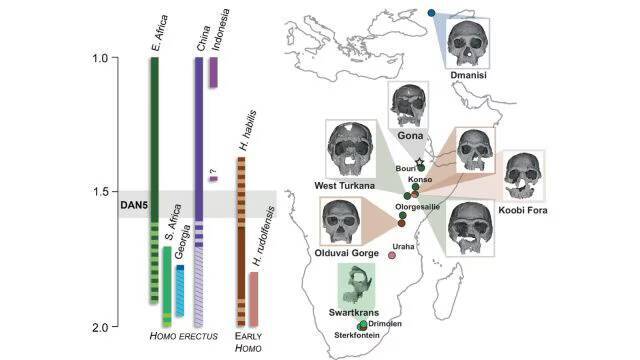
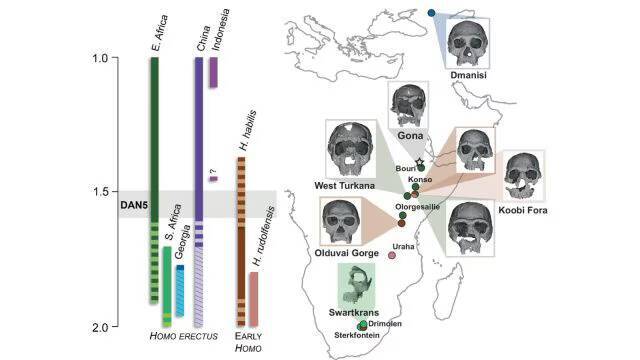
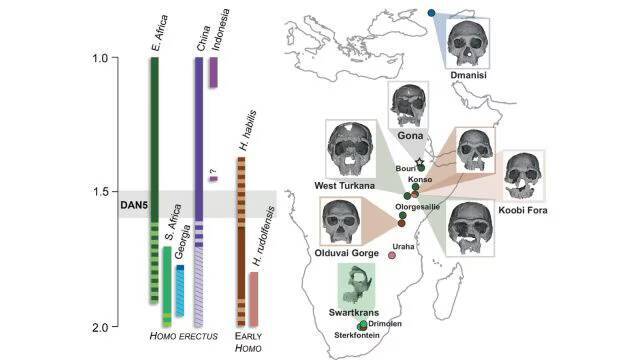
The discovery of a 1.5-1.6 million-year-old Homo erectus skull in Ethiopia has shed new light on the evolution of early humans. A recent study has revealed that this ancient skull, known as DAN5, exhibits more primitive facial traits than previously thought. The findings have surprised scientists, who had expected to see more modern features in a fossil of this age.
According to Dr. Baab, one of the researchers involved in the study, “The face is more archaic than we anticipated.” The team used micro-CT modeling to create a detailed reconstruction of the skull, which revealed a small braincase paired with ancestral features, including a flat nasal bridge and large molars. These characteristics are more commonly associated with earlier human ancestors, such as Homo habilis, rather than the more advanced Homo erectus.
The discovery of the DAN5 skull has significant implications for our understanding of human evolution. Homo erectus is thought to have evolved around 2 million years ago and is considered one of the most successful human species, having spread from Africa to Asia and Europe. However, the new findings suggest that the evolution of this species may have been more complex and nuanced than previously thought.
Yousuke Kaifu, another researcher involved in the study, expressed surprise at the primitive features of the DAN5 skull. “Seeing such a primitive face on a fossil this young was surprising,” he said. The fact that a fossil of this age still exhibits such ancestral characteristics suggests that the evolution of modern human facial features may have occurred more gradually than previously thought.
The study’s findings also highlight the importance of continued exploration and research into human evolution. The discovery of the DAN5 skull is a significant addition to the fossil record, providing valuable insights into the lives and characteristics of our ancient ancestors. As scientists continue to uncover new fossils and analyze existing ones, our understanding of human evolution is likely to become even more detailed and complex.
One of the most significant implications of the study is the challenge it poses to our current understanding of human evolution. The discovery of the DAN5 skull suggests that the evolution of Homo erectus may have been more gradual and variable than previously thought. This, in turn, raises questions about the pace and pattern of human evolution, and highlights the need for further research into this area.
The study also underscores the importance of interdisciplinary collaboration in scientific research. The team involved in the study included experts from a range of fields, including paleontology, anthropology, and geology. The use of micro-CT modeling, a technique commonly used in medical imaging, to reconstruct the DAN5 skull is a testament to the power of interdisciplinary collaboration in advancing our understanding of human evolution.
In conclusion, the discovery of the 1.5-1.6 million-year-old Homo erectus skull DAN5 has significant implications for our understanding of human evolution. The primitive facial traits exhibited by this fossil challenge our current understanding of the evolution of Homo erectus and highlight the need for further research into this area. As scientists continue to uncover new fossils and analyze existing ones, our understanding of human evolution is likely to become even more detailed and complex.
The study’s findings are a reminder that there is still much to be learned about our ancient ancestors and the processes that shaped the course of human evolution. As we continue to explore and research the fossil record, we may uncover even more surprising insights into the lives and characteristics of our ancient ancestors.
The discovery of the DAN5 skull is a significant addition to the fossil record, providing valuable insights into the lives and characteristics of our ancient ancestors. The study’s findings are a testament to the power of scientific research and collaboration, and highlight the importance of continued exploration and discovery in advancing our understanding of human evolution.
About the Author