Skull reveals some ancient humans had more ‘primitive’ faces
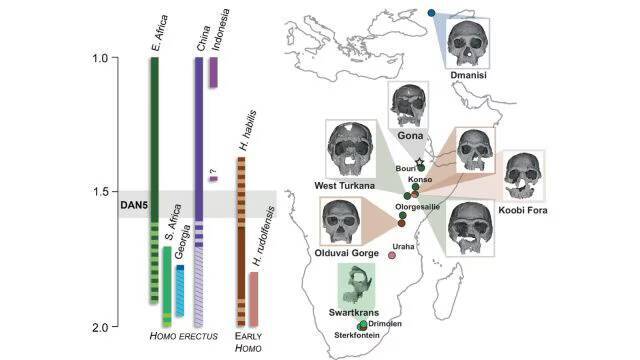
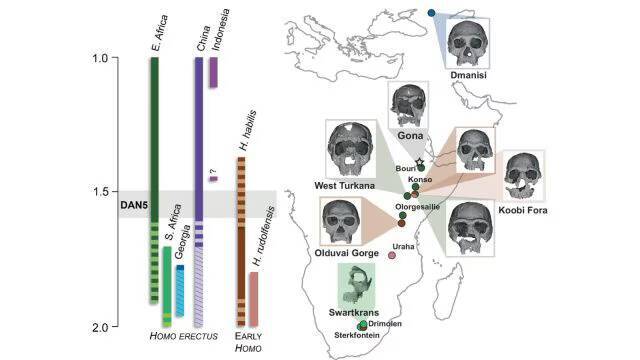
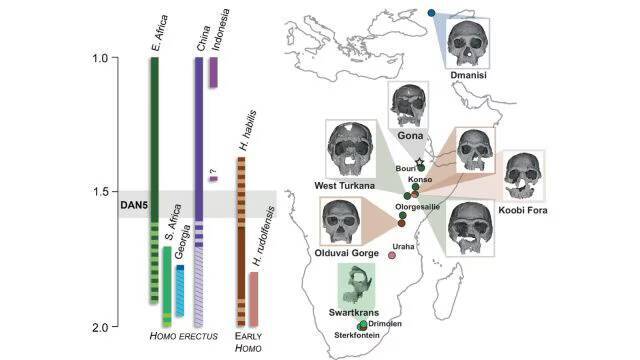
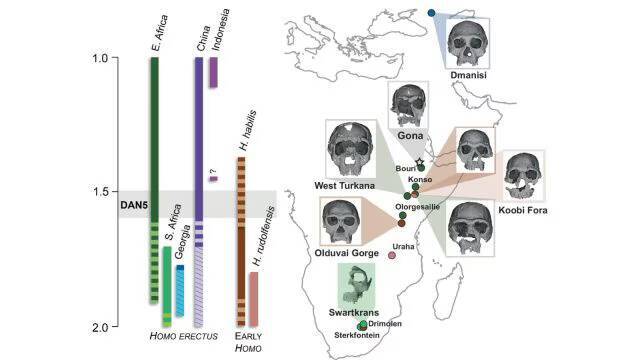
The discovery of a 1.5-1.6-million-year-old Homo erectus skull in Ethiopia has shed new light on the evolution of early humans. A recent study has revealed that this ancient skull, known as DAN5, exhibits more primitive facial traits than previously thought. The findings have surprised scientists, who had expected to see more modern features in a fossil of this age.
According to Dr. Baab, one of the researchers involved in the study, “The face is more archaic than we anticipated.” The team used micro-CT modelling to reconstruct the skull and found that it had a small braincase paired with ancestral features, including a flat nasal bridge and large molars. These characteristics are more typical of earlier human ancestors, such as Homo habilis, rather than the more advanced Homo erectus.
The discovery of the DAN5 skull has significant implications for our understanding of human evolution. Homo erectus is thought to have evolved around 2 million years ago and is considered one of the most important human ancestors. They were the first humans to migrate out of Africa and colonize other parts of the world, and their fossils have been found in many parts of Asia and Europe.
However, the DAN5 skull suggests that the evolution of Homo erectus was more complex and nuanced than previously thought. The presence of primitive facial traits in a fossil of this age is unexpected, and it challenges the traditional view of human evolution as a linear progression from primitive to modern.
As Yousuke Kaifu, another researcher involved in the study, noted, “Seeing such a primitive face on a fossil this young was surprising.” The finding suggests that there may have been more variation in the human population during this time period than previously thought, and that the evolution of modern human traits may have been more gradual and complex.
The study also highlights the importance of continued exploration and discovery in the field of paleoanthropology. The DAN5 skull is just one of many fossils that have been discovered in recent years, and it is likely that future discoveries will continue to shed new light on human evolution.
The use of micro-CT modelling in the study is also noteworthy. This technology allows researchers to create highly detailed 3D models of fossils, which can be used to analyze their structure and morphology. The technique has revolutionized the field of paleoanthropology, enabling scientists to study fossils in greater detail than ever before.
In addition to its implications for human evolution, the discovery of the DAN5 skull also raises questions about the origins of modern human traits. If Homo erectus fossils from this time period exhibit more primitive facial traits, then when and how did modern humans develop their characteristic features?
The answer to this question may lie in the study of other fossils from this time period. Researchers are currently working to analyze other Homo erectus fossils, including those found in Asia and Europe, to see if they exhibit similar primitive traits. The results of these studies will be eagerly anticipated, as they may provide further insights into the evolution of modern humans.
In conclusion, the discovery of the DAN5 skull has provided new insights into the evolution of early humans. The presence of primitive facial traits in a fossil of this age is a surprise, and it challenges our traditional view of human evolution. The study highlights the importance of continued exploration and discovery in the field of paleoanthropology, and it demonstrates the power of new technologies, such as micro-CT modelling, in analyzing fossils.
As we continue to learn more about our ancient ancestors, we are reminded of the complexity and nuance of human evolution. The story of how we came to be the species we are today is still being written, and it is likely that future discoveries will continue to surprise and fascinate us.
About the Author