ED moves Delhi HC against trial court’s ruling in National Herald case
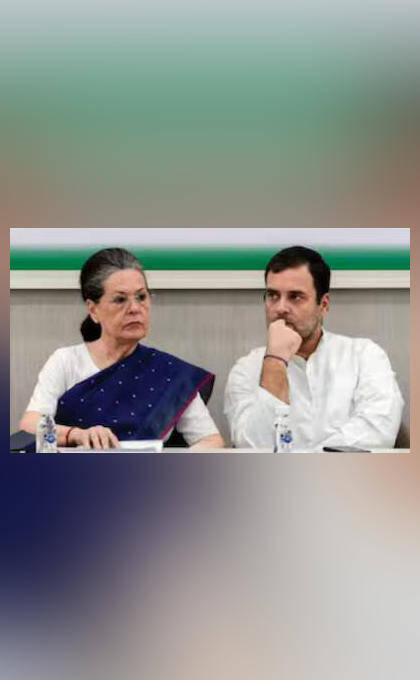
The Enforcement Directorate (ED) has moved the Delhi High Court, challenging the trial court’s order that declined to take cognisance of the money laundering complaint against Congress leaders Sonia Gandhi, Rahul Gandhi, and others in the National Herald case. The move comes after the trial court’s ruling, which was seen as a significant setback for the ED’s investigation into the alleged money laundering case.
At the heart of the case is the allegation that assets worth over ₹2,000 crore belonging to Associated Journals Limited (AJL) were wrongfully taken over. AJL is the company that published the National Herald newspaper, which was founded by Jawaharlal Nehru in 1938. The newspaper has been a symbol of the Indian National Congress and has been closely associated with the Gandhi family.
The ED’s investigation into the case began in 2014, after a complaint was filed by Subramanian Swamy, a BJP leader. Swamy alleged that the Gandhi family had illegally taken over the assets of AJL, which included prime real estate in Delhi and other parts of the country. The ED’s investigation found that the Gandhi family had set up a company called Young Indian, which had acquired a 99% stake in AJL.
The ED alleged that the acquisition of AJL by Young Indian was a sham transaction, and that the Gandhi family had used the company to launder money and acquire valuable assets. The agency also alleged that the Gandhi family had used the assets of AJL for personal gain, rather than for the purpose of publishing the National Herald newspaper.
The trial court’s ruling, which was delivered earlier this year, declined to take cognisance of the ED’s complaint against the Gandhi family and others. The court ruled that the ED had failed to provide sufficient evidence to support its allegations of money laundering. The court also ruled that the ED had not followed the proper procedure in filing its complaint.
The ED has now challenged the trial court’s ruling in the Delhi High Court, arguing that the court had erred in its decision. The agency has argued that it had provided sufficient evidence to support its allegations, and that the trial court had failed to consider the evidence properly. The ED has also argued that the trial court had not followed the proper procedure in dismissing its complaint.
The case has significant implications for the Gandhi family and the Indian National Congress. If the ED’s allegations are proven, it could lead to serious consequences for the Gandhi family, including possible criminal charges. The case has also been seen as a major embarrassment for the Congress party, which has been struggling to regain its footing in Indian politics.
The National Herald case has been a long-running saga, with the ED’s investigation stretching back several years. The case has been marked by controversy and political intrigue, with the Gandhi family and the Congress party accusing the BJP government of using the ED to target its political opponents.
The ED’s move to challenge the trial court’s ruling in the Delhi High Court is likely to prolong the case further. The High Court will now hear the ED’s appeal and decide whether to overturn the trial court’s ruling. If the High Court rules in favour of the ED, it could lead to a fresh trial in the case, which could have significant implications for the Gandhi family and the Congress party.
In conclusion, the ED’s move to challenge the trial court’s ruling in the National Herald case is a significant development in the long-running saga. The case has significant implications for the Gandhi family and the Indian National Congress, and its outcome could have a major impact on Indian politics. As the case continues to unfold, it will be closely watched by politicians, journalists, and citizens alike.
About the Author