Chinmayi Slams Troll Who Called Her Husband ‘Puppet’, Says ‘He’s Alpha’
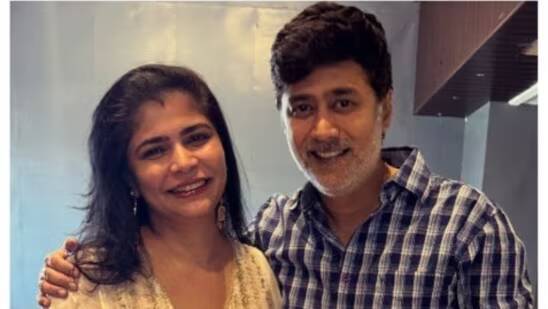
In a recent incident, singer Chinmayi Sripaada took to social media to slam a troll who had made a derogatory comment about her husband, filmmaker Rahul Ravindran. The troll had called Rahul “a puppet dancing” to Chinmayi’s “tunes”, implying that he was under her control and had no agency of his own. However, Chinmayi was quick to respond to the troll, setting the record straight and shutting down the hate.
The incident began when Chinmayi posted a message on X (formerly Twitter) praising her husband Rahul. The post was a heartfelt tribute to Rahul, and it seemed to have been well-received by her followers. However, not everyone was pleased with the post, and one troll in particular took it upon himself to comment on the post with a vicious remark. The troll wrote that Rahul was “a puppet dancing” to Chinmayi’s “tunes”, implying that he was somehow lesser than her and was only doing her bidding.
Chinmayi was quick to respond to the troll, and her response was epic. She wrote, “He’s an alpha and not an incel prick, who uses his brains, reads and doesn’t dance to anyone’s tunes…don’t screw around.” With this one response, Chinmayi not only shut down the troll but also sent a powerful message to all those who think that they can get away with making derogatory comments about others.
It’s worth noting that Chinmayi’s response was not just about defending her husband, but also about standing up for herself and for women everywhere. The troll’s comment was not just a personal attack on Rahul, but also a reflection of the patriarchal attitudes that still prevail in our society. By implying that Rahul was under Chinmayi’s control, the troll was perpetuating the stereotype that women are somehow manipulative and controlling, and that men are weak and passive.
Chinmayi’s response, on the other hand, was a powerful rejection of this stereotype. By calling Rahul an “alpha”, she was asserting his strength and agency, and making it clear that he was a capable and independent individual who didn’t need to be controlled by anyone. At the same time, she was also sending a message to all those who think that they can get away with making misogynistic comments, that such behavior would not be tolerated.
It’s also worth noting that Chinmayi’s response was not just about defending her husband, but also about promoting a positive and healthy image of relationships. By praising Rahul and asserting his independence, she was showing that a healthy relationship is one in which both partners are equal and respect each other’s autonomy. This is a powerful message, especially in a society where relationships are often portrayed as being about control and possession rather than mutual respect and trust.
In conclusion, Chinmayi’s response to the troll was a powerful statement about the importance of standing up for oneself and for others. It was a rejection of patriarchal attitudes and a celebration of healthy and equal relationships. As a public figure, Chinmayi has a responsibility to use her platform to promote positive messages and to challenge hate and misogyny wherever she sees it. And with this response, she has shown that she is more than up to the task.
The incident has also sparked a wider conversation about the importance of standing up to trolls and promoting a culture of respect and empathy online. With the rise of social media, it’s become easier than ever for people to hide behind anonymous accounts and spew hate and venom at others. But as Chinmayi’s response shows, this behavior will not be tolerated, and those who engage in it will be called out and held accountable.
In the end, Chinmayi’s response to the troll was a victory for all those who believe in the importance of promoting positive and respectful dialogue online. It was a reminder that we all have the power to stand up for ourselves and for others, and to create a more just and equitable society. And as we move forward in this digital age, it’s more important than ever that we use our voices to promote love, respect, and empathy, rather than hate and intolerance.
About the Author