Skull reveals some ancient humans had more ‘primitive’ faces
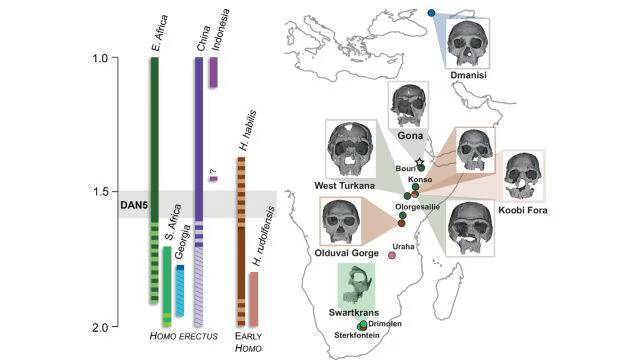
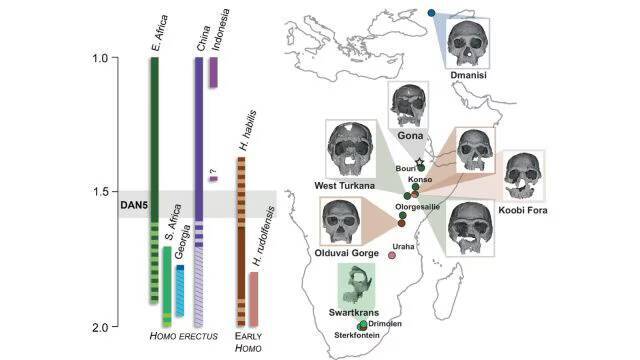
The discovery of a 1.5-1.6 million-year-old Homo erectus skull in Ethiopia has shed new light on the evolution of early humans. A recent study has revealed that the skull, known as DAN5, exhibits more primitive facial traits than previously thought. The findings, which were made possible through the use of micro-CT modeling, have significant implications for our understanding of human evolution.
The DAN5 skull was found to have a small braincase paired with ancestral features, including a flat nasal bridge and large molars. According to Dr. Baab, one of the researchers involved in the study, “The face is more archaic than we anticipated.” This is a surprising discovery, as previous findings had suggested that Homo erectus had more modern facial features. The revelation that some ancient humans had more primitive faces challenges our current understanding of human evolution and raises new questions about the development of our species.
The use of micro-CT modeling was instrumental in revealing the primitive facial traits of the DAN5 skull. This technology allows researchers to create highly detailed 3D models of fossils, which can be used to study the internal structure of the skull. In the case of the DAN5 skull, micro-CT modeling revealed a braincase that was significantly smaller than that of modern humans. This is consistent with the idea that early humans had smaller brain sizes than their modern counterparts.
The discovery of the DAN5 skull also highlights the importance of continued exploration and research into human evolution. As Yousuke Kaifu, another researcher involved in the study, noted, “Seeing such a primitive face on a fossil this young was surprising.” This surprise underscores the fact that there is still much to be learned about our evolutionary history, and that new discoveries can challenge our current understanding of human development.
The study of the DAN5 skull also provides valuable insights into the lives of early humans. The presence of a flat nasal bridge and large molars suggests that these individuals may have had a diet that was rich in tough, fibrous plants. This is consistent with the idea that early humans were adapted to a variety of environments, and that their diets varied depending on the resources available to them.
The implications of the DAN5 skull discovery are far-reaching, and challenge our current understanding of human evolution. The fact that some ancient humans had more primitive faces suggests that the evolution of modern human facial features was a more complex and nuanced process than previously thought. This discovery also highlights the importance of continued research into human evolution, and the need for new technologies and methods to study fossils.
In conclusion, the discovery of the 1.5-1.6 million-year-old Homo erectus skull DAN5 has significant implications for our understanding of human evolution. The revelation that some ancient humans had more primitive faces challenges our current understanding of human development, and highlights the need for continued research into this field. As we continue to explore and study the history of our species, we may uncover even more surprises that challenge our assumptions and shed new light on the evolution of humanity.
The study of human evolution is an ongoing process, and one that requires the use of new technologies and methods to study fossils. The use of micro-CT modeling, for example, has allowed researchers to study the internal structure of fossils in unprecedented detail. As we continue to develop new technologies and methods, we may uncover even more insights into the history of our species.
Ultimately, the discovery of the DAN5 skull is a reminder that there is still much to be learned about human evolution. The study of this fossil, and others like it, will continue to shed new light on the development of our species, and challenge our current understanding of human history. As we continue to explore and research the history of our species, we may uncover even more surprises that challenge our assumptions and shed new light on the evolution of humanity.
About the Author