RBI spent ₹2.7 lakh cr to prevent rupee from falling, it still fell to record lows: Report
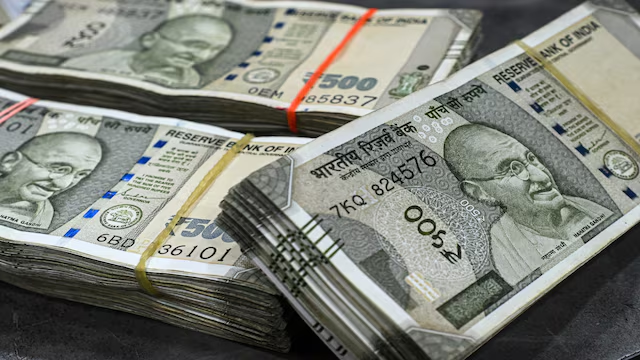
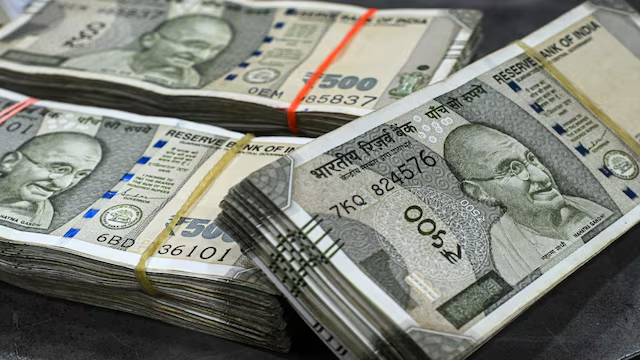
The Indian rupee has been on a downward spiral for the past few months, touching record lows against the US dollar. In an effort to soften the fall, the Reserve Bank of India (RBI) has been intervening in the foreign exchange market, buying dollars to prevent a sharp depreciation of the currency. According to a report by SBI Research, the RBI spent around ₹2.7 lakh crore ($30 billion) to help stabilize the rupee over the past few months. However, despite the central bank’s best efforts, the rupee continued to tumble to new record lows.
The RBI’s intervention in the foreign exchange market is aimed at preventing a sharp depreciation of the rupee, which could have a negative impact on the country’s economy. A weaker rupee makes imports more expensive, which could lead to higher inflation and affect the country’s trade deficit. To prevent this, the RBI has been buying dollars from the market, which helps to reduce the supply of rupees and prevent a sharp fall in the currency’s value.
According to SBI Research, the RBI has intervened around $18 billion in the forex market during June-September, and an estimated $10 billion in October 2025. This brings the total intervention to around $30 billion, or approximately ₹2.7 lakh crore. The report notes that the RBI’s intervention has helped to slow down the fall of the rupee, but it has not been able to prevent the currency from touching new record lows.
The rupee’s fall has been attributed to a number of factors, including a strong US dollar, higher crude oil prices, and a widening trade deficit. The US dollar has been strengthening against most major currencies, including the rupee, due to a combination of factors such as higher interest rates in the US and a strong economy. Higher crude oil prices have also put pressure on the rupee, as India is a major importer of oil and a weaker currency makes imports more expensive.
The RBI’s intervention in the foreign exchange market is not without its risks. The central bank’s dollar purchases can lead to a reduction in its foreign exchange reserves, which could affect its ability to intervene in the market in the future. Additionally, the RBI’s intervention can also lead to a decrease in the money supply in the economy, which could have a negative impact on economic growth.
Despite the risks, the RBI’s intervention in the foreign exchange market is seen as necessary to prevent a sharp depreciation of the rupee. The central bank has been using a combination of tools, including dollar purchases and sales, to manage the currency’s value. The RBI has also been using other measures, such as increasing interest rates and imposing capital controls, to reduce the pressure on the rupee.
The rupee’s fall has significant implications for the Indian economy. A weaker rupee makes imports more expensive, which could lead to higher inflation and affect the country’s trade deficit. It also makes it more expensive for Indian companies to borrow from abroad, which could affect their ability to invest and expand their businesses. On the other hand, a weaker rupee can make Indian exports more competitive, which could lead to an increase in exports and help to boost economic growth.
In conclusion, the RBI’s intervention in the foreign exchange market has been aimed at preventing a sharp depreciation of the rupee. While the central bank’s efforts have helped to slow down the fall of the currency, they have not been able to prevent the rupee from touching new record lows. The rupee’s fall has significant implications for the Indian economy, and the RBI will need to continue to use a combination of tools to manage the currency’s value and prevent a sharp depreciation.
The RBI’s intervention in the foreign exchange market is a complex issue, and there are no easy solutions. The central bank will need to balance its efforts to prevent a sharp depreciation of the rupee with the need to manage the economy and prevent inflation. It will also need to work with the government to implement policies that can help to boost economic growth and reduce the country’s trade deficit.
As the rupee continues to fall, it will be important to monitor the RBI’s intervention in the foreign exchange market and its impact on the economy. The central bank’s efforts to stabilize the currency will be crucial in preventing a sharp depreciation of the rupee and maintaining economic stability.
About the Author