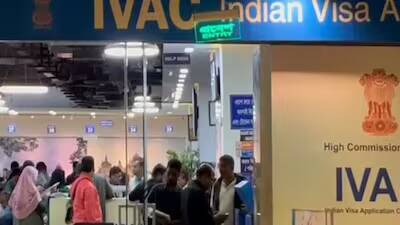
India Resumes Ops at Dhaka Visa Centre After Closure Amid Protests
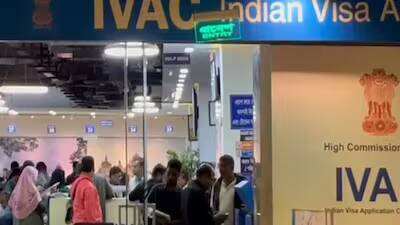
The Indian visa centre in Dhaka, the capital city of Bangladesh, has resumed its operations after a temporary closure due to security concerns. The centre was shut down on Wednesday as a precautionary measure after anti-India protesters marched towards the Indian High Commission in Dhaka. The protests were sparked by a radical remark made by a Bangladeshi leader, Hasnat Abdullah, against India. The Indian government took swift action and summoned the Bangladesh High Commissioner on Wednesday to express its strong protest against the remark.
The temporary closure of the visa centre was a precautionary measure to ensure the safety of the staff and applicants. However, with the situation returning to normal, the centre has resumed its operations, and visa services are now available to the public. The Indian government has assured that all necessary measures are being taken to ensure the safety and security of its citizens and diplomatic missions in Bangladesh.
The protests in Dhaka were sparked by a remark made by Hasnat Abdullah, a leader of the Bangladesh Nationalist Party (BNP), against India. The remark was seen as highly provocative and inflammatory, and it drew strong reactions from the Indian government. The Ministry of External Affairs (MEA) summoned the Bangladesh High Commissioner on Wednesday to express its strong protest against the remark. The MEA also issued a statement condemning the remark and calling for restraint and responsible behavior from all parties.
The incident has highlighted the complexities of the India-Bangladesh relationship. While the two countries have a long history of cooperation and friendship, there are also underlying tensions and sensitivities that can sometimes boil over into protests and controversies. The Indian government has been working to strengthen its ties with Bangladesh, and the two countries have been cooperating on a range of issues, including trade, security, and connectivity.
However, there are also some challenges and concerns that need to be addressed. The BNP, which is the main opposition party in Bangladesh, has been critical of the government’s handling of relations with India. The party has accused the government of being too soft on India and of compromising Bangladesh’s sovereignty and interests. These sentiments have been echoed by some other opposition parties and groups, which have been critical of India’s role in the region.
The Indian government has been working to address these concerns and to reassure Bangladesh of its commitment to the relationship. The government has been engaging with the Bangladesh government and other stakeholders to strengthen cooperation and to build trust. The Indian High Commissioner in Dhaka has been meeting with Bangladeshi leaders and officials to discuss a range of issues, including trade, security, and connectivity.
The resumption of operations at the Indian visa centre in Dhaka is a positive development, and it reflects the Indian government’s commitment to the relationship. The centre provides an important service to Bangladeshi citizens who want to travel to India for business, tourism, or other purposes. The centre has been processing a large number of visa applications, and it has been playing an important role in promoting people-to-people contacts between the two countries.
In conclusion, the temporary closure of the Indian visa centre in Dhaka was a precautionary measure to ensure the safety and security of the staff and applicants. The centre has now resumed its operations, and visa services are available to the public. The incident has highlighted the complexities of the India-Bangladesh relationship, but it has also shown the resilience and strength of the relationship. The Indian government is committed to strengthening its ties with Bangladesh, and it is working to address the concerns and challenges that arise from time to time.
The Indian government’s decision to summon the Bangladesh High Commissioner to express its strong protest against the radical remark made by Hasnat Abdullah reflects its commitment to protecting its interests and sovereignty. The government will continue to work with the Bangladesh government and other stakeholders to promote cooperation and understanding between the two countries.
As the relationship between India and Bangladesh continues to evolve, it is likely that there will be more challenges and controversies in the future. However, with the strong foundation of cooperation and friendship that exists between the two countries, it is likely that these challenges can be overcome. The Indian government is committed to working with the Bangladesh government and other stakeholders to build a stronger and more sustainable relationship that benefits both countries.
About the Author