RBI spent ₹2.7 lakh cr to prevent rupee from falling, it still fell to record lows: Report
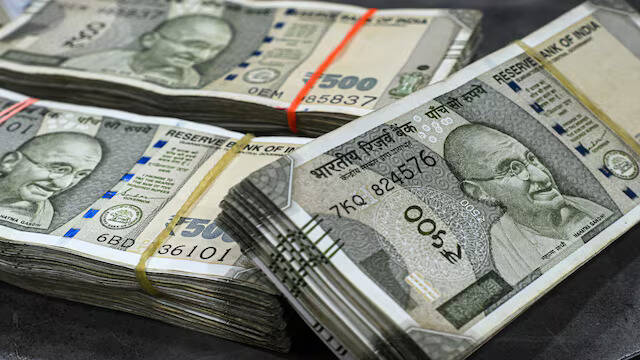
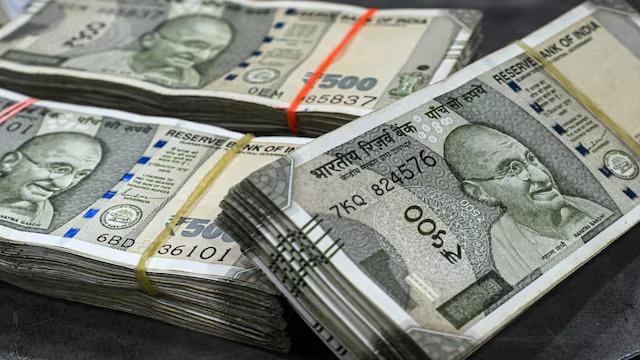
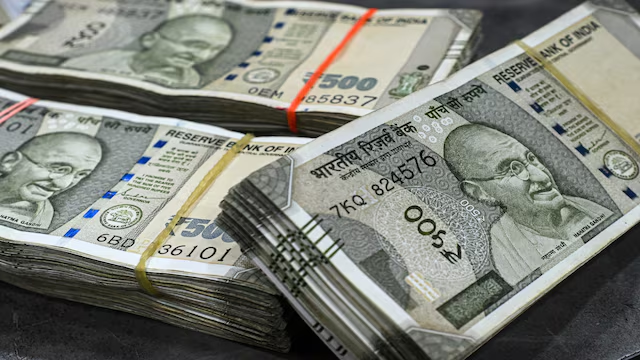
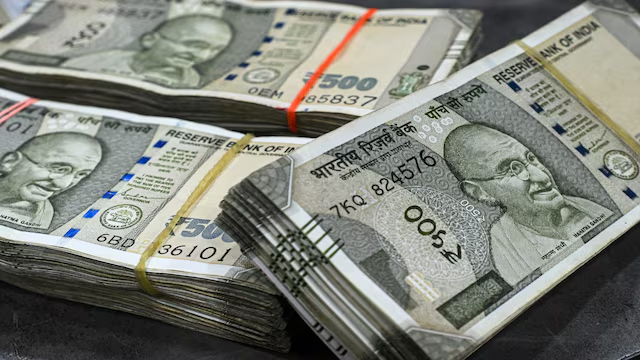
The Indian rupee has been on a downward spiral in recent months, reaching record lows against the US dollar. In an effort to mitigate the fall, the Reserve Bank of India (RBI) has spent a substantial amount of money to intervene in the foreign exchange market. According to a report by SBI Research, the RBI has spent around ₹2.7 lakh crore ($30 billion) to help soften the fall of the Indian rupee over the past few months.
The report highlights the significant intervention by the RBI in the forex market, with an estimated $18 billion spent during the period of June-September. Additionally, SBI Research estimates that the RBI has spent another $10 billion in October 2025, bringing the total expenditure to $30 billion. This massive intervention is a clear indication of the central bank’s efforts to stabilize the rupee and prevent it from falling further.
Despite the RBI’s best efforts, the rupee has continued to tumble to new record lows. This raises questions about the effectiveness of the central bank’s intervention and the underlying factors driving the rupee’s decline. The rupee’s fall has significant implications for the Indian economy, including higher import costs, increased inflation, and reduced competitiveness for Indian exports.
The RBI’s intervention in the forex market is aimed at reducing the supply of rupees and increasing the demand for dollars. By selling dollars and buying rupees, the central bank hopes to reduce the downward pressure on the rupee and stabilize its value. However, the report suggests that the RBI’s efforts have been insufficient to halt the rupee’s decline, highlighting the complexity of the factors driving the currency’s value.
One of the primary factors contributing to the rupee’s fall is the strong US dollar. The US dollar has been strengthening against most major currencies, driven by the US Federal Reserve’s monetary policy decisions. The Fed’s decision to raise interest rates has made the US dollar more attractive to investors, leading to a surge in demand for the currency. This has put pressure on emerging market currencies, including the Indian rupee, which has been struggling to keep up with the strong US dollar.
Another factor contributing to the rupee’s decline is the widening trade deficit. India’s trade deficit has been increasing, driven by higher imports and lower exports. This has led to a surge in demand for dollars, putting downward pressure on the rupee. The RBI’s intervention has helped to reduce the trade deficit to some extent, but the underlying factors driving the deficit remain a concern.
The rupee’s fall also has significant implications for Indian businesses, particularly those that rely on imports. Higher import costs can lead to increased production costs, reduced profitability, and lower competitiveness. This can have a ripple effect on the entire economy, leading to higher inflation, reduced economic growth, and lower employment.
In conclusion, the RBI’s efforts to stabilize the rupee have been significant, with an estimated ₹2.7 lakh crore spent to intervene in the forex market. However, despite these efforts, the rupee has continued to fall to record lows. The underlying factors driving the rupee’s decline, including the strong US dollar and widening trade deficit, remain a concern. The RBI will need to continue to monitor the situation closely and take appropriate measures to stabilize the rupee and support the Indian economy.
As the rupee continues to fluctuate, it is essential for businesses and individuals to stay informed about the latest developments and their implications. The RBI’s intervention is just one aspect of the complex factors driving the rupee’s value, and understanding these factors is crucial for making informed decisions.
The report by SBI Research highlights the significant challenges facing the Indian economy, particularly with regards to the rupee’s value. As the economy continues to evolve, it is essential to stay up-to-date with the latest news and developments. For more information on the Indian rupee and its implications for the economy, readers can visit the following news source:
About the Author