India Resumes Ops at Dhaka Visa Centre after Closure amid Protests
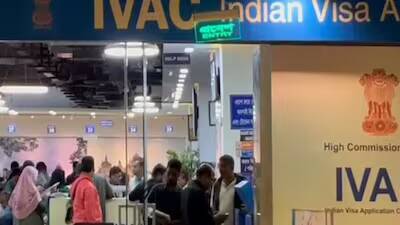
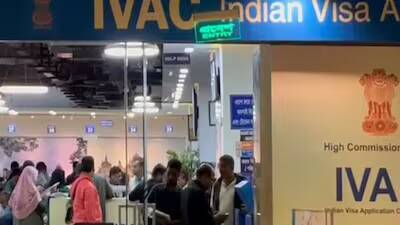
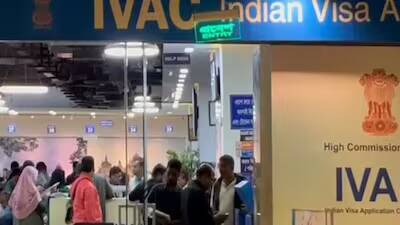
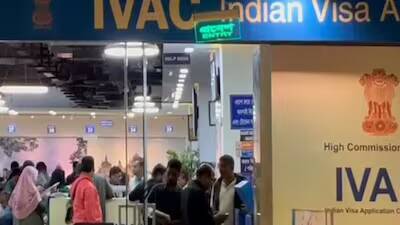
In a significant development, the Indian visa centre in Dhaka, Bangladesh, resumed its operations on Thursday, a day after it was temporarily shut down due to security concerns. The closure of the visa centre came after a group of anti-India protesters marched towards the Indian High Commission in Dhaka, sparking concerns about the safety of the centre and its staff.
The protests were reportedly sparked by a radical remark made by a Bangladeshi leader, Hasnat Abdullah, against India. The remark was widely condemned by the Indian government, which summoned the Bangladesh High Commissioner on Wednesday to express its strong protest. The Ministry of External Affairs (MEA) took a strong exception to the remark, terming it as “unacceptable” and “unwarranted”.
The temporary closure of the visa centre was a precautionary measure taken by the Indian authorities to ensure the safety of the centre and its staff. The centre, which provides visa services to Bangladeshi citizens, is an important facility that caters to a large number of people who travel to India for various purposes, including tourism, business, and education.
The resumption of operations at the visa centre is a significant development, as it will help to restore normalcy in the visa application process and facilitate the travel plans of Bangladeshi citizens who wish to visit India. The Indian government has taken a number of steps to ensure the safety and security of the visa centre, including increasing the security presence and taking measures to prevent any further protests or disruptions.
The incident highlights the complex and sensitive nature of India-Bangladesh relations, which have been subject to various challenges and controversies over the years. Despite the strong historical and cultural ties between the two countries, there have been periods of tension and strain, particularly with regards to issues such as border disputes, trade, and security.
The radical remark made by the Bangladeshi leader, Hasnat Abdullah, is a case in point. Such remarks can have a negative impact on the bilateral relationship and create an atmosphere of mistrust and hostility. The Indian government’s strong protest against the remark is a clear indication of its commitment to maintaining good relations with Bangladesh and its expectation that the Bangladeshi government will take steps to prevent such incidents in the future.
The resumption of operations at the visa centre is a positive development, but it is also important to address the underlying issues that led to the protests and the closure of the centre. The Indian government needs to engage with the Bangladeshi government and other stakeholders to build trust and confidence and to prevent such incidents from happening in the future.
In recent years, India and Bangladesh have made significant progress in strengthening their bilateral relationship, particularly in areas such as trade, connectivity, and security. The two countries have signed a number of agreements and MoUs, including a landmark agreement on the sharing of water resources and a deal to construct a new railway line between the two countries.
However, despite these positive developments, there are still a number of challenges that need to be addressed. The issue of border disputes, for example, remains a contentious one, with both countries having differing claims over certain territories. The issue of trade is also a sensitive one, with Bangladesh seeking greater access to the Indian market and India seeking to increase its exports to Bangladesh.
The incident at the visa centre in Dhaka is a reminder of the complexities and challenges of India-Bangladesh relations. While the resumption of operations at the centre is a positive development, it is also important to address the underlying issues that led to the protests and the closure of the centre. The Indian government needs to engage with the Bangladeshi government and other stakeholders to build trust and confidence and to prevent such incidents from happening in the future.
In conclusion, the resumption of operations at the Indian visa centre in Dhaka is a significant development that will help to restore normalcy in the visa application process and facilitate the travel plans of Bangladeshi citizens who wish to visit India. However, the incident also highlights the complex and sensitive nature of India-Bangladesh relations, which require careful handling and management to prevent any further disruptions or controversies.
About the Author