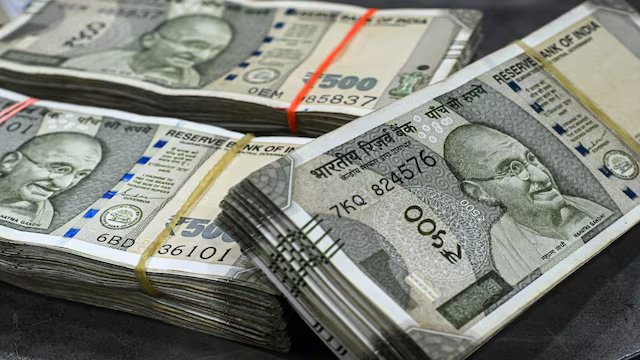
RBI spent ₹2.7 lakh cr to prevent rupee from falling, it still fell to record lows: Report
The Indian rupee has been experiencing a tumultuous few months, with its value plummeting to record lows against the US dollar. In an effort to mitigate the decline, the Reserve Bank of India (RBI) has been actively intervening in the foreign exchange market. According to a report by SBI Research, the RBI spent around ₹2.7 lakh crore ($30 billion) to help soften the fall of the Indian rupee over the past few months. Despite this massive intervention, the rupee continued to tumble, reaching new record lows.
The RBI’s intervention in the forex market is aimed at stabilizing the currency and preventing its value from declining further. The central bank achieves this by buying or selling US dollars in the market, depending on the situation. When the rupee is weakening, the RBI sells dollars to increase their supply in the market, which helps to prop up the rupee’s value. Conversely, when the rupee is strengthening, the RBI buys dollars to reduce their supply and prevent the rupee from appreciating too much.
According to SBI Research, the RBI has intervened significantly in the forex market during the June-September period, with estimated sales of around $18 billion. Additionally, the research firm estimates that the RBI may have sold another $10 billion in October 2025, bringing the total intervention to $30 billion. This massive intervention is a clear indication of the RBI’s efforts to support the rupee and prevent its value from declining further.
However, despite the RBI’s best efforts, the rupee has continued to decline, reaching new record lows. This raises questions about the effectiveness of the RBI’s intervention strategy and the underlying factors driving the rupee’s decline. One possible explanation is that the RBI’s intervention may be insufficient to counter the strong demand for US dollars in the market. With the US Federal Reserve raising interest rates to combat inflation, investors have been flocking to the US dollar, which is considered a safe-haven asset.
Another factor contributing to the rupee’s decline is the country’s large trade deficit. India’s imports have been increasing rapidly, driven by strong domestic demand and high global commodity prices. This has resulted in a significant outflow of foreign exchange, putting downward pressure on the rupee. The RBI’s intervention may be able to temporarily stabilize the currency, but it cannot address the underlying structural issues driving the trade deficit.
The decline of the rupee has significant implications for the Indian economy. A weak currency makes imports more expensive, which can fuel inflation and hurt domestic industries that rely on imported inputs. It can also make Indian exports more competitive in the global market, but this benefit may be offset by the higher cost of imports. Furthermore, a weak currency can deter foreign investors, who may be hesitant to invest in a country with a rapidly depreciating currency.
In conclusion, the RBI’s intervention in the forex market has been significant, with estimated sales of around $30 billion over the past few months. However, despite this intervention, the rupee has continued to decline, reaching new record lows. This highlights the complexity of the factors driving the rupee’s value and the limitations of the RBI’s intervention strategy. To stabilize the currency and address the underlying structural issues, the government and the RBI need to work together to implement policies that promote export growth, reduce the trade deficit, and attract foreign investment.
The RBI’s efforts to stabilize the rupee are likely to continue, and it will be interesting to see how the situation unfolds in the coming months. As the Indian economy navigates these challenging times, it is essential to monitor the developments in the forex market and the RBI’s intervention strategy. One thing is certain, however – the RBI’s role in maintaining financial stability and promoting economic growth will remain crucial in the months and years to come.
News Source: https://www.cnbctv18.com/market/currency/india-rupee-how-many-us-dollars-did-rbi-buy-ws-l-19794895.htm/amp
About the Author