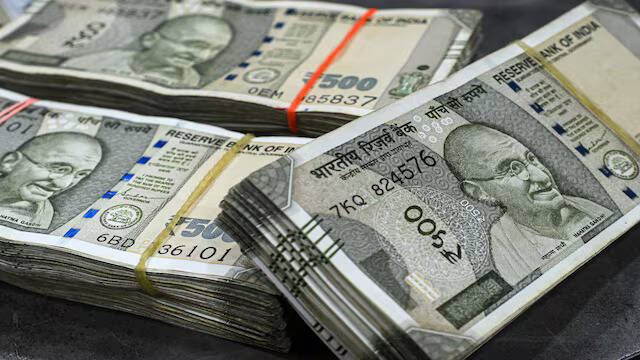
RBI spent ₹2.7 lakh cr to prevent rupee from falling, it still fell to record lows: Report
The Indian rupee has been on a downward spiral for quite some time now, and the Reserve Bank of India (RBI) has been trying to stem the fall by intervening in the foreign exchange market. According to a report by SBI Research, the RBI spent around ₹2.7 lakh crore ($30 billion) to help soften the fall of the Indian rupee over the past few months. Despite this massive intervention, the rupee continued to tumble to new record lows, leaving many to wonder about the effectiveness of the central bank’s strategy.
The RBI’s intervention in the foreign exchange market is aimed at preventing a sharp depreciation of the rupee, which can have far-reaching consequences for the Indian economy. A weak rupee can make imports more expensive, leading to higher inflation and reducing the competitiveness of Indian exports. To prevent this, the RBI sells dollars from its foreign exchange reserves to buy rupees, thereby reducing the supply of rupees in the market and propping up its value.
According to SBI Research, the RBI has intervened around $18 billion in the forex market during June-September, and another $10 billion in October 2025. This amounts to a total of $28 billion, or around ₹2.7 lakh crore, spent by the RBI to support the rupee. Despite this massive intervention, the rupee continued to fall, reaching new record lows against the US dollar.
The rupee’s decline can be attributed to a combination of factors, including a strong US dollar, rising crude oil prices, and a widening trade deficit. The US dollar has been strengthening against most major currencies, including the rupee, due to the Federal Reserve’s hawkish stance on interest rates. Higher crude oil prices have also put pressure on the rupee, as India is a major importer of oil and a weak rupee makes imports more expensive. Additionally, a widening trade deficit has reduced the supply of dollars in the market, putting downward pressure on the rupee.
The RBI’s intervention in the foreign exchange market is a short-term measure to stabilize the currency, but it is not a long-term solution. The central bank’s actions can only delay the inevitable, and the rupee’s decline is likely to continue if the underlying factors are not addressed. To stem the fall of the rupee, the government and the RBI need to work together to address the underlying issues, such as the trade deficit and rising crude oil prices.
One way to reduce the trade deficit is to increase exports and reduce imports. The government can provide incentives to exporters, such as tax breaks and subsidies, to encourage them to increase their exports. Additionally, the government can impose tariffs on imports to reduce their demand and encourage domestic production. The RBI can also play a role by providing cheap financing to exporters and reducing interest rates to make borrowing cheaper.
Another way to reduce the pressure on the rupee is to increase foreign investment in India. The government can provide incentives to foreign investors, such as tax breaks and subsidies, to encourage them to invest in India. The RBI can also play a role by providing cheap financing to foreign investors and reducing interest rates to make borrowing cheaper.
In conclusion, the RBI’s intervention in the foreign exchange market has not been able to stem the fall of the rupee, despite the massive amount of money spent. The rupee’s decline is a symptom of deeper economic issues, such as a widening trade deficit and rising crude oil prices. To address these issues, the government and the RBI need to work together to provide a long-term solution, rather than just relying on short-term measures. The RBI’s intervention can only delay the inevitable, and the rupee’s decline is likely to continue if the underlying factors are not addressed.
About the Author