India Resumes Ops at Dhaka Visa Centre after Closure amid Protests
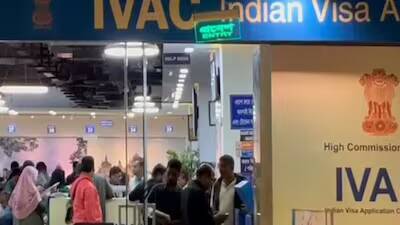
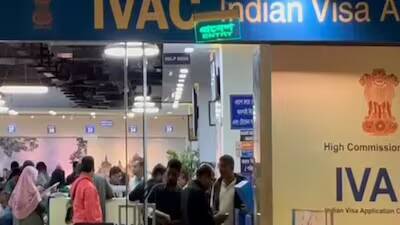
In a significant development, the Indian visa centre in Dhaka resumed operations on Thursday, a day after it was temporarily shut due to security concerns. The closure was a result of anti-India protests that had been gaining momentum in the Bangladeshi capital, with protesters marching towards the Indian High Commission. The protests were sparked by a radical remark made by a Bangladeshi leader, Hasnat Abdullah, against India, which led to a strong reaction from the Indian government.
The protests, which had been simmering for some time, came to a head on Wednesday, with a large group of protesters marching towards the Indian High Commission in Dhaka. The protesters, who were reportedly from a hardline Islamist group, were demanding an apology from the Indian government for what they perceived as an insult to their country. The situation became increasingly tense, with the protesters clashing with the police and security personnel deployed to maintain order.
In response to the protests, the Indian government took swift action, summoning the Bangladesh High Commissioner to the Ministry of External Affairs (MEA) in New Delhi. The MEA lodged a strong protest with the Bangladeshi envoy, expressing concern over the radical remark made by Hasnat Abdullah and the subsequent protests that had erupted in Dhaka. The Indian government made it clear that it would not tolerate any form of anti-India rhetoric or protests, and expected the Bangladeshi government to take concrete steps to ensure the safety and security of Indian citizens and diplomatic personnel in Bangladesh.
The temporary closure of the Indian visa centre in Dhaka was a precautionary measure, aimed at ensuring the safety of the staff and applicants who visit the centre. The centre, which is responsible for processing visa applications from Bangladeshi citizens, is an important facility that caters to the large number of people who travel to India for various purposes, including tourism, business, and education.
The resumption of operations at the visa centre is a welcome development, and is expected to bring relief to the many Bangladeshi citizens who have been waiting to apply for Indian visas. The centre is expected to function normally, with applicants able to submit their applications and undergo the necessary formalities without any disruption.
The incident, however, highlights the complexities and challenges of the India-Bangladesh relationship. Despite the two countries sharing a long border and a rich cultural heritage, there are many issues that have the potential to create tensions and misunderstandings. The radical remark made by Hasnat Abdullah, and the subsequent protests that erupted in Dhaka, are a reminder that there are still many challenges that need to be addressed in order to build a stronger and more stable relationship between the two countries.
In recent years, India and Bangladesh have made significant progress in strengthening their bilateral ties, with cooperation in areas such as trade, security, and connectivity. The two countries have also made efforts to improve people-to-people contacts, with an increase in the number of tourists, students, and business travelers visiting each other’s countries.
However, despite these positive developments, there are still many challenges that need to be addressed. The issue of anti-India protests and radical remarks made by some Bangladeshi leaders is a concern that needs to be taken seriously. The Indian government has made it clear that it will not tolerate any form of anti-India rhetoric or protests, and has expected the Bangladeshi government to take concrete steps to ensure the safety and security of Indian citizens and diplomatic personnel in Bangladesh.
In conclusion, the resumption of operations at the Indian visa centre in Dhaka is a welcome development, and is expected to bring relief to the many Bangladeshi citizens who have been waiting to apply for Indian visas. However, the incident highlights the complexities and challenges of the India-Bangladesh relationship, and the need for both countries to work together to build a stronger and more stable relationship. The Indian government’s strong reaction to the anti-India protests and radical remarks made by some Bangladeshi leaders is a reminder that it will not tolerate any form of anti-India rhetoric or protests, and expects the Bangladeshi government to take concrete steps to ensure the safety and security of Indian citizens and diplomatic personnel in Bangladesh.
About the Author