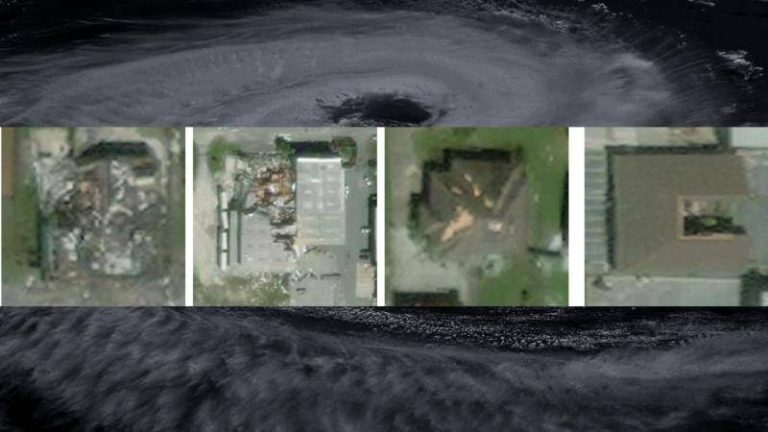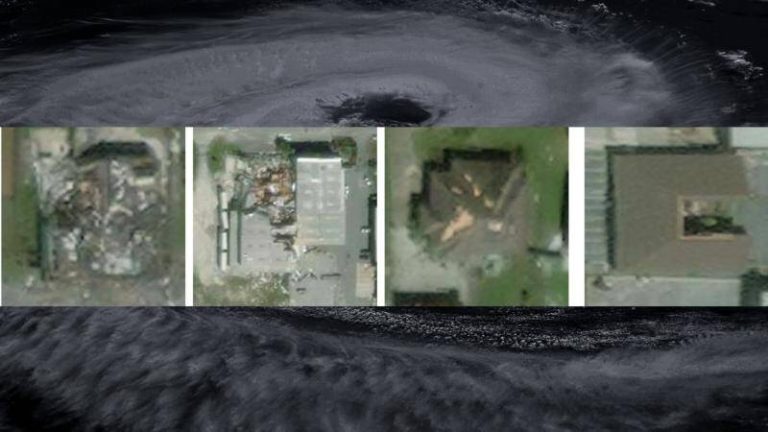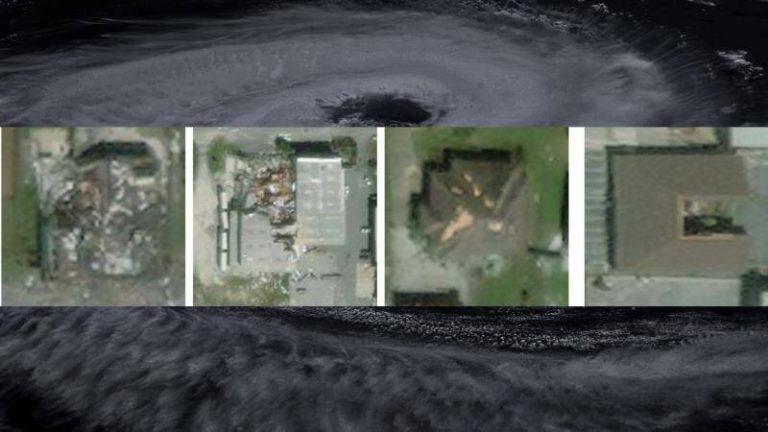
IIT Bombay’s AI speeds up hurricane damage assessment
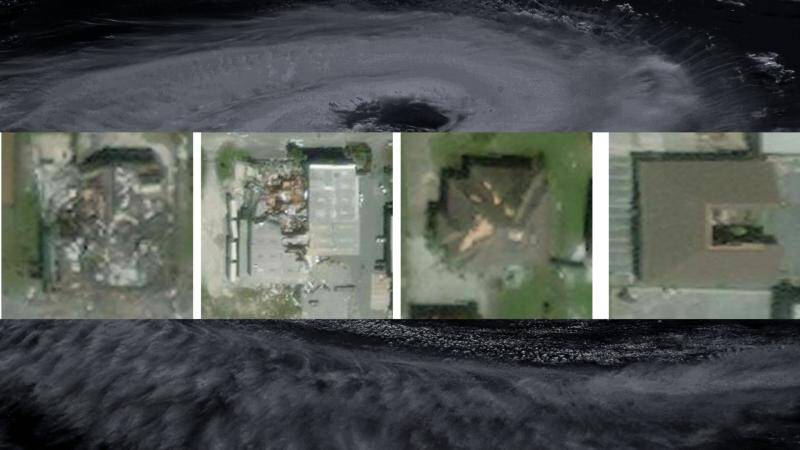
In recent years, the world has witnessed an increasing number of devastating hurricanes that have caused unprecedented damage to infrastructure, resulting in significant loss of life and property. The aftermath of such disasters poses a significant challenge for relief teams, who must navigate through the rubble to assess the extent of the damage and provide aid to those in need. However, this process can be time-consuming, labor-intensive, and often hampered by limited access to affected areas. To address this issue, researchers at the Indian Institute of Technology (IIT) Bombay have developed an innovative AI model called SpADANet, which can quickly and accurately identify building damage from aerial images.
The development of SpADANet is a significant breakthrough in the field of disaster response and relief efforts. The AI model uses spatial context to analyze aerial images and identify damaged buildings, overcoming the “domain gap” that has limited the effectiveness of existing methods. The domain gap refers to the challenge of adapting AI models to different environments, such as varying weather conditions, lighting, and terrain. By using spatial context, SpADANet can adapt to different storms with minimal data, making it a valuable tool for disaster response teams.
One of the key advantages of SpADANet is its ability to optimize for mobile devices. This means that the AI model can be used in the field, allowing relief teams to quickly assess damage and provide aid to those in need. The use of mobile devices also enables real-time data collection and analysis, which can help to inform decision-making and improve the effectiveness of relief efforts.
The development of SpADANet is based on a deep learning approach, which involves training the AI model on a large dataset of aerial images. The model uses a combination of convolutional neural networks (CNNs) and spatial attention mechanisms to analyze the images and identify damaged buildings. The use of spatial attention mechanisms allows the model to focus on specific areas of the image, such as buildings, and ignore other features, such as roads and vegetation.
The performance of SpADANet has been evaluated on a range of datasets, including images from recent hurricanes. The results show that the AI model outperforms existing methods, achieving high accuracy and precision in identifying damaged buildings. The use of spatial context and spatial attention mechanisms is shown to be particularly effective in improving the accuracy of the model.
The potential applications of SpADANet are significant. The AI model could be used by disaster response teams to quickly assess damage and provide aid to those in need. It could also be used by insurance companies to assess damage and process claims. Additionally, the model could be used by urban planners and policymakers to identify areas of high risk and develop strategies for mitigating the impact of future disasters.
The development of SpADANet is also a testament to the power of collaboration and innovation in addressing complex challenges. The researchers at IIT Bombay have demonstrated that by combining advances in AI, computer vision, and spatial analysis, it is possible to develop innovative solutions that can make a significant impact in the real world.
In conclusion, the development of SpADANet is a significant breakthrough in the field of disaster response and relief efforts. The AI model has the potential to significantly improve real-time disaster response and relief efforts globally, and its applications extend beyond disaster response to urban planning, insurance, and other fields. As the world continues to grapple with the challenges of climate change and natural disasters, the development of innovative solutions like SpADANet is more important than ever.
News Source: https://researchmatters.in/news/novel-spatially-aware-ai-model-makes-hurricane-damage-assessment-more-accurate
About the Author