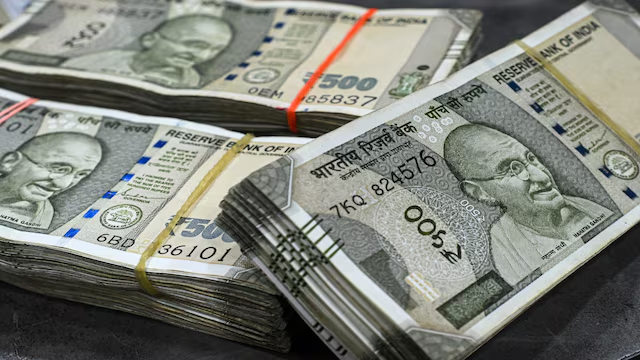
RBI spent ₹2.7 lakh cr to prevent rupee from falling, it still fell to record lows: Report
The Indian rupee has been on a downward spiral for quite some time now, and despite the Reserve Bank of India’s (RBI) best efforts to stem the fall, it continues to tumble to new record lows. In a recent report, SBI Research revealed that the RBI spent a staggering ₹2.7 lakh crore ($30 billion) to help soften the fall of the Indian rupee over the past few months. This massive intervention, however, has not been enough to halt the rupee’s decline, raising concerns about the effectiveness of the central bank’s strategy.
According to SBI Research, the RBI has intervened around $18 billion in the forex market during the period of June-September, and an estimated additional $10 billion in October 2025. This brings the total intervention to $30 billion, or approximately ₹2.7 lakh crore. The RBI’s intervention in the forex market is aimed at preventing a sharp depreciation of the rupee, which can have far-reaching consequences for the Indian economy, including higher import bills, inflation, and reduced investor confidence.
The rupee’s decline has been largely driven by a combination of factors, including a strong US dollar, rising crude oil prices, and a widening trade deficit. The US Federal Reserve’s decision to raise interest rates has also contributed to the rupee’s fall, as it has led to a strengthening of the US dollar and a consequent outflow of foreign capital from emerging markets like India.
Despite the RBI’s intervention, the rupee has continued to fall to new record lows. On several occasions, it has breached the 83-mark against the US dollar, causing concern among policymakers, businesses, and investors. The rupee’s decline has also had a ripple effect on the Indian economy, with imports becoming more expensive and exports becoming less competitive.
The RBI’s intervention in the forex market is a complex process that involves buying or selling US dollars to influence the exchange rate. When the RBI buys US dollars, it absorbs excess liquidity from the market, which helps to prevent a sharp depreciation of the rupee. Conversely, when it sells US dollars, it injects liquidity into the market, which helps to prevent a sharp appreciation of the rupee.
While the RBI’s intervention has helped to slow down the rupee’s decline, it is not a long-term solution to the problem. The central bank’s actions are merely a stopgap measure to prevent a disorderly decline of the currency, and they do not address the underlying factors that are driving the rupee’s fall.
To stem the rupee’s decline, the government and the RBI need to work together to address the underlying factors that are driving the currency’s fall. This includes reducing the trade deficit, increasing foreign exchange reserves, and implementing policies that promote exports and attract foreign investment.
In addition, the RBI needs to carefully manage its intervention in the forex market to ensure that it is not depleting its foreign exchange reserves at an alarming rate. The central bank’s foreign exchange reserves have already declined by over $100 billion since the start of the year, and further depletion could reduce its ability to intervene in the market and defend the rupee.
In conclusion, the RBI’s spending of ₹2.7 lakh crore to prevent the rupee from falling is a significant development that highlights the challenges faced by the Indian economy. While the central bank’s intervention has helped to slow down the rupee’s decline, it is not a long-term solution to the problem. To stem the rupee’s fall, the government and the RBI need to work together to address the underlying factors that are driving the currency’s decline and implement policies that promote economic growth and stability.
News Source: https://www.cnbctv18.com/market/currency/india-rupee-how-many-us-dollars-did-rbi-buy-ws-l-19794895.htm/amp
About the Author