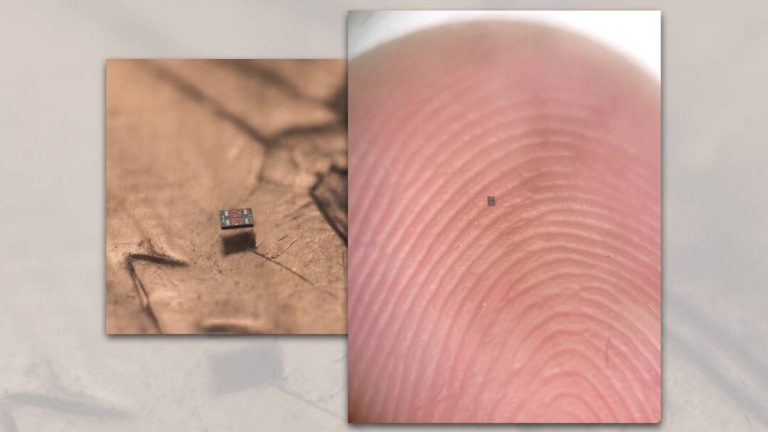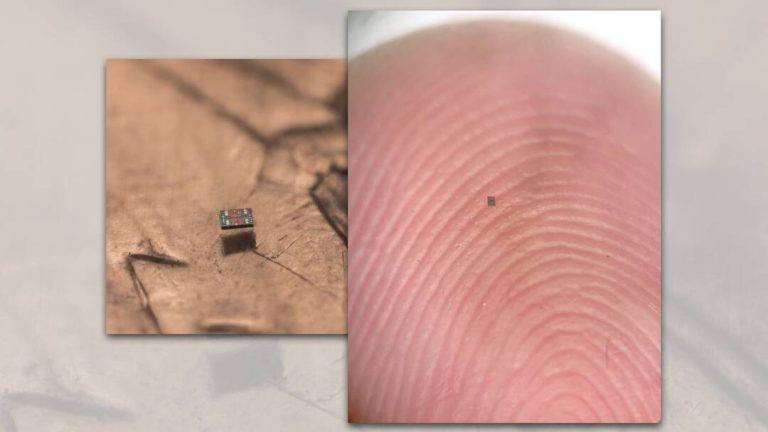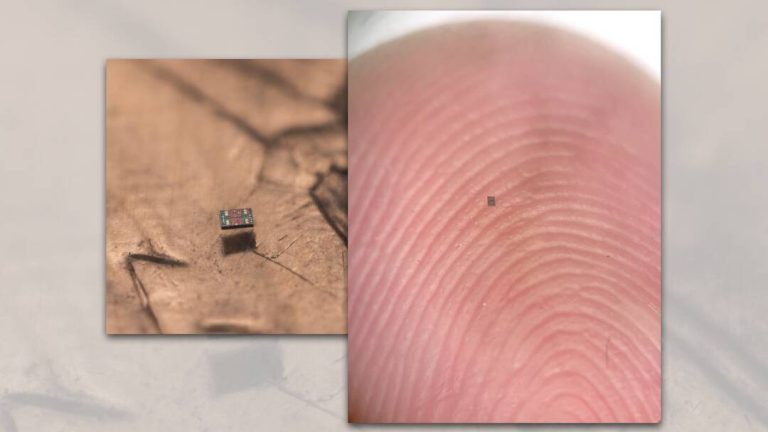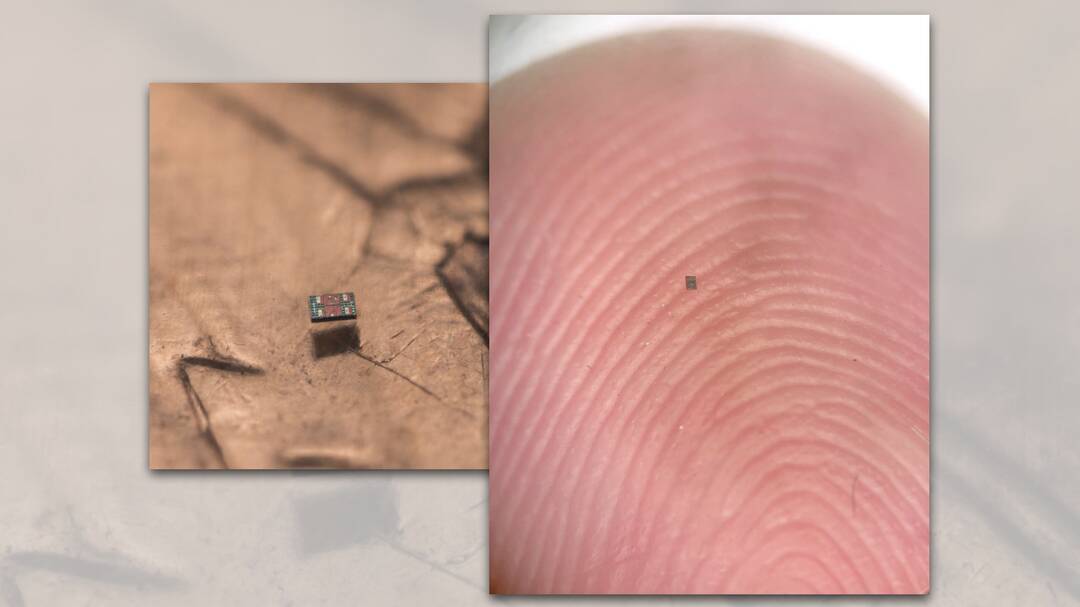
Scientists create world’s smallest programmable robots, share pics
In a groundbreaking achievement, researchers from the Universities of Pennsylvania and Michigan have successfully created the world’s smallest fully programmable and autonomous robots. These microscopic swimming machines are capable of independently sensing and responding to their surroundings, paving the way for a new era of miniaturized robotics.
The robot, which measures a mere 0.2 by 0.3 by 0.05 millimeters, is barely visible to the naked eye. Despite its incredibly small size, the robot is fully programmable, allowing it to perform a variety of tasks. The cost of producing these tiny robots is also remarkably low, with each unit costing only a penny.
According to the researchers, the creation of these microscopic robots is a significant breakthrough in the field of robotics. “These robots are the smallest fully programmable and autonomous robots in the world,” they stated. “They can independently sense and respond to their surroundings, which makes them incredibly versatile and useful for a wide range of applications.”
The robots are designed to swim through fluids, allowing them to navigate through tight spaces and interact with their environment in new and innovative ways. This ability to swim and navigate through fluids makes them ideal for use in a variety of fields, including medicine, environmental monitoring, and industrial inspection.
One of the most significant advantages of these microscopic robots is their ability to be programmed to perform specific tasks. This allows researchers to tailor the robots to suit specific applications, making them highly versatile and useful. The robots can be programmed to swim to specific locations, interact with other objects, and even perform complex tasks such as assembly and manipulation of tiny objects.
The creation of these robots is the result of a collaboration between researchers from the Universities of Pennsylvania and Michigan. The team used a combination of advanced materials and manufacturing techniques to create the robots, which are made from a thin layer of metal and a flexible polymer substrate.
The researchers used a technique called “lithography” to create the robots, which involves using light to pattern the metal and polymer layers. This technique allows for the creation of incredibly small features, making it possible to produce robots that are barely visible to the naked eye.
The robots are powered by a small electrical signal, which allows them to swim and navigate through fluids. The signal is generated by a tiny electrode that is embedded in the robot’s body, which is made from a conductive material.
The potential applications of these microscopic robots are vast and varied. They could be used to deliver medicine to specific locations within the body, or to monitor environmental pollution in hard-to-reach areas. They could also be used to inspect industrial equipment, such as pipelines and turbines, or to assemble tiny components in industrial manufacturing processes.
The researchers are excited about the potential of these robots and are already exploring new applications and uses for them. “We are thrilled to have created the world’s smallest fully programmable and autonomous robots,” they stated. “We believe that these robots have the potential to revolutionize a wide range of fields and applications, and we are eager to see where they will take us.”
In conclusion, the creation of the world’s smallest fully programmable and autonomous robots is a significant breakthrough in the field of robotics. These microscopic swimming machines have the potential to revolutionize a wide range of fields and applications, from medicine and environmental monitoring to industrial inspection and manufacturing. With their incredibly small size, low cost, and high versatility, these robots are set to make a big impact in the years to come.
To learn more about this groundbreaking achievement, you can visit the news source at https://www.seas.upenn.edu/stories/penn-and-umich-create-worlds-smallest-programmable-autonomous-robots/. The researchers have shared pictures and details of their creation, providing a fascinating glimpse into the world of microscopic robotics.
News Source: https://www.seas.upenn.edu/stories/penn-and-umich-create-worlds-smallest-programmable-autonomous-robots/
About the Author