Typhoons return microplastics to land after humans pollute oceans: Study
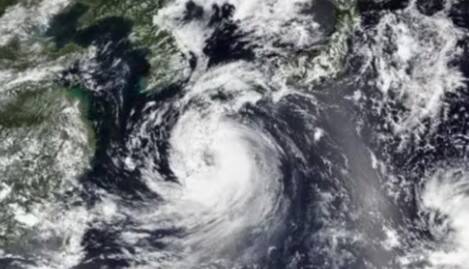
The world’s oceans have become a dumping ground for human waste, with plastic pollution being a major concern. However, a recent study published in Environmental Science and Technology has revealed that typhoons are playing a significant role in returning microplastics to land. The research, which documented three typhoons in Ningbo, China, found that these storms are efficiently vacuuming microplastics from the ocean and spreading them over land.
The study, which was conducted by a team of scientists, aimed to investigate the impact of typhoons on microplastic pollution. Microplastics, which are small plastic particles less than 5 millimeters in size, have become a major concern in recent years due to their potential to harm marine life and contaminate the food chain. The researchers collected samples of microplastics from the ocean and land before, during, and after three typhoons that hit Ningbo, China.
The results of the study showed that the typhoons were not mobilizing local litter from Ningbo, as previously thought. Instead, the storms were actively transferring ocean-sourced microplastics into the atmosphere and depositing them on land. The researchers found that the concentration of microplastics in the air increased significantly during the typhoons, with some samples showing a concentration of microplastics that was several times higher than the concentration found in the ocean.
The study’s findings have significant implications for our understanding of microplastic pollution. It suggests that typhoons are playing a major role in the transport of microplastics from the ocean to land, and that this process is likely to be occurring in other parts of the world where typhoons are common. The researchers also noted that the microplastics found on land were similar in composition to those found in the ocean, suggesting that they were indeed coming from the ocean.
The study’s lead author noted that the findings highlight the need for a more comprehensive approach to addressing microplastic pollution. “Our study shows that typhoons are an important mechanism for transporting microplastics from the ocean to land,” the author said. “This means that we need to consider the impact of typhoons on microplastic pollution when developing strategies to reduce plastic pollution.”
The study’s findings also have implications for human health. Microplastics have been shown to be harmful to human health, and the fact that they are being deposited on land by typhoons means that people may be exposed to them through the air they breathe and the food they eat. The researchers noted that further study is needed to understand the impact of microplastics on human health, but that the findings of this study suggest that it is an area that deserves further attention.
In addition to the health implications, the study’s findings also have significant implications for the environment. Microplastics have been shown to harm marine life, and the fact that they are being transported from the ocean to land by typhoons means that they may also be harming terrestrial ecosystems. The researchers noted that further study is needed to understand the impact of microplastics on terrestrial ecosystems, but that the findings of this study suggest that it is an area that deserves further attention.
Overall, the study’s findings highlight the complex and interconnected nature of microplastic pollution. They suggest that typhoons are playing a major role in the transport of microplastics from the ocean to land, and that this process is likely to be occurring in other parts of the world where typhoons are common. The study’s findings also highlight the need for a more comprehensive approach to addressing microplastic pollution, one that takes into account the impact of typhoons and other natural processes on the transport of microplastics.
In conclusion, the study’s findings are a significant contribution to our understanding of microplastic pollution. They highlight the importance of considering the impact of typhoons on microplastic pollution, and suggest that this is an area that deserves further attention. The study’s findings also have significant implications for human health and the environment, and highlight the need for a more comprehensive approach to addressing microplastic pollution.
News Source: https://pubs.acs.org/doi/10.1021/acs.est.5c11101
About the Author