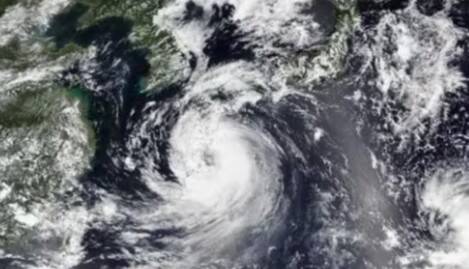
Typhoons return microplastics to land after humans pollute oceans: Study
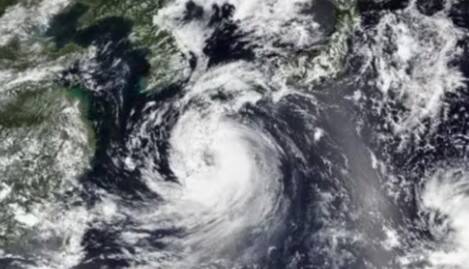
The world’s oceans have become a dumping ground for human waste, with plastic pollution being a major concern. However, a recent study has revealed that typhoons are playing a significant role in returning microplastics to land, after they have been deposited into the oceans. The research, published in Environmental Science and Technology, has found that typhoons are efficiently vacuuming microplastics from the ocean and spreading them over land.
The study, which was conducted in Ningbo, China, documented three typhoons and their impact on microplastic pollution. The researchers found that the storms were not mobilizing local litter from Ningbo, but were instead actively transferring ocean-sourced microplastics into the atmosphere and depositing them on land. This means that the microplastics that were originally deposited into the ocean by humans are now being returned to land, through the agency of typhoons.
The study’s findings have significant implications for our understanding of the microplastic pollution cycle. Microplastics, which are small plastic particles less than 5 millimeters in size, have become a major concern in recent years. They are found in a wide range of products, from cosmetics to clothing, and can enter the environment through various means, including wastewater and litter.
Once in the environment, microplastics can have a range of negative impacts. They can be ingested by animals, causing physical harm and toxicity, and can also leach chemicals into the environment. Furthermore, microplastics have been found in a wide range of environments, from the deep sea to the highest mountains, and have even been detected in human blood and tissue.
The study’s authors used a combination of field observations and laboratory analysis to investigate the impact of typhoons on microplastic pollution. They collected samples of microplastics from the ocean and from land, before and after the typhoons, and analyzed them using a range of techniques, including microscopy and spectroscopy.
The results showed that the typhoons were highly efficient at vacuuming microplastics from the ocean. The researchers found that the concentration of microplastics in the ocean decreased significantly after the typhoons, while the concentration on land increased. This suggests that the typhoons were actively transferring microplastics from the ocean to the land, rather than simply mobilizing local litter.
The study’s findings have significant implications for our understanding of the microplastic pollution cycle. They suggest that typhoons are playing a significant role in returning microplastics to land, after they have been deposited into the oceans. This means that the microplastics that were originally deposited into the ocean by humans are now being returned to land, through the agency of typhoons.
The study’s authors note that this has significant implications for human health and the environment. Microplastics have been found to have a range of negative impacts on human health, including physical harm and toxicity. Furthermore, microplastics have been found in a wide range of environments, from the deep sea to the highest mountains, and have even been detected in human blood and tissue.
The study’s findings also have significant implications for our understanding of the role of natural systems in shaping the microplastic pollution cycle. Typhoons are a natural part of the Earth’s system, and play a significant role in shaping our environment. The study’s findings suggest that typhoons are playing a significant role in returning microplastics to land, after they have been deposited into the oceans.
In conclusion, the study’s findings have significant implications for our understanding of the microplastic pollution cycle. They suggest that typhoons are playing a significant role in returning microplastics to land, after they have been deposited into the oceans. This means that the microplastics that were originally deposited into the ocean by humans are now being returned to land, through the agency of typhoons. The study’s findings have significant implications for human health and the environment, and highlight the need for further research into the role of natural systems in shaping the microplastic pollution cycle.
The study’s findings also highlight the need for urgent action to reduce microplastic pollution. Microplastics are a major concern, and their impact on human health and the environment is still not fully understood. However, it is clear that microplastics are having a significant impact on our planet, and that urgent action is needed to reduce their use and disposal.
One way to reduce microplastic pollution is to reduce our use of single-use plastics. Single-use plastics, such as plastic bags and water bottles, are a major source of microplastic pollution, and can be easily replaced with reusable alternatives. Furthermore, governments and businesses can take action to reduce microplastic pollution, by implementing policies and practices that reduce the use and disposal of microplastics.
In addition, individuals can take action to reduce microplastic pollution, by making changes to their daily habits. For example, using a reusable water bottle and coffee cup, and avoiding products that contain microplastics, such as face wash and toothpaste. By taking these simple steps, we can all play a role in reducing microplastic pollution, and protecting our planet for future generations.
News Source: https://pubs.acs.org/doi/10.1021/acs.est.5c11101
About the Author