Roblox ban in Russia sparks protest, debate on censorship
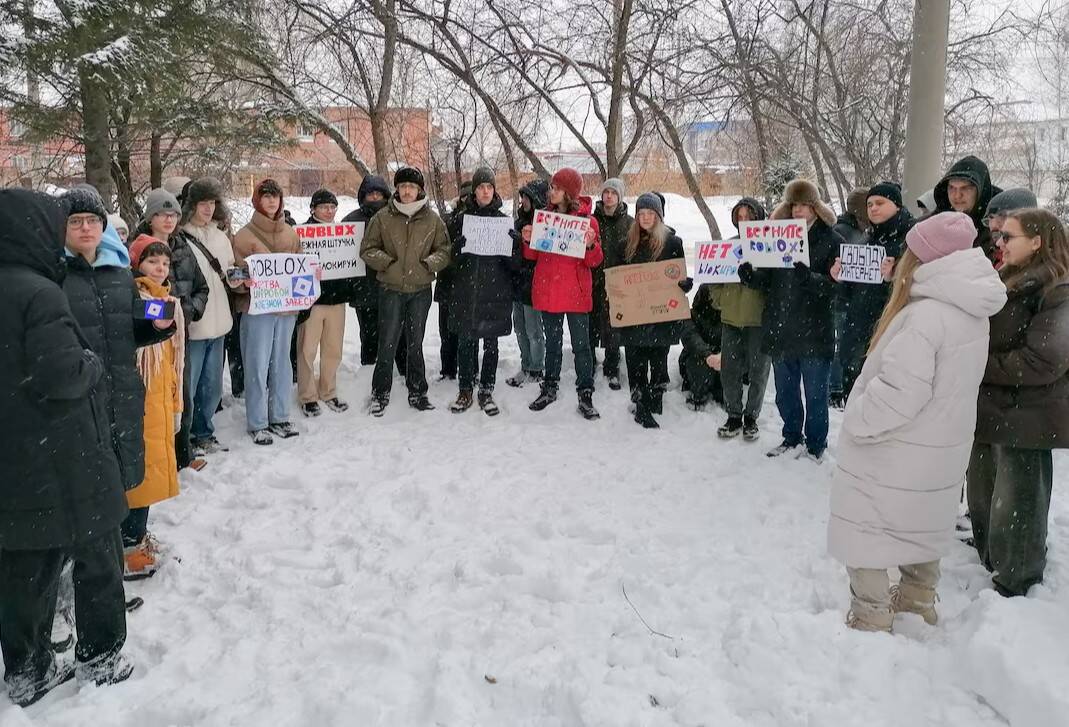
In a move that has sparked widespread controversy and opposition, the Russian government has banned the popular online gaming platform Roblox, citing concerns over child safety and the potential spread of Western influence. The ban, which was announced in early December, has been met with rare protests in the Siberian city of Tomsk, where gamers and parents have taken to the streets to express their discontent with the government’s decision.
Although Russia has a history of blocking or restricting social media platforms such as Snapchat, Facebook, Instagram, and YouTube, the ban on Roblox has brought a level of opposition that is unusual in the country. The protests in Tomsk, which have been largely peaceful, have highlighted the growing tensions between the Russian government and its citizens, particularly among the younger generation who are avid users of the platform.
Roblox, which has over 200 million monthly active users worldwide, allows players to create their own games and interact with others in a virtual environment. The platform has been popular among children and teenagers, who can use it to socialize, learn, and express themselves creatively. However, the Russian government has argued that the platform poses a threat to child safety, citing concerns over the potential for children to be exposed to explicit content, cyberbullying, and other forms of online harassment.
The ban on Roblox has also sparked a debate over censorship, with many arguing that the move is a clear example of the Russian government’s attempts to control the flow of information and suppress dissent. Critics of the ban have pointed out that it is not only an infringement on the rights of Russian citizens, but also a futile attempt to block a platform that can easily be accessed through virtual private networks (VPNs) and other circumvention tools.
“The ban on Roblox is a clear example of the Russian government’s attempts to exert control over the internet and suppress dissent,” said a Tomsk-based gamer, who wished to remain anonymous. “It’s not only an infringement on our rights, but also a pointless exercise, as we can easily access the platform through VPNs and other tools.”
The effectiveness of censorship in the digital age has been a topic of debate for many years, with many arguing that it is impossible to completely block access to online content. The use of VPNs and other circumvention tools has made it easy for users to bypass government-imposed blocks, rendering censorship efforts largely ineffective.
Moreover, the ban on Roblox has raised concerns over the potential impact on child safety, as it may drive children to use alternative platforms that are less regulated and more vulnerable to exploitation. “The ban on Roblox may have the opposite effect of what the government intends,” said a child safety expert. “By driving children to use alternative platforms, the government may be putting them at greater risk of exposure to explicit content and online harassment.”
The Russian government’s decision to ban Roblox has also sparked a wider debate over the role of technology in society, with many arguing that it is a vital tool for socialization, education, and creativity. The platform has been praised for its ability to provide a safe and interactive environment for children to learn and express themselves, and its ban has been seen as a blow to the country’s efforts to promote digital literacy and online safety.
As the debate over the ban on Roblox continues, it is clear that the issue is not just about a single platform, but about the broader implications of censorship and the role of technology in society. The Russian government’s decision to ban Roblox has sparked a rare protest, but it has also highlighted the need for a more nuanced and informed approach to online regulation, one that balances the need to protect children with the need to promote freedom of expression and access to information.
In conclusion, the ban on Roblox in Russia has sparked a protest, debate on censorship, and raised concerns over child safety and the effectiveness of censorship in the digital age. As the world becomes increasingly interconnected, it is essential that governments and regulatory bodies take a more nuanced and informed approach to online regulation, one that promotes digital literacy, online safety, and freedom of expression.
News Source: https://www.reuters.com/business/media-telecom/russian-ban-roblox-gaming-platform-sparks-rare-protest-2025-12-14/
About the Author