Roblox Ban in Russia Sparks Protest, Debate on Censorship
In a move that has sent shockwaves through the online gaming community, Russia has banned the popular gaming platform Roblox, sparking rare protests in the Siberian city of Tomsk. The ban, which was implemented in early December, has not only drawn opposition from gamers but has also triggered a debate on censorship, child safety, and the effectiveness of such measures in a world where children can easily bypass bans using VPNs.
Roblox, a platform that allows users to create and play a wide variety of games, has been a favorite among children and teenagers in Russia, with millions of users accessing the site every day. However, the Russian government has deemed the platform to be a threat to child safety, citing concerns over the content and interactions available on the site. According to officials, the ban is intended to protect children from exposure to harmful or inappropriate material, as well as to prevent them from being targeted by online predators.
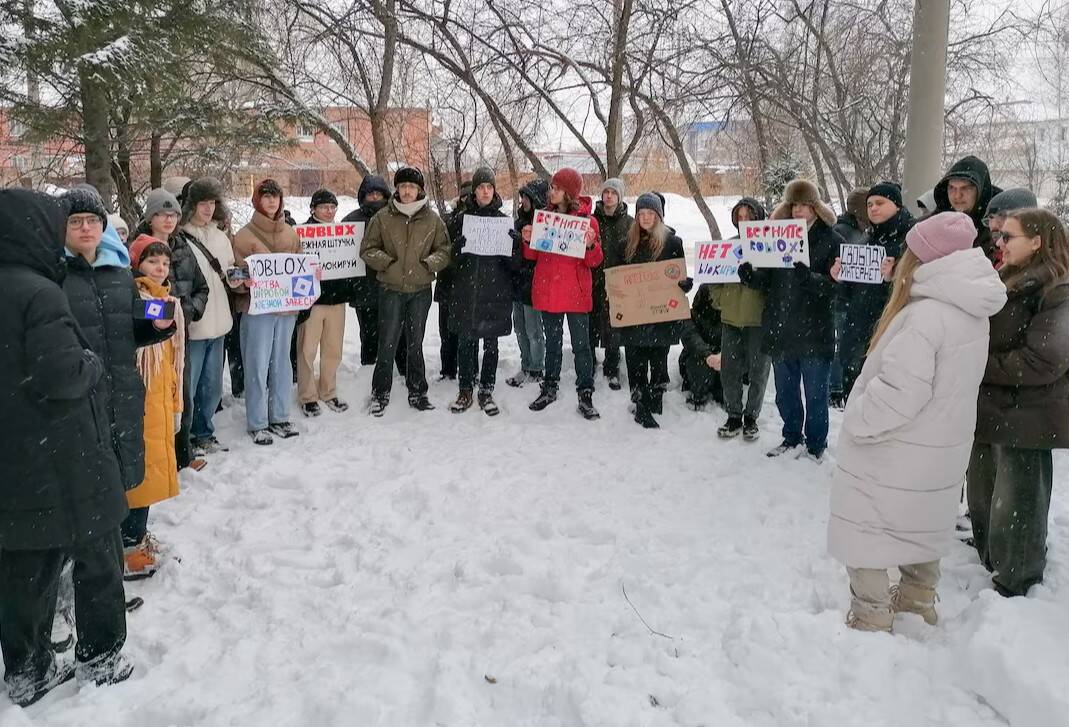
While Russia has a history of blocking or restricting social media platforms, including Snapchat, Facebook, Instagram, and YouTube, the ban on Roblox has sparked a rare and unexpected reaction. In Tomsk, a city in western Siberia, protesters took to the streets to demonstrate against the ban, holding signs and chanting slogans in support of the platform. The protests, which were largely peaceful, were attended by gamers, parents, and other concerned citizens who argue that the ban is an overreach of government authority and an infringement on their right to free expression.
The debate over the Roblox ban has also sparked a wider discussion about censorship and its effectiveness in the digital age. While proponents of the ban argue that it is necessary to protect children from harm, others argue that it is a heavy-handed approach that fails to address the underlying issues. Many experts point out that children can easily bypass the ban using VPNs or other circumvention tools, rendering the measure ineffective. Furthermore, the ban has been criticized for being overly broad, as it not only blocks access to Roblox but also restricts access to other online resources and services that are not harmful or inappropriate.
The issue of child safety is, of course, a critical one, and it is understandable that governments would want to take steps to protect children from harm. However, the question is whether a blanket ban on a platform like Roblox is the most effective way to achieve this goal. Many experts argue that a more nuanced approach is needed, one that balances the need to protect children with the need to respect their rights and freedoms. This could involve working with platform providers to develop and implement robust safety measures, such as age verification, content moderation, and reporting mechanisms.
The Roblox ban has also raised questions about the role of government in regulating online activity. While governments have a responsibility to protect their citizens, they must also be careful not to overstep their authority or infringe on individual rights. In the case of the Roblox ban, many argue that the government has gone too far, and that the measure is an example of censorship rather than a legitimate effort to protect children.
As the debate over the Roblox ban continues, it is clear that the issue is complex and multifaceted. While there are valid concerns about child safety, there are also concerns about censorship, free expression, and the effectiveness of government regulation. Ultimately, the solution will require a balanced approach that takes into account the needs and rights of all stakeholders, including children, parents, and platform providers.
In conclusion, the Roblox ban in Russia has sparked a rare protest and a heated debate about censorship, child safety, and the role of government in regulating online activity. While the issue is complex and multifaceted, it is clear that a more nuanced approach is needed, one that balances the need to protect children with the need to respect their rights and freedoms. As the world becomes increasingly digital, it is essential that we develop effective and balanced solutions to the challenges posed by online activity, rather than relying on heavy-handed measures like censorship.
News Source: https://www.reuters.com/business/media-telecom/russian-ban-roblox-gaming-platform-sparks-rare-protest-2025-12-14/
About the Author