Roblox Ban in Russia Sparks Protest, Debate on Censorship
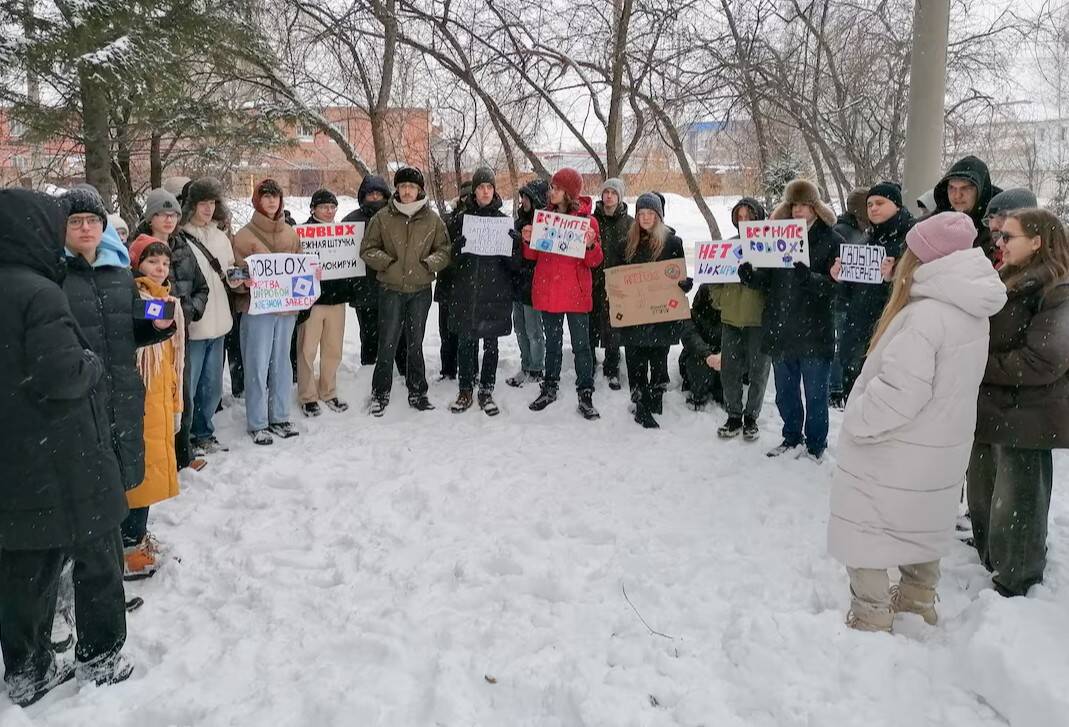
In a move that has sent shockwaves through the online gaming community, Russia has banned the popular gaming platform Roblox, sparking rare protests in the Siberian city of Tomsk. The ban, which was implemented in early December, has not only drawn opposition from gamers but has also triggered a heated debate over censorship, child safety, and the effectiveness of such measures in the digital age.
Roblox, a platform that allows users to create and play a wide variety of games, has become a staple of online entertainment for millions of children and teenagers around the world. With its vast library of user-generated content, Roblox has provided a unique outlet for creativity, socialization, and self-expression. However, the Russian government’s decision to ban the platform has raised concerns about the motivations behind such a move and the potential consequences for the country’s youth.
The protests in Tomsk, a city located in western Siberia, were a rare display of public dissent in a country where opposition to government policies is often met with swift repression. The protesters, mostly comprising of young people, took to the streets to express their discontent with the ban, holding signs and chanting slogans in support of Roblox. The demonstrations were peaceful, but they underscored the depth of feeling among the platform’s users, who feel that the ban is an unjustified infringement on their freedom of expression.
The Russian government’s decision to ban Roblox is not an isolated incident. In recent years, the country has restricted or blocked access to several social media platforms, including Snapchat, Facebook, Instagram, and YouTube. These moves have been justified on the grounds of protecting national security, promoting domestic technology, and safeguarding children from harmful content. However, critics argue that such measures are tantamount to censorship, aimed at suppressing dissent and limiting the free flow of information.
The ban on Roblox has also sparked a debate about child safety and the role of technology in protecting young people from harm. While the Russian government has cited concerns about the platform’s content and its potential impact on children, many experts argue that such measures are misguided and ineffective. With the widespread availability of virtual private networks (VPNs) and other circumvention tools, children can easily bypass bans and access restricted content, rendering such measures obsolete.
Moreover, the ban on Roblox has highlighted the complexities of regulating online content and the challenges of balancing freedom of expression with concerns about safety and security. In a world where technology is evolving at a rapid pace, governments face an uphill task in keeping pace with the latest developments and trends. The Russian government’s decision to ban Roblox may have been motivated by a desire to protect children, but it has ultimately sparked a wider debate about the effectiveness of censorship in the digital age.
As the world becomes increasingly interconnected, the issue of censorship and online regulation is likely to become more pressing. Governments, policymakers, and technology companies must work together to find solutions that balance the need to protect children and promote safety with the need to preserve freedom of expression and promote innovation. The ban on Roblox in Russia may have sparked protests and debate, but it has also highlighted the need for a more nuanced and informed approach to regulating online content.
In conclusion, the ban on Roblox in Russia has sparked a rare protest and debate about censorship, child safety, and the effectiveness of such measures in the digital age. While the Russian government’s decision may have been motivated by a desire to protect children, it has ultimately raised more questions than answers. As the world grapples with the challenges of regulating online content, it is essential to find solutions that balance competing interests and promote a free, open, and safe online environment for all.
About the Author