Roblox ban in Russia sparks protest, debate on censorship
In a move that has sparked widespread opposition and debate, Russia banned the popular gaming platform Roblox in early December, citing concerns over child safety and the spread of “extremist” content. The ban, which was enforced in the Siberian city of Tomsk, has led to rare protests and has ignited a heated discussion on censorship, the role of technology in regulating online content, and the effectiveness of such measures in a world where children can easily bypass bans using Virtual Private Networks (VPNs).
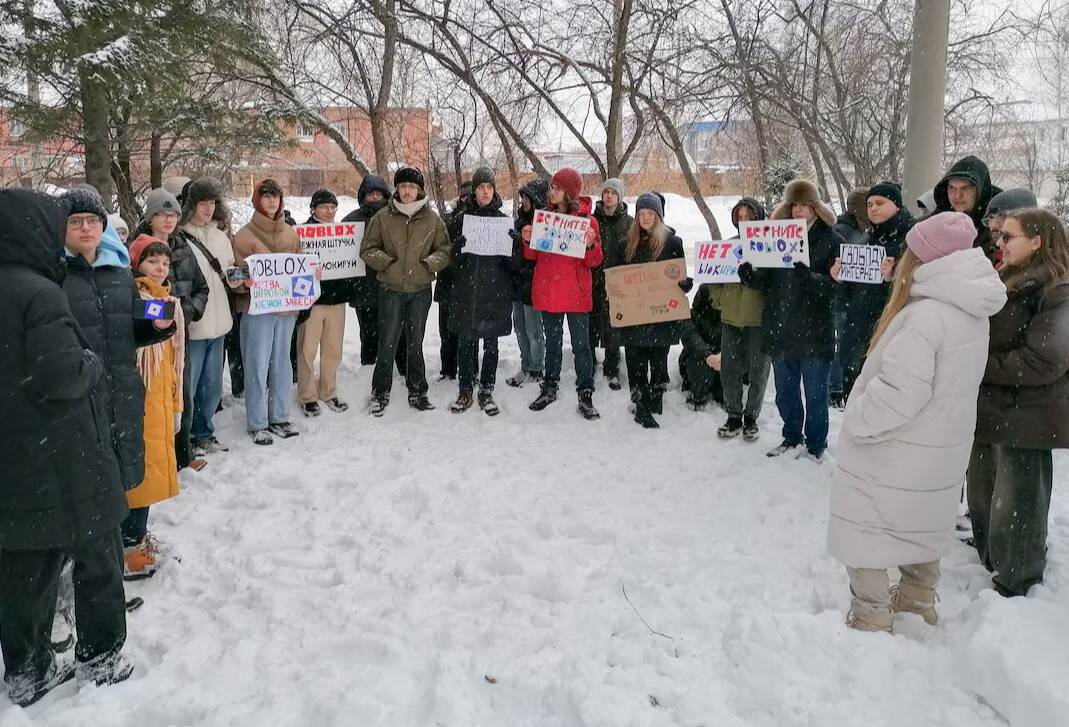
The Russian government has been actively restricting access to social media platforms and online services in recent years, with Snapchat, Facebook, Instagram, and YouTube all facing blocks or restrictions. However, the ban on Roblox has been met with an unusual level of resistance, with many young people taking to the streets to protest the move. The protests, which were largely peaceful, were organized by a group of teenagers who argued that the ban was unfair and would deprive them of a popular online platform where they could socialize and express themselves.
The Russian government’s decision to ban Roblox was based on concerns that the platform was being used to spread “extremist” content and to recruit children into radical groups. However, many critics have argued that the ban is an overreach of government power and that it will do little to address the underlying issues of child safety and online radicalization. Instead, they argue that the ban will simply drive the problem underground, making it harder for authorities to monitor and regulate online activity.
One of the main concerns surrounding the ban is the impact it will have on children’s access to online information and their ability to express themselves freely. Roblox is a popular platform that allows users to create and share their own games, as well as interact with other players in real-time. The platform has been praised for its creativity and educational value, and many children use it as a way to develop important skills such as problem-solving and critical thinking.
However, the Russian government has argued that the platform poses a risk to child safety, citing instances of online harassment and the spread of extremist content. While these concerns are valid, many critics argue that a blanket ban on the platform is not the most effective way to address these issues. Instead, they argue that the government should be working with the platform’s developers to implement more robust moderation and safety measures, rather than simply shutting it down.
The debate over the Roblox ban has also raised important questions about the role of technology in regulating online content. In a world where children can easily bypass bans using VPNs, it is unclear whether such measures are effective in achieving their intended goals. Many experts argue that a more nuanced approach is needed, one that takes into account the complexities of online behavior and the ways in which children interact with technology.
Furthermore, the ban on Roblox has sparked a wider debate about censorship and the role of government in regulating online activity. While some argue that the government has a responsibility to protect children from harm, others argue that such measures are a form of censorship that undermines the principles of free speech and online freedom. This debate is not unique to Russia, and is being played out in countries around the world as governments struggle to balance the need to regulate online activity with the need to protect individual freedoms.
In conclusion, the ban on Roblox in Russia has sparked a rare protest and has ignited a heated debate about censorship, child safety, and the role of technology in regulating online content. While the Russian government’s concerns about child safety are valid, many critics argue that a blanket ban on the platform is not the most effective way to address these issues. Instead, they argue that a more nuanced approach is needed, one that takes into account the complexities of online behavior and the ways in which children interact with technology. As the debate over online regulation continues to evolve, it is clear that finding a balance between protecting children and preserving online freedoms will be a major challenge for governments around the world.
About the Author