Roblox ban in Russia sparks protest, debate on censorship
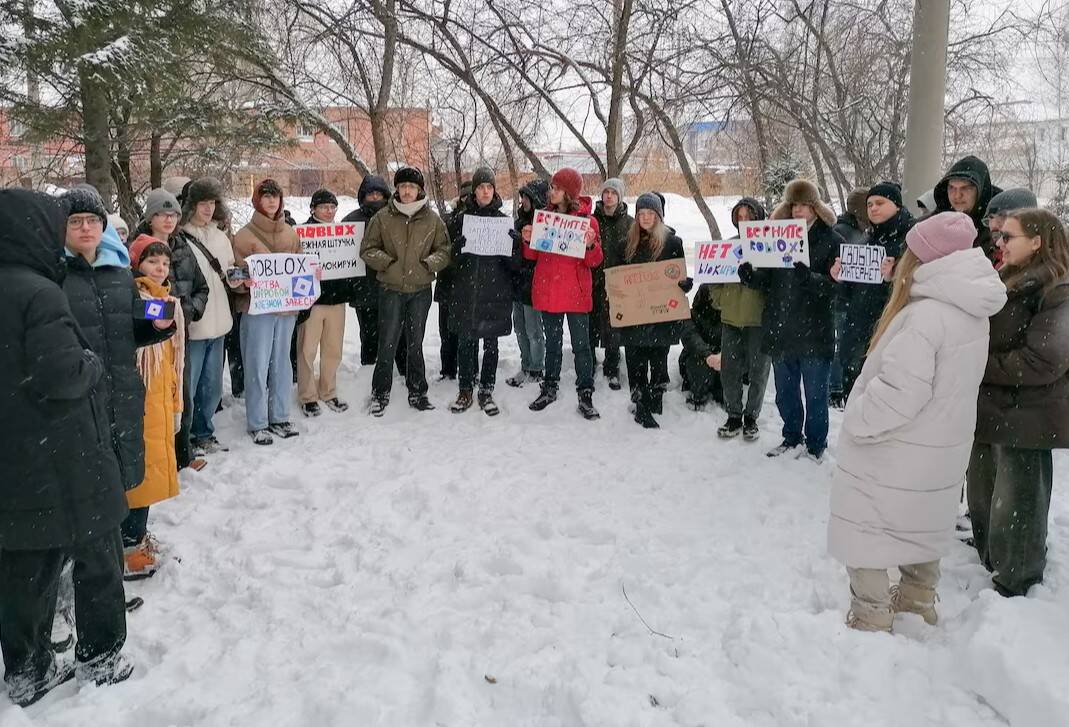
In a move that has sparked widespread opposition and debate, Russia has banned the popular online gaming platform Roblox in the Siberian city of Tomsk. The ban, which was announced in early December, has led to rare protests in the city, with many young people taking to the streets to express their discontent. The decision to ban Roblox has also triggered a broader debate about censorship, child safety, and the effectiveness of such measures in a world where children can easily bypass restrictions using Virtual Private Networks (VPNs).
The Russian government has been increasingly restrictive when it comes to social media and online platforms, having previously blocked or restricted access to platforms like Snapchat, Facebook, Instagram, and YouTube. However, the ban on Roblox has been met with a level of opposition that is unusual in Russia, where protests against government decisions are often quickly suppressed. The fact that the ban has sparked such a strong reaction suggests that the Russian government may have underestimated the popularity of the platform, particularly among young people.
Roblox is a user-generated game platform that allows players to create and share their own games, as well as play games created by others. The platform has become incredibly popular among children and teenagers, who can use it to create and interact with their own virtual worlds. However, the Russian government has cited concerns about the platform’s content, suggesting that it is not suitable for children due to its alleged promotion of “non-traditional sexual relationships” and “extremist” ideologies.
The ban on Roblox has been widely criticized by human rights groups and free speech advocates, who argue that it is a clear example of censorship and an attempt to restrict access to information and online content. They point out that the Russian government has a history of using censorship as a means of controlling the narrative and suppressing dissent, and that the ban on Roblox is just the latest example of this trend.
The debate over the ban on Roblox has also raised important questions about child safety and the role of parents and governments in protecting children online. While the Russian government has cited concerns about the platform’s content, many parents and experts argue that the ban is not an effective solution to the problem. Instead, they suggest that parents and caregivers should be taking a more active role in monitoring their children’s online activities and educating them about online safety and digital citizenship.
Furthermore, the ban on Roblox has highlighted the limitations of censorship in a world where children can easily bypass restrictions using VPNs and other technologies. Many young people in Russia have already found ways to access the platform despite the ban, using VPNs to circumvent the restrictions. This has raised questions about the effectiveness of censorship as a means of controlling access to online content, and has highlighted the need for more nuanced and effective approaches to protecting children online.
The protests in Tomsk have also drawn attention to the growing activism and mobilization of young people in Russia, who are increasingly using social media and other online platforms to organize and express themselves. The fact that the ban on Roblox has sparked such a strong reaction suggests that young people in Russia are becoming more confident and empowered, and are no longer willing to accept government restrictions on their online activities without a fight.
In conclusion, the ban on Roblox in Russia has sparked a rare and significant protest, as well as a broader debate about censorship, child safety, and the effectiveness of such measures. While the Russian government has cited concerns about the platform’s content, many experts and advocates argue that the ban is a clear example of censorship and an attempt to restrict access to information and online content. As the debate continues, it is clear that the issue of online censorship and child safety will remain a contentious and complex one, requiring a more nuanced and effective approach than simply banning popular online platforms.
About the Author