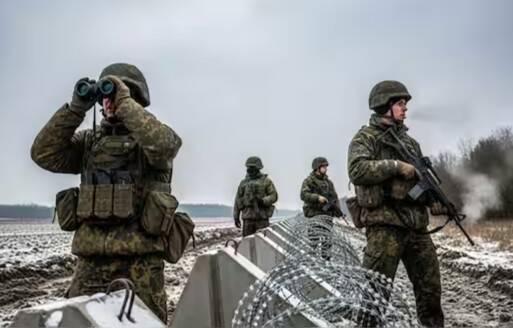
Germany to send troops to Poland border amid threats from Russia
In a significant move to bolster the security of its eastern European ally, Germany announced that it would be sending a contingent of troops to Poland to assist the country’s eastern frontier amid rising concerns over potential threats from Russia. The deployed troops would be tasked with engineering work, said Berlin’s defence ministry, as the country seeks to strengthen its defensive capabilities in the face of growing tensions with its neighbor to the east.
The decision to send troops to Poland marks a notable escalation in Germany’s efforts to support its allies in the region, as the threat of Russian aggression continues to loom large. The move is seen as a demonstration of Germany’s commitment to the security and stability of the region, and a clear message to Russia that any attempts to undermine the sovereignty of its neighbors will not be tolerated.
The troops deployed to Poland will be tasked with a range of engineering duties, including building defensive structures, excavating trenches, installing barbed wire, and laying anti-tank obstacles. These measures are designed to enhance the defensive capabilities of Poland’s eastern border, making it more difficult for any potential aggressor to launch a successful attack.
The decision to send troops to Poland comes at a time of heightened tensions between Russia and the West, with the conflict in Ukraine continuing to simmer and concerns growing over Russia’s military buildup in the region. The move is seen as a prudent measure to bolster the security of Poland and other eastern European countries, and to deter any potential aggression from Russia.
Germany’s defence ministry has emphasized that the deployment of troops to Poland is a defensive measure, designed to support the security and stability of the region. The ministry has also stressed that the move is in line with Germany’s commitments to its NATO allies, and is intended to demonstrate the country’s commitment to the collective defence of the alliance.
The deployment of German troops to Poland is also seen as a significant development in the context of the country’s historical relationships with its eastern neighbors. Germany’s past aggressions in the region, including the invasion of Poland in 1939, have left deep scars, and the country’s efforts to make amends and support the security of its neighbors are seen as an important step towards healing these wounds.
The move has been welcomed by Poland, which has been seeking to strengthen its defensive capabilities in the face of growing threats from Russia. The Polish government has expressed its gratitude to Germany for its support, and has emphasized the importance of the two countries’ cooperation in ensuring the security and stability of the region.
The deployment of German troops to Poland is also seen as a significant development in the context of the NATO alliance. The move demonstrates the commitment of NATO member states to the collective defence of the alliance, and highlights the importance of cooperation and solidarity in the face of common security challenges.
As the situation in the region continues to evolve, it is likely that the deployment of German troops to Poland will be closely watched by Russia and other countries in the region. The move is seen as a clear message to Russia that any attempts to undermine the security and stability of the region will not be tolerated, and that the West is committed to supporting its allies and defending its interests.
In conclusion, the decision by Germany to send troops to Poland’s eastern border amid threats from Russia is a significant development in the region’s security landscape. The move demonstrates Germany’s commitment to the security and stability of its allies, and highlights the importance of cooperation and solidarity in the face of common security challenges. As the situation in the region continues to evolve, it is likely that the deployment of German troops to Poland will be closely watched by Russia and other countries in the region, and will be seen as a significant test of the West’s commitment to defending its interests and supporting its allies.
About the Author