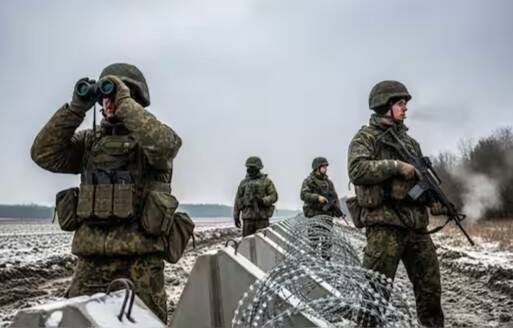
Germany to send troops to Poland border amid threats from Russia
In a significant move to bolster the security of its eastern European ally, Germany has announced that it will be deploying a contingent of troops to Poland to assist the country in fortifying its border. This decision comes amid rising concerns over potential threats from Russia, which has been engaging in aggressive military posturing in the region. The deployed troops will be tasked with engineering work, according to Berlin’s defence ministry, with their duties involving building defensive structures, excavating trenches, installing barbed wire, and setting up anti-tank obstacles.
The decision to send German troops to Poland is a clear indication of the growing unease in Europe over Russia’s actions, particularly in the wake of the ongoing conflict in Ukraine. The move is also seen as a demonstration of solidarity between Germany and Poland, as well as a commitment to upholding the security and stability of the region. By providing military assistance to Poland, Germany is sending a strong signal to Russia that any attempts to intimidate or coerce its eastern European neighbors will not be tolerated.
The engineering work to be carried out by the German troops will play a crucial role in enhancing the defensive capabilities of Poland’s border. The construction of defensive structures, such as bunkers and watchtowers, will provide Polish troops with secure positions from which to monitor and respond to any potential threats. The excavation of trenches and the installation of barbed wire and anti-tank obstacles will also serve to hinder the movement of enemy forces, making it more difficult for them to launch a successful attack.
The deployment of German troops to Poland is also significant in the context of NATO’s efforts to bolster its eastern flank. The alliance has been working to strengthen its military presence in the region, with a particular focus on countries that border Russia. The deployment of German troops to Poland is seen as a key component of this effort, and is likely to be welcomed by other NATO member states.
Despite the clear rationale behind the decision to send German troops to Poland, there are likely to be concerns about the potential risks and consequences of such a move. One of the main concerns is the potential for escalation, with Russia potentially responding to the deployment of German troops by increasing its own military presence in the region. This could lead to a destabilization of the security situation, and potentially even spark a wider conflict.
Another concern is the potential impact on relations between Germany and Russia. The decision to send German troops to Poland is likely to be seen as a provocative move by Russia, and could potentially damage already strained relations between the two countries. This could have significant implications for European security, particularly given Russia’s importance as a energy supplier to Germany and other European countries.
In addition to the potential risks and consequences, there are also questions about the effectiveness of the deployment of German troops to Poland. While the engineering work to be carried out by the troops will undoubtedly enhance the defensive capabilities of Poland’s border, it is unclear whether this will be sufficient to deter Russia from pursuing its aggressive military ambitions in the region. There are also concerns about the potential for Russia to exploit weaknesses in the defensive systems, potentially using asymmetric tactics such as cyber attacks or sabotage to undermine the effectiveness of the German troops.
Despite these concerns, the decision to send German troops to Poland is a significant and welcome development in the context of European security. It demonstrates a clear commitment to upholding the security and stability of the region, and sends a strong signal to Russia that its aggressive military posturing will not be tolerated. As the situation in the region continues to evolve, it will be important to monitor the deployment of German troops to Poland closely, and to assess its impact on the security situation.
In conclusion, the decision to send German troops to Poland is a significant move that reflects the growing concerns over Russia’s aggressive military ambitions in the region. The deployment of troops will play a crucial role in enhancing the defensive capabilities of Poland’s border, and demonstrates a clear commitment to upholding the security and stability of the region. While there are potential risks and consequences to consider, the move is a welcome development in the context of European security, and sends a strong signal to Russia that its actions will not be tolerated.
About the Author