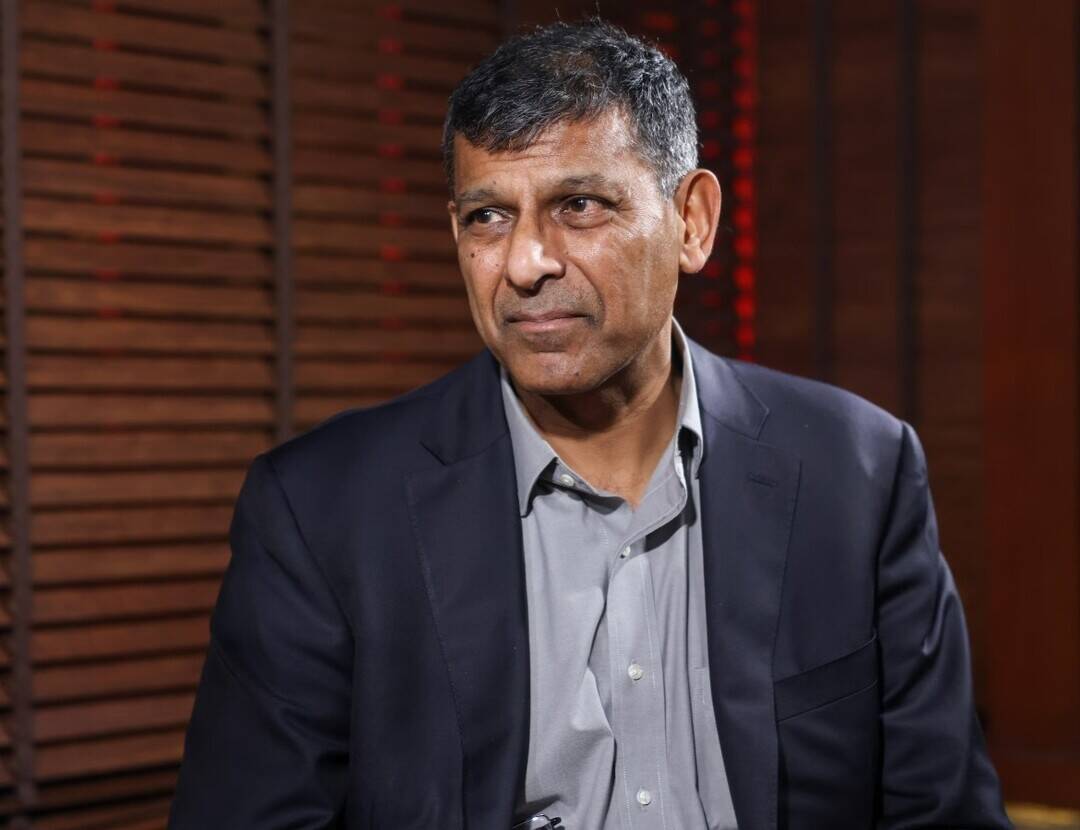
Plumbers will survive AI: Raghuram Rajan as he flags shortcomings in Indian education
The advent of Artificial Intelligence (AI) has sparked a heated debate about the future of jobs and the impact of automation on the workforce. While some experts predict that AI will displace a significant number of jobs, others believe that certain professions will remain unaffected. Recently, former Reserve Bank of India (RBI) Governor Raghuram Rajan weighed in on the discussion, suggesting that hands-on jobs like that of a plumber may survive the AI wave, while a variety of other jobs may become obsolete.
Rajan’s comments highlight the shortcomings in the Indian education system, which has traditionally emphasized academic degrees over vocational training. According to Rajan, the Indian education system needs to undergo a significant transformation to equip students with the skills required for hands-on jobs. “We need to find a good skilling model…It’s not rocket science,” he said, emphasizing the need for a more practical approach to education.
The former RBI Governor’s remarks are particularly relevant in the context of India’s demographics. With a large and growing population of young people, India needs to create millions of jobs to absorb new entrants into the workforce. However, the country’s education system is not equipped to provide the necessary skills for these jobs, leading to a mismatch between the demand and supply of skilled workers.
Rajan’s suggestion that not everyone needs a college degree is a significant departure from the conventional wisdom in India, where a college degree is often seen as the key to success. However, the reality is that many college graduates in India are not equipped with the skills required by the industry, leading to high levels of unemployment among graduates. On the other hand, vocational training and skills development can provide students with the practical skills required for hands-on jobs, making them more employable.
The example of plumbers is a case in point. Plumbers require a high level of technical expertise and manual dexterity, skills that are difficult to replicate with AI. Moreover, the demand for plumbers is likely to remain high, as urbanization and infrastructure development continue to drive the need for skilled tradespeople. By emphasizing the importance of vocational training and skills development, Rajan is highlighting the need for India to focus on creating a workforce that is equipped to meet the demands of the modern economy.
Another significant advantage of hands-on jobs like plumbing is that they are less likely to be automated. While AI and machine learning have made significant progress in recent years, they are not yet capable of replicating the complex manual tasks required in skilled trades. This means that jobs like plumbing, electrical work, and carpentry are likely to remain in high demand, even as AI and automation continue to advance.
In contrast, many white-collar jobs are at high risk of automation. Jobs that involve repetitive tasks, data entry, and bookkeeping are already being automated, and this trend is likely to continue in the coming years. According to a report by the McKinsey Global Institute, up to 800 million jobs could be lost worldwide due to automation by 2030. This highlights the need for India to focus on creating a workforce that is equipped to adapt to the changing demands of the economy.
So, what can India do to address the shortcomings in its education system and create a workforce that is equipped to meet the demands of the modern economy? Firstly, the government needs to prioritize vocational training and skills development, providing students with the practical skills required for hands-on jobs. This can be achieved through a combination of government-funded programs and partnerships with industry leaders.
Secondly, India needs to rethink its approach to education, emphasizing the importance of skills development and vocational training. This can involve introducing vocational training programs in schools, providing students with the opportunity to acquire practical skills from an early age. Additionally, the government can provide incentives for companies to invest in vocational training and skills development, creating a pipeline of skilled workers that can meet the demands of industry.
Finally, Indians need to change their mindset about the value of vocational training and skills development. For too long, the country has emphasized the importance of academic degrees, often at the expense of practical skills. By recognizing the value of hands-on jobs like plumbing, Indians can begin to appreciate the importance of vocational training and skills development, creating a workforce that is equipped to meet the demands of the modern economy.
In conclusion, Raghuram Rajan’s comments highlight the shortcomings in the Indian education system and the need for a more practical approach to education. By emphasizing the importance of vocational training and skills development, India can create a workforce that is equipped to meet the demands of the modern economy, even as AI and automation continue to advance. As the country looks to the future, it is essential that it prioritizes the development of practical skills, providing students with the opportunity to acquire the skills required for hands-on jobs like plumbing.
About the Author