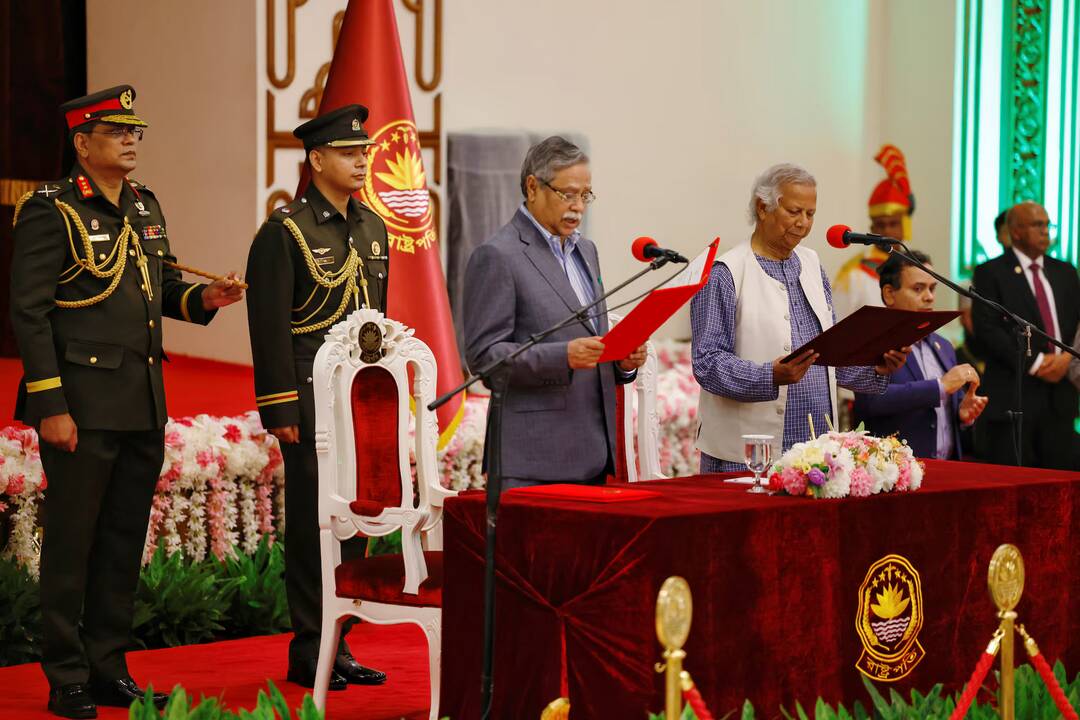
‘Humiliated’ by Yunus, B’desh Prez wants to step down before completing term
In a shocking turn of events, Bangladeshi President Mohammed Shahabuddin has announced his intention to step down from his post before completing his term. In an exclusive interview with Reuters, Shahabuddin revealed that he plans to quit after the parliamentary election on February 12. This sudden decision has sent shockwaves throughout the country, with many wondering what could have led to such a drastic move.
According to Shahabuddin, the main reason behind his decision to step down is the humiliation he has faced at the hands of Bangladesh’s interim chief, Mohammed Yunus. The President expressed his deep sense of hurt and betrayal, stating that he felt humiliated after his portraits were taken down from Bangladeshi embassies. This incident, he claimed, was a clear indication of the lack of respect and regard he has been shown by the current interim government.
Shahabuddin also revealed that he has not had a meeting with Mohammed Yunus in the past seven months. This lack of communication, he said, has made it clear that he is no longer a part of the decision-making process in the country. The President expressed his disappointment and frustration, stating that he has been left in the dark about important matters of state.
The decision to step down is a significant one, and it is likely to have far-reaching consequences for the country. Shahabuddin’s term was supposed to last for several more years, and his sudden departure will create a power vacuum that will need to be filled. The parliamentary election on February 12 will be a crucial event, as it will determine the course of the country’s future.
The relationship between Shahabuddin and Mohammed Yunus has been strained for some time now. The two leaders have had significant differences in opinion, and their working relationship has been tense. The removal of Shahabuddin’s portraits from Bangladeshi embassies was seen as a symbolic gesture of the interim government’s lack of respect for the President.
Shahabuddin’s decision to step down has been met with a mix of reactions. Some have expressed surprise and shock, while others have welcomed the move. The opposition parties have been quick to capitalize on the situation, with some leaders calling for fresh elections and a new government.
The international community will be watching the situation in Bangladesh with great interest. The country has been a key player in regional affairs, and any instability will have significant implications for the region. The United States, China, and India, among other countries, will be closely monitoring the situation, as they have significant economic and strategic interests in the country.
As the parliamentary election on February 12 approaches, the country is bracing itself for a period of uncertainty. The outcome of the election will determine the course of the country’s future, and it will be interesting to see how the situation unfolds.
In conclusion, the decision of Bangladeshi President Mohammed Shahabuddin to step down before completing his term is a significant development. The reasons behind his decision, including the humiliation he has faced at the hands of Mohammed Yunus and the lack of communication between the two leaders, are a clear indication of the deep-seated problems within the country’s leadership.
As the country prepares for a new chapter in its history, it is essential to reflect on the events that have led to this point. The removal of Shahabuddin’s portraits from Bangladeshi embassies and the lack of communication between the President and the interim chief are symptoms of a larger problem. The country needs a stable and effective government, and it is essential to address the underlying issues that have led to this crisis.
The future of Bangladesh is uncertain, and it will be interesting to see how the situation unfolds. One thing is clear, however: the country is at a crossroads, and the decisions made in the coming weeks and months will have a significant impact on its future.
About the Author