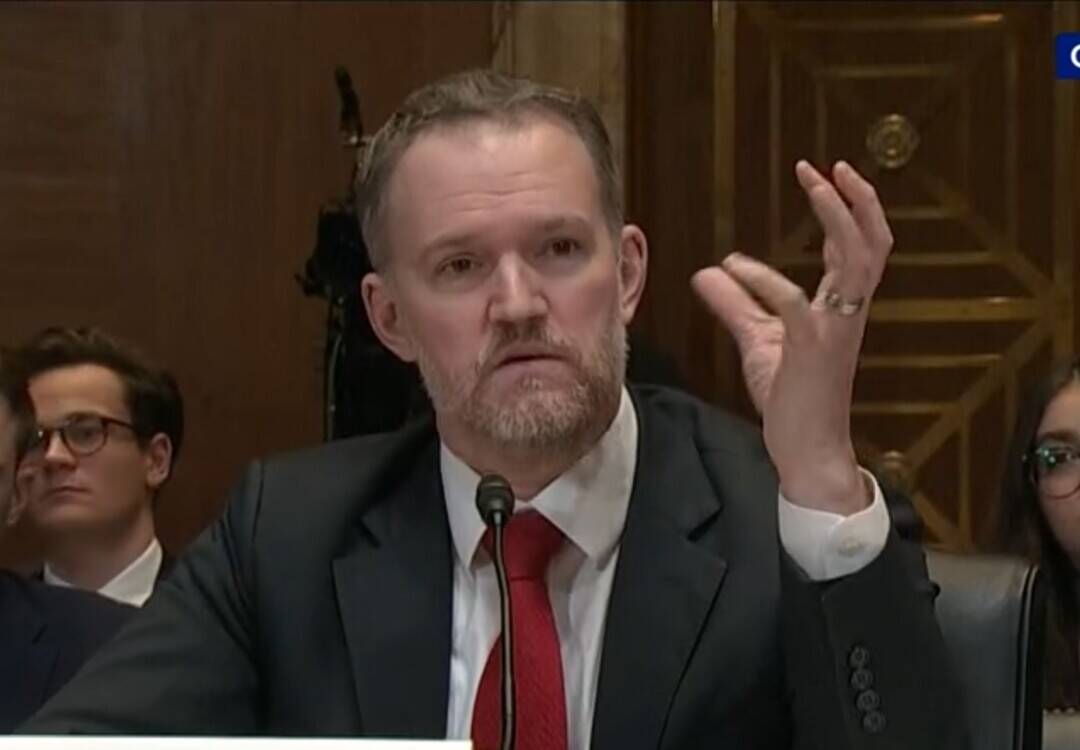
China & US like square & circle, that’s why we turned to India but it’s hard nut to crack: US
The relationship between China and the US has been a topic of discussion for many years, with the two nations often finding themselves at odds over various issues. Recently, US Trade Representative Jamieson Greer shed some light on the complexities of the US-China economic relationship, likening it to a square and a circle that don’t sit together. This analogy highlights the fundamental differences between the two countries’ economic systems and approaches to trade. In an effort to diversify and reduce its dependence on the Chinese market, the US has turned its attention to India, seeking to establish a bilateral trade agreement. However, as Greer noted, India is proving to be a “hard nut to crack,” particularly when it comes to the export of US crops.
The US-China economic relationship has long been a source of tension, with the two nations engaging in a protracted trade war in recent years. The US has accused China of unfair trade practices, including intellectual property theft and forced technology transfer, while China has responded with its own set of tariffs and trade restrictions. The situation has led to a significant decline in US exports to China, with many American businesses seeking alternative markets for their products. It is in this context that the US has turned to India, hoping to establish a new and lucrative trade partnership.
According to Greer, the US is keen to diversify its exports, particularly in the agricultural sector. The country is a significant producer of crops such as soybeans, corn, and wheat, and is looking to expand its market share in countries like India. However, as Greer noted, there is significant resistance in India to the importation of US row crops, such as soybeans and corn. This resistance is driven in part by India’s own agricultural sector, which is a significant contributor to the country’s economy. Indian farmers are concerned that the influx of cheap US crops could undermine their own livelihoods and the country’s food security.
The challenges facing the US in its efforts to establish a bilateral trade agreement with India are significant. India is a complex and diverse country, with a large and growing population that is increasingly assertive in its economic and trade policies. The country has a long history of protectionism, and its government is often hesitant to open up its markets to foreign competition. This has made it difficult for the US to make inroads in the Indian market, particularly in the agricultural sector.
Despite these challenges, the US remains committed to establishing a strong trade partnership with India. The country is seen as a key player in the Asia-Pacific region, and its growing economy and large consumer market make it an attractive destination for US exports. The US is also keen to counterbalance the growing influence of China in the region, and a trade agreement with India could help to achieve this goal.
In recent years, the US and India have made significant progress in their trade negotiations, with the two countries agreeing to a number of measures aimed at increasing trade and investment. These include the establishment of a new trade policy forum, which will provide a platform for the two countries to discuss trade issues and identify areas for cooperation. The US has also offered to provide technical assistance to India, aimed at helping the country to improve its trade infrastructure and increase its exports.
However, as Greer’s comments suggest, there is still much work to be done if the US and India are to establish a comprehensive and mutually beneficial trade agreement. The issue of row crops is just one of many areas where the two countries will need to find common ground, and it is likely that significant negotiations and compromises will be required. The US will need to be patient and flexible in its approach, recognizing that India is a complex and diverse country with its own unique set of economic and trade priorities.
In conclusion, the US-China economic relationship is likely to remain a source of tension and complexity for the foreseeable future. The two countries’ economies are fundamentally different, and their approaches to trade and investment are often at odds. In response, the US has turned to India, seeking to establish a new and lucrative trade partnership. However, as US Trade Representative Jamieson Greer noted, India is a “hard nut to crack,” particularly when it comes to the export of US crops. The US will need to be patient, flexible, and creative in its approach if it is to succeed in establishing a comprehensive and mutually beneficial trade agreement with India.
News source: https://x.com/Sputnik_India/status/1998714309367521298
About the Author