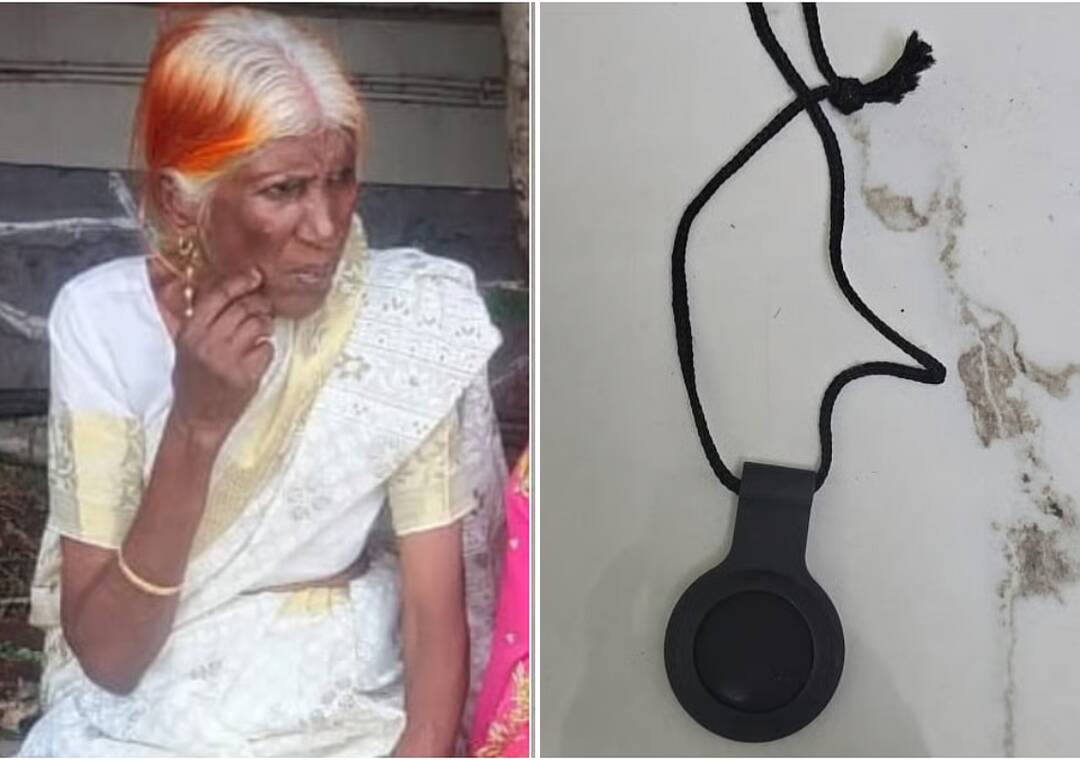
Woman with memory issues gets hit by 2-wheeler, found with help of GPS tracker in Mumbai
In a remarkable display of how technology can be a lifesaver, a 79-year-old woman in Mumbai’s Sewri, who suffers from memory-related issues, was found at a hospital after being hit by a two-wheeler while out for an evening walk. The woman’s family was able to locate her thanks to a GPS tracker that her grandson had placed on her necklace, highlighting the importance of leveraging technology to ensure the safety and well-being of loved ones, especially those with medical conditions.
The incident occurred when the woman, who has been experiencing memory issues, decided to go for an evening walk. As she was walking, she was struck by a two-wheeler, leaving her injured and disoriented. The rider of the two-wheeler fled the scene, leaving the woman to her fate. Fortunately, a passerby came to her aid and took her to the nearby KEM Hospital for treatment.
However, the woman’s family was unaware of her whereabouts, and a frantic search ensued. Her grandson, who had been taking care of her, was particularly worried, given her medical condition. He had been using a GPS tracker to keep tabs on her location, and it was this device that ultimately led him to her.
The GPS tracker, which was attached to the woman’s necklace, allowed her grandson to pinpoint her exact location. After activating the tracker, he was able to determine that she was at KEM Hospital, where he immediately rushed to be with her. The family was relieved to have found her, and they were grateful for the technology that had made it possible.
This incident highlights the importance of using technology to support loved ones with medical conditions. For individuals with memory-related issues, such as dementia or Alzheimer’s, GPS trackers can be a vital tool in ensuring their safety and well-being. These devices can provide peace of mind for family members and caregivers, who can use them to monitor the location of their loved ones and respond quickly in case of an emergency.
In addition to GPS trackers, there are a range of other technologies that can be used to support individuals with memory-related issues. For example, wearable devices with fall detection capabilities can alert caregivers or emergency services in the event of a fall, while mobile apps can provide reminders and guidance to help individuals with daily tasks and navigation.
The use of technology to support individuals with medical conditions is a growing trend, and one that is likely to continue as the population ages and the prevalence of conditions such as dementia and Alzheimer’s increases. By leveraging these technologies, families and caregivers can provide better support and care for their loved ones, while also reducing the risk of accidents and injuries.
In the case of the 79-year-old woman in Sewri, the GPS tracker proved to be a lifesaver. Without it, her family may not have been able to find her, and she may have been left alone and unattended at the hospital. The incident is a powerful reminder of the importance of using technology to support loved ones with medical conditions, and the potential consequences of not doing so.
As we move forward in an increasingly technologically advanced world, it is essential that we prioritize the development and use of technologies that can support individuals with medical conditions. By doing so, we can help to improve their quality of life, reduce the risk of accidents and injuries, and provide peace of mind for families and caregivers.
In conclusion, the incident involving the 79-year-old woman in Sewri is a powerful example of how technology can be used to save lives. The use of a GPS tracker to locate her after she was hit by a two-wheeler highlights the importance of leveraging technology to support loved ones with medical conditions. As we continue to develop and use new technologies, it is essential that we prioritize their application in areas such as healthcare and social care, where they can have the greatest impact.
About the Author