No link between air pollution & deaths: Govt
In a statement that may raise eyebrows, the Minister of State for Health, Prataprao Jadhav, told the Rajya Sabha on Tuesday that there was no conclusive data in India to establish a direct link between deaths exclusively with air pollution. This assertion has sparked a debate about the impact of air pollution on public health in the country. According to Jadhav, “The health effects of air pollution are a synergistic manifestation of factors, which include food habits, occupational habits, socioeconomic status, medical history, immunity, heredity, etc.” This statement suggests that the government believes that air pollution is just one of many factors that contribute to health problems, and that it is not the sole cause of deaths.
The statement has been met with skepticism by environmentalists and health experts, who point to a large body of research that suggests a clear link between air pollution and premature death. Studies have shown that exposure to poor air quality can lead to a range of health problems, including respiratory diseases, cardiovascular disease, and even cancer. In fact, the World Health Organization (WHO) estimates that nine out of ten people worldwide breathe polluted air, and that air pollution is responsible for seven million premature deaths each year.
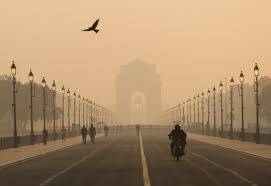
In India, the problem of air pollution is particularly acute. The country is home to some of the most polluted cities in the world, with Delhi and other major urban centers regularly experiencing hazardous levels of air pollution. This has led to a growing public health crisis, with thousands of people dying prematurely each year due to respiratory and other diseases linked to air pollution.
Despite this, the government’s statement suggests that it does not believe that air pollution is a major public health concern. This is a worrying development, as it may lead to a lack of urgency in addressing the problem. If the government does not recognize the link between air pollution and deaths, it is unlikely to take the necessary steps to reduce pollution levels and protect public health.
So, what is the evidence for the link between air pollution and deaths? There is a large body of research that suggests a clear connection between the two. Studies have shown that exposure to particulate matter (PM), nitrogen dioxide (NO2), and other pollutants can lead to a range of health problems, including respiratory diseases, cardiovascular disease, and even cancer. For example, a study published in the journal Environmental Health Perspectives found that exposure to PM2.5 (fine particulate matter) was associated with an increased risk of premature death from cardiovascular disease.
Other studies have found similar links between air pollution and health problems. A study published in the journal Lancet found that air pollution was responsible for 1.2 million premature deaths in India in 2017, with the majority of these deaths due to cardiovascular disease. Another study published in the journal Environmental Research found that exposure to NO2 was associated with an increased risk of respiratory disease in children.
In addition to the scientific evidence, there is also a growing body of anecdotal evidence that suggests a link between air pollution and health problems. Many people who live in polluted cities report experiencing respiratory problems, such as asthma and bronchitis, and some have even reported experiencing more serious health problems, such as cardiovascular disease and cancer.
So, why is the government downplaying the link between air pollution and deaths? There are several possible reasons for this. One possibility is that the government is trying to avoid taking responsibility for the problem. By suggesting that air pollution is just one of many factors that contribute to health problems, the government may be trying to shift the blame away from itself and onto other factors, such as lifestyle or genetics.
Another possibility is that the government is trying to avoid the economic costs of reducing air pollution. Reducing pollution levels would likely require significant investments in clean energy, transportation, and other infrastructure, which could be costly. By downplaying the link between air pollution and deaths, the government may be trying to avoid the economic costs of taking action to reduce pollution levels.
In conclusion, the government’s statement that there is no conclusive data to establish a direct link between deaths exclusively with air pollution is a worrying development. The evidence suggests that there is a clear link between air pollution and health problems, and that reducing pollution levels is essential to protecting public health. The government must take urgent action to address the problem of air pollution, including investing in clean energy, improving transportation infrastructure, and promoting public awareness about the risks of air pollution.
Source: https://x.com/PTI_News/status/1998360503333355572
About the Author