Violent Protest Breaks Out in Pak Over Demand of Separate ‘Sindhu Desh’
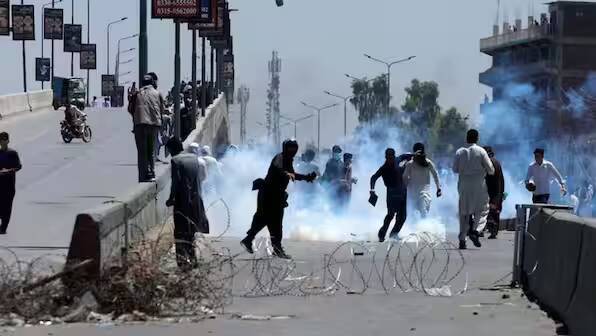
In a disturbing turn of events, a protest in Pakistan’s Karachi turned violent as demonstrators demanding a separate ‘Sindhu Desh’ clashed with police. The protest, which was organized by the Jiye Sindh Muttahida Mahaz (JSSM), saw Sindhis gathering together to raise their voices for independence and self-determination. However, the situation quickly spiraled out of control as stone pelting and clashes with police were reported, leaving many injured and damaging property.
The protest, which began peacefully, took a turn for the worse when the authorities allegedly redirected the rally’s path. This move was met with anger and frustration from the protesters, who felt that their rights were being suppressed. The redirection of the rally’s path was seen as an attempt to stifle their voices and prevent them from exercising their right to free speech and assembly. As a result, the protesters became agitated and began throwing stones at the police, who were deployed to maintain law and order.
The situation was further inflamed by the slogans raised by the protesters, who chanted ‘Azadi’ (freedom) and ‘Pakistan Murdabad’ (death to Pakistan). These slogans were seen as a direct challenge to the authority of the Pakistani state, and were met with a heavy-handed response from the police. The use of force by the police only served to escalate the situation, and soon the protest had descended into chaos.
The demand for a separate ‘Sindhu Desh’ is not a new one, and has been a long-standing issue in Pakistan. The Sindhi people have historically felt marginalized and oppressed by the Pakistani state, and have been seeking greater autonomy and self-determination. The JSSM, which is leading the protest, has been at the forefront of this movement, and has been advocating for the rights of the Sindhi people.
However, the Pakistani government has been resistant to these demands, and has instead sought to suppress the movement through force and intimidation. This approach has only served to further alienate the Sindhi people, and has created a sense of resentment and anger towards the state. The violent protest in Karachi is a manifestation of this anger and frustration, and highlights the need for the Pakistani government to engage with the Sindhi people and address their grievances.
The situation in Karachi is not an isolated incident, and is part of a larger pattern of unrest and violence in Pakistan. The country has been plagued by sectarian and ethnic tensions, and has seen numerous protests and clashes in recent years. The demand for a separate ‘Sindhu Desh’ is just one of many issues that are driving these tensions, and highlights the need for the Pakistani government to address the underlying causes of these problems.
In recent years, Pakistan has seen a surge in nationalist movements, with various ethnic and regional groups demanding greater autonomy and self-determination. The Balochistan region, which is located in the southwestern part of the country, has been a particular hotspot of unrest, with separatist groups demanding independence from Pakistan. The situation in Sindh is similar, with the Sindhi people seeking greater autonomy and self-determination.
The Pakistani government has been struggling to respond to these demands, and has often resorted to force and intimidation to suppress the movements. However, this approach has only served to further inflame the situation, and has created a sense of resentment and anger towards the state. The violent protest in Karachi is a manifestation of this anger and frustration, and highlights the need for the Pakistani government to engage with the Sindhi people and address their grievances.
In conclusion, the violent protest in Karachi is a disturbing development that highlights the deep-seated tensions and grievances that exist in Pakistan. The demand for a separate ‘Sindhu Desh’ is just one of many issues that are driving these tensions, and highlights the need for the Pakistani government to address the underlying causes of these problems. The use of force and intimidation to suppress the movement is not a solution, and will only serve to further inflame the situation. Instead, the Pakistani government needs to engage with the Sindhi people and address their grievances, and work towards finding a peaceful and democratic solution to the crisis.
About the Author