No link between air pollution & deaths: Govt
The debate about the impact of air pollution on human health has been a longstanding one, with many studies suggesting a direct link between the two. However, in a recent statement, the Indian government has claimed that there is no conclusive data to establish a direct link between deaths exclusively due to air pollution. This statement was made by Minister of State for Health, Prataprao Jadhav, in the Rajya Sabha on Tuesday.
According to Jadhav, the health effects of air pollution are a complex phenomenon that cannot be attributed to a single factor. “The health effects of air pollution are a synergistic manifestation of factors, which include food habits, occupational habits, socioeconomic status, medical history, immunity, heredity, etc,” he said. This statement suggests that the government believes that air pollution is just one of the many factors that contribute to health problems, and that it is not possible to isolate its impact on human health.
This statement has sparked a heated debate, with many environmentalists and health experts disagreeing with the government’s claim. They argue that there is overwhelming evidence to suggest that air pollution is a major contributor to health problems, including respiratory diseases, cardiovascular diseases, and even cancer. They point to studies that have shown a direct link between exposure to poor air quality and increased mortality rates.
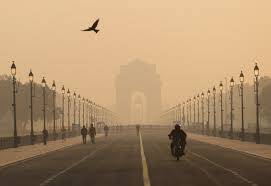
One of the main concerns about air pollution is the high levels of particulate matter (PM) in the air, particularly PM2.5, which is fine particulate matter that can penetrate deep into the lungs and cause damage. India has some of the highest levels of PM2.5 in the world, with cities like Delhi and Mumbai experiencing severe air pollution during certain times of the year. This has led to a significant increase in respiratory problems, including asthma and chronic obstructive pulmonary disease (COPD).
Despite the government’s claim that there is no conclusive data to establish a direct link between air pollution and deaths, there are many studies that suggest otherwise. A study published in the journal Lancet found that air pollution is responsible for over 1.2 million deaths in India every year, which is approximately 12% of all deaths in the country. Another study published in the journal Environmental Health Perspectives found that exposure to PM2.5 can increase the risk of cardiovascular disease by up to 20%.
The government’s statement has also been criticized for downplaying the impact of air pollution on human health. Many experts argue that the government’s claim that air pollution is just one of the many factors that contribute to health problems is an oversimplification of a complex issue. They point out that air pollution is a major public health concern that requires immediate attention and action.
So, what can be done to address the issue of air pollution in India? Firstly, the government needs to take concrete steps to reduce emissions from vehicles, industries, and other sources. This can be done by implementing stricter emission norms, increasing the use of clean energy sources, and promoting the use of electric vehicles. Secondly, the government needs to improve the monitoring of air quality in cities and towns, and make the data available to the public. This will help to raise awareness about the issue and encourage people to take action to reduce their exposure to poor air quality.
Finally, the government needs to take a more proactive approach to addressing the health impacts of air pollution. This can be done by increasing funding for research on the health effects of air pollution, and by implementing policies to reduce the burden of air pollution on vulnerable populations, such as children and the elderly.
In conclusion, the government’s claim that there is no conclusive data to establish a direct link between air pollution and deaths is a controversial one that has sparked a heated debate. While there is no doubt that air pollution is a complex issue that cannot be attributed to a single factor, the evidence suggests that it is a major contributor to health problems in India. The government needs to take concrete steps to address the issue of air pollution, including reducing emissions, improving monitoring, and increasing funding for research and policy initiatives.
Source: https://x.com/PTI_News/status/1998360503333355572
About the Author