Violent Protest Breaks Out in Pak Over Demand of Separate ‘Sindhu Desh’
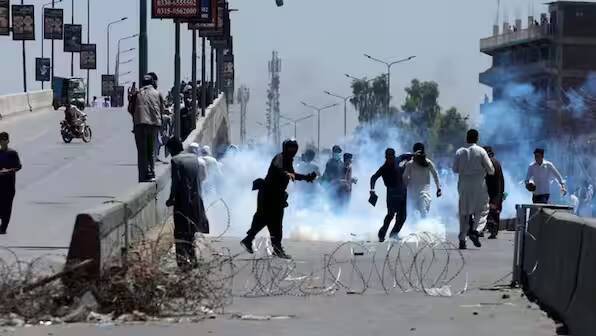
In a shocking turn of events, a protest demanding a separate ‘Sindhu Desh’ turned violent in Pakistan’s Karachi, leaving a trail of destruction and chaos in its wake. The protest, which was organized by the Jiye Sindh Muttahida Mahaz (JSSM), a Sindhi nationalist party, saw thousands of Sindhis take to the streets, raising slogans of ‘Azadi’ (freedom) and ‘Pakistan Murdabad’ (death to Pakistan). The situation took a turn for the worse when stone pelting and clashes with police were reported, forcing the authorities to intervene.
According to eyewitnesses, the protest began peacefully, with Sindhis gathering in large numbers to demand a separate homeland, which they call ‘Sindhu Desh’. However, things took a turn for the worse when the authorities redirected the rally’s path, which made the protesters angry. The protesters, who were determined to make their voices heard, began throwing stones at the police, who were trying to maintain order. The police, in turn, responded with tear gas and baton charges, which only added to the chaos.
The JSSM, which is a key player in the Sindhi nationalist movement, has been demanding a separate homeland for the Sindhi people for decades. The party claims that the Sindhi people have been marginalized and oppressed by the Pakistani government, which has led to widespread poverty, unemployment, and human rights abuses in the region. The JSSM believes that a separate ‘Sindhu Desh’ is the only solution to the problems faced by the Sindhi people, and has been mobilizing support for its cause across the province.
The demand for a separate ‘Sindhu Desh’ is not a new one, and has been a longstanding issue in Pakistani politics. The Sindhi people have a distinct culture, language, and history, which is separate from the rest of Pakistan. However, despite their unique identity, the Sindhi people have been subject to marginalization and oppression by the Pakistani government, which has led to widespread resentment and anger.
The protests in Karachi are just the latest expression of this anger and frustration. The Sindhi people are demanding a separate homeland, where they can govern themselves and determine their own destiny. They believe that a separate ‘Sindhu Desh’ would allow them to preserve their unique culture and identity, and would provide them with the freedom and autonomy they need to develop their own economy and society.
The Pakistani government, however, is opposed to the idea of a separate ‘Sindhu Desh’, and has been trying to suppress the Sindhi nationalist movement. The government claims that the demand for a separate homeland is a threat to the unity and integrity of Pakistan, and has been using force and coercion to quell the protests.
Despite the government’s efforts to suppress the movement, the demand for a separate ‘Sindhu Desh’ continues to gain momentum. The Sindhi people are determined to make their voices heard, and are willing to risk everything to achieve their goal. The protests in Karachi are just the beginning, and it is likely that we will see more violence and unrest in the coming days and weeks.
The international community has been watching the situation in Pakistan with growing concern. The United States, the European Union, and other Western countries have been urging the Pakistani government to respect the human rights of the Sindhi people, and to engage in dialogue with the JSSM and other Sindhi nationalist parties. However, so far, the Pakistani government has refused to budge, and has been using force and coercion to quell the protests.
As the situation in Pakistan continues to deteriorate, it is clear that the demand for a separate ‘Sindhu Desh’ is not going away anytime soon. The Sindhi people are determined to achieve their goal, and are willing to risk everything to make their voices heard. The Pakistani government, on the other hand, is determined to suppress the movement, and is using force and coercion to quell the protests.
Only time will tell what the outcome of this struggle will be. Will the Sindhi people achieve their goal of a separate ‘Sindhu Desh’, or will the Pakistani government succeed in suppressing the movement? One thing is certain, however: the situation in Pakistan is going to get a lot worse before it gets better.
In conclusion, the protests in Karachi are a clear indication of the growing unrest and anger among the Sindhi people. The demand for a separate ‘Sindhu Desh’ is a legitimate one, and the Pakistani government needs to engage in dialogue with the JSSM and other Sindhi nationalist parties to find a solution to the problem. The use of force and coercion is not the answer, and will only lead to more violence and unrest.
About the Author