No link between air pollution & deaths: Govt
The Indian government has sparked a debate by stating that there is no conclusive evidence to establish a direct link between air pollution and deaths in the country. Minister of State for Health, Prataprao Jadhav, made this statement in the Rajya Sabha on Tuesday, citing the complexity of factors that contribute to health effects. According to Jadhav, the health effects of air pollution are a result of a combination of factors, including food habits, occupational habits, socioeconomic status, medical history, immunity, and heredity.
This statement has raised eyebrows, as it comes at a time when air pollution has become a major concern in India, with many cities struggling to meet the national air quality standards. The government’s stance has been met with skepticism by environmentalists and health experts, who argue that the link between air pollution and health effects is well-established and backed by scientific evidence.
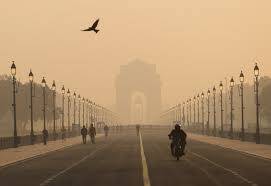
Air pollution is a major public health concern, with the World Health Organization (WHO) estimating that it causes around 7 million premature deaths worldwide each year. In India, the situation is particularly alarming, with the country being home to some of the most polluted cities in the world. The capital city, Delhi, is often referred to as a “gas chamber” due to its hazardous air quality, which is blamed for thousands of premature deaths each year.
Despite the overwhelming evidence, the government’s statement suggests that the relationship between air pollution and health effects is more complex than previously thought. Jadhav’s statement implies that air pollution is just one of many factors that contribute to health problems, and that it is not possible to establish a direct link between the two.
However, health experts argue that the government’s statement is misleading and downplays the severity of the problem. “The science is clear: air pollution is a major killer, and the evidence is overwhelming,” said Dr. Kumar, a leading environmental health expert. “To suggest that there is no conclusive evidence is to ignore the vast body of research that has been conducted on this topic.”
The government’s statement has also been criticized for being overly simplistic. While it is true that many factors contribute to health effects, air pollution is a significant and preventable risk factor that can be addressed through policy interventions. By downplaying the link between air pollution and health effects, the government may be undermining efforts to tackle this critical public health issue.
So, what does the science say? Studies have consistently shown that exposure to poor air quality is associated with a range of health problems, including respiratory diseases, cardiovascular disease, and even cancer. The evidence is based on decades of research, including epidemiological studies, laboratory experiments, and animal studies.
In India, the problem of air pollution is particularly acute. The country’s rapid industrialization and urbanization have led to a massive increase in air pollution, with particulate matter (PM) levels often exceeding safe limits. The situation is exacerbated by the lack of effective regulations and enforcement, which has allowed polluters to operate with impunity.
The government’s statement has also raised questions about its commitment to addressing the problem of air pollution. While the government has launched several initiatives to improve air quality, including the National Clean Air Programme, critics argue that these efforts are insufficient and lack teeth.
In conclusion, the government’s statement that there is no link between air pollution and deaths is misleading and ignores the overwhelming evidence on this topic. Air pollution is a major public health concern that requires urgent attention and action. Rather than downplaying the problem, the government should be working to strengthen regulations, increase enforcement, and promote sustainable development practices that prioritize public health and the environment.
As the debate over air pollution and health effects continues, it is essential to rely on scientific evidence and expert opinion. The government’s statement should not be taken as a justification for inaction, but rather as a call to action to address this critical public health issue.
Source: https://x.com/PTI_News/status/1998360503333355572
About the Author