Violent protest breaks out in Pak over demand of separate ‘Sindhu Desh’
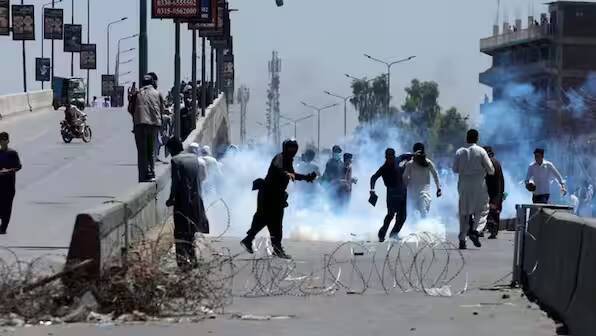
In a disturbing turn of events, a protest demanding a separate ‘Sindhu Desh’ turned violent in Pakistan’s Karachi, with reports of stone pelting and clashes with police. The protest, which was organized by the Jiye Sindh Muttahida Mahaz (JSSM), a Sindhi nationalist group, saw thousands of Sindhis gathered together, raising slogans of ‘Azadi’ (freedom) and ‘Pakistan Murdabad’ (down with Pakistan). The situation took a turn for the worse when the authorities attempted to redirect the rally’s path, which enraged the protesters, forcing them to throw stones at the police.
The protest, which was initially peaceful, began to take a violent turn when the police attempted to intervene and change the route of the rally. The protesters, who were determined to make their voices heard, refused to back down, and the situation quickly escalated. The stone pelting and clashes with police resulted in injuries to several people, including both protesters and police personnel.
The Jiye Sindh Muttahida Mahaz (JSSM), which is a coalition of Sindhi nationalist groups, has been at the forefront of the movement for a separate ‘Sindhu Desh’. The group claims that the Sindhi people have been marginalized and oppressed by the Pakistani government, and that they deserve their own separate nation. The JSSM has been organizing protests and rallies across Sindh, demanding greater autonomy and rights for the Sindhi people.
The demand for a separate ‘Sindhu Desh’ is not a new one, and has been a long-standing issue in Pakistan. The Sindhi people have historically felt that they have been treated unfairly by the Pakistani government, and that their rights and interests have been ignored. The movement for a separate ‘Sindhu Desh’ has gained momentum in recent years, with many Sindhis feeling that they have no other option but to demand their own separate nation.
The situation in Karachi is a reflection of the deeper underlying issues that exist in Pakistan. The country has long struggled with separatist movements, with groups in Balochistan, Sindh, and other regions demanding greater autonomy and rights. The Pakistani government has often been accused of using heavy-handed tactics to suppress these movements, which has only served to exacerbate the situation.
The protest in Karachi is also a reflection of the growing frustration and anger among the Sindhi people. The Sindhis have long felt that they have been marginalized and oppressed by the Pakistani government, and that their rights and interests have been ignored. The movement for a separate ‘Sindhu Desh’ is a symptom of this deeper frustration and anger, and is a call for the Pakistani government to recognize the rights and interests of the Sindhi people.
The Pakistani government has so far refused to acknowledge the demands of the Sindhi people, and has instead attempted to suppress the movement through force. However, this approach is unlikely to work, and is likely to only serve to further exacerbate the situation. The Pakistani government needs to recognize the legitimate grievances of the Sindhi people, and work towards finding a solution that addresses their concerns.
In conclusion, the violent protest that broke out in Karachi over the demand for a separate ‘Sindhu Desh’ is a reflection of the deeper underlying issues that exist in Pakistan. The movement for a separate ‘Sindhu Desh’ is a call for the Pakistani government to recognize the rights and interests of the Sindhi people, and to address the legitimate grievances of the Sindhi community. The Pakistani government needs to take a more nuanced and sensitive approach to addressing the concerns of the Sindhi people, rather than relying on force and suppression.
The situation in Karachi is a reminder of the complex and sensitive nature of the issues that exist in Pakistan. The country has long struggled with separatist movements, and the demand for a separate ‘Sindhu Desh’ is just one example of the deeper underlying issues that exist. The Pakistani government needs to take a more proactive and inclusive approach to addressing the concerns of all its citizens, regardless of their ethnic or linguistic background.
As the situation in Karachi continues to unfold, it remains to be seen how the Pakistani government will respond to the demands of the Sindhi people. One thing is certain, however, and that is that the movement for a separate ‘Sindhu Desh’ is not going away anytime soon. The Sindhi people are determined to make their voices heard, and to fight for their rights and interests. It is up to the Pakistani government to listen to their concerns, and to work towards finding a solution that addresses the legitimate grievances of the Sindhi community.
About the Author